The traffic was backed up on the west side of the Hudson River, a mile or more before the entrance to the Kingston-Rhinecliff bridge.
“If these cars are all heading to the Sheep and Wool Festival at the fairgrounds, this does not bode well,” I said to my husband, Pat. He didn’t seem bothered. Pat has dementia and enjoys car rides even though he rarely remembers where we are going.
The car jam broke up a bit on the other side of the river but slowed to a crawl waiting to turn into the fairground parking.
Pat was astounded at the number of cars. It was only about 11:00 a.m. and the rows and rows of vehicles glinted in the autumn sunshine. I reeled off the states on license plates: Florida, Massachusetts, Connecticut, New Jersey.
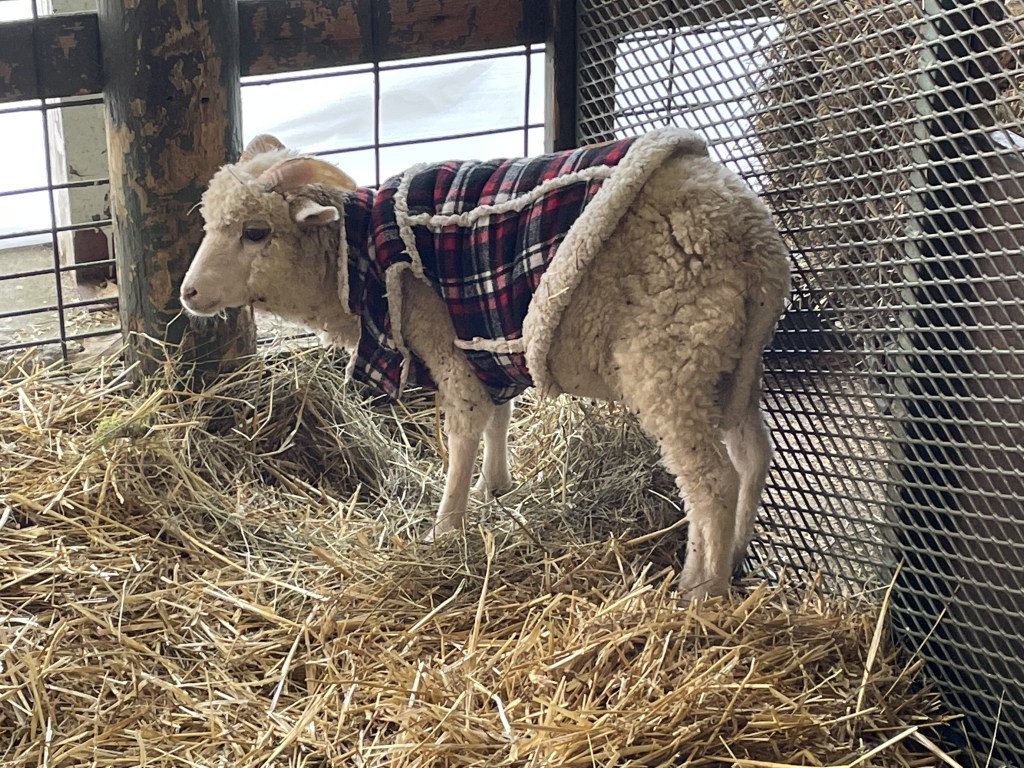
Fortunately, we had our tickets, so we skipped the buyers’ lines and followed the crowd. For crowded it was. Our first stop was the llamas and alpacas (and I still don’t know the difference). We bumped and jostled our way through the goat and sheep barns.
The one thing I was determined to see was the demonstration of Frisbee-playing dogs. It wasn’t the sheepherding dog demo that I really wanted to watch, but we made our way slowly to the grassy area marked off by flagged poles where an audience three deep was already gathered.
The dogs were amazing. They obviously loved the game, and the trainers/owners loved the dogs.
By this time, Pat and I were both hungry. I consulted the map and pointed the way to the food trucks. It turned out that everyone else at the festival was also hungry. Each vendor had lines of fifty or more people waiting to order food. Even the fried pickles truck had a line of obviously desperate people.
The hordes in the food plaza were worse than Oxford Street in London at Christmas time.
“I don’t want to wait in these long lines,” I said to Pat. Ever since Covid, I get anxious in large groups of people.
And it wasn’t just masses of people waiting to eat. Every barn and booth was packed.
The only thing I wanted to do now, having seen the dogs and given up on eating, was to choose some colorful handspun yarn to send to my sister in California.
“Let me get some yarn and then let’s go,” I said. “We’ll eat somewhere else.”
Pat, agreeable as always, held onto me as I dragged him through the crush.
After consulting the map multiple times, I figured out the way back to Gate 4 and our parking area. The barns of yarn and wool vendors were still crammed with people, but I pulled Pat into the one near our exit.
Halfway down the swarming aisle, I yanked Pat into a booth. I began to examine the yarns and the prices. Sixty dollars for one skein— uh, no. I turned around and—he was gone. No Pat.
Pushing my way back into the aisle, I looked around for an Irish cap and gray beard. There was a cap, but the wrong color and the man was too tall.
“Oh, no, oh no,” I moaned, elbowing my way to the entrance. No Pat. I turned and shoved back the other way.
Already I was imagining finding the festival police, if there was such an entity, and having someone call for Patrick Dillon on the PA system—if they had one. How in the world would I find him in these mobs of people? I got out my phone and called his mobile. It rang and said he was not available. Did he even hear it?
My mind played out more scenarios, such as me searching until closing time, when at last people would have gone and he might be easier to spot.
What would Pat do if he were trying to find me? Would he use his phone? Press his emergency medical button? Ask for help?
Eventually, I suppose, I would have remembered the app that locates him and his phone. Later, though, I discovered that he’d unknowingly turned it off in September.
But then—hallelujah–I spotted him, standing bewildered in front of the next barn over. What an incredible relief!
“Let’s get out of here!” I said, grabbing his hand.
Back in the car, I went over the protocol of what to do if we get separated. “Stay in one place,” I directed. But would he remember?
Should I tie us together the next time we’re out in a crowd?—if I ever attempt that again.
On a late fall afternoon, my husband and I took a walk along the road beside the Wallkill River. We were pleased that the recent rains had raised the water level. We could hear the swoosh of the current again. The leaves on the trees were lemon yellow, with an occasional splash of scarlet.
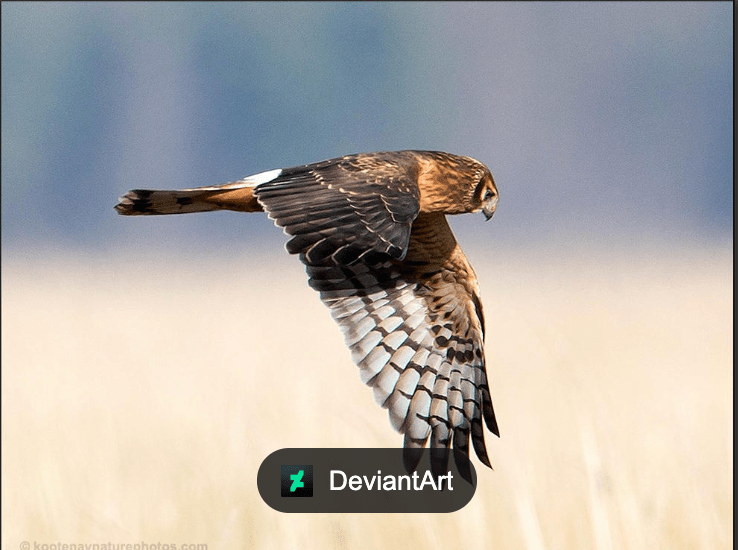
From overhead sounded a bird call that I didn’t recognize. It took a close search of the branches above to spot a large bird, a raptor. I am enamored of raptors. In the past two weeks I’ve seen two bald eagles, or maybe one bald eagle twice.
This bird above my head called out, “skeek-eek-eek-eek-eek!” I pointed it out to my husband, and the hawk must have taken offense because it spread its wings and glided across to the other side of the river.
As it flew, I spotted the light-feathered underside and white patch that told me this was not a red-tail hawk. It screeched again. I pulled out my trusty iPhone and searched for raptors of New York. The photo of the harrier left no doubt that this was the bird we were seeing. Just to be sure, I located recordings of harrier hawk calls. There was a match: the female. Female raptors tend to be larger than the males, and this was a big bird.
At home, I found more information about the harrier hawk.
The Northern harrier, formerly known as the marsh hawk, hunts primarily on the wing and may cover up to 100 miles per day. Its prey, consisting of mostly rodents and small birds, is detected using extremely keen hearing. This 16-24 inch, slender-bodied hawk has a long tail and wings, long yellow legs, distinct facial disks and a conspicuous white rump patch. In flight, the wings are held in a shallow “V.” The adult male is pale gray on the head, back and wings. The gray tail is banded with six to eight gray-brown bars. There is cinnamon-brown spotting on the legs and flanks, and the wing linings and undertail are white. The eyes of an adult male are yellow.
Female plumage is browner overall with dark streaks on the breast. The female is born with brown eyes which turn yellow at about three years of age. Juveniles resemble adult females, but have gray eyes. When startled, this species makes a rapid, nasal chattering “ke-ke-ke-ke-ke”.
This raptor is considered one of the most agile and acrobatic in North America. During the breeding season, the male performs an elaborate courtship flight consisting of a series of U-shaped maneuvers. The nest is a flimsy structure built of sticks and grass on the ground. It can be found in dense vegetation or situated in a slightly elevated position. The clutch averages five eggs. Incubation lasts 30-32 days and begins before the last egg is laid, so the young vary in size. The young fledge in 30-41 days, then remain near the nest, dependent on their parents for three to four weeks. Clutches are larger and reproductive success is higher during years when vole populations are high.
The Balkan band on the small wooden stage tunes up. One accordion, one violin, two dumbeks (Arabian drums), a tambura (a sort of Balkan mandolin), and a tupan–the big drum. The three drums pick up a familiar beat: TA-ta-tiki-tiki-ta-ta-ta. “That’s the belly-dancing rhythm,” I say to my friend as we link hands and join the line doing a cocek.
My feet follow the sequence of steps, but my thoughts go back to my one performance as a belly-dancer for the Society for Creative Anachronism (SCA) back in 1974.
My co-worker, Kate, in the Graduate Department at UCSB set up the gig for me. She was a member of SCA, a seneschal. I had been taking belly-dancing classes with Tiny Ossman, wife of David Ossman of the Firesign Theater. She and the other students liked to get stoned before class. I didn’t, so I arrived just at starting time.
I had spent days making my costume. For the bra, I had to buy a satin underwire brassiere. Then I painstakingly sewed gold coins on the cups and straps. I made the skirt with red chiffon attached to a wide elastic belt, also covered with gold coins. From an import store, I acquired part of a camel trapping made of colored red, green, and brown yarn, spangled with bells. This jingled delightfully when I swung my hips.
For me, the two hardest parts of belly-dancing were coordinating the zills (finger cymbals) while dancing and making my arms fluid like waves. I practiced upstairs in the rented house in Isla Vista, where I lived with four other college students.
Kate came one day to take photos. She was very excited that Ursula LeGuin was coming to the SCA festival. I hadn’t heard of LeGuin, and I secretly thought the members of the SCA were a little cuckoo. But I was excited and nervous to perform.
The only worry about weather in Santa Barbara is the fog that blows in off the ocean at night and hangs on past noon. Clear skies and sunshine greeted the SCA gathering by mid-afternoon. I had my phonograph and record ready (no iPhones or laptops back then). While I waited for show time, I took in the festival.
People were dressed in all sorts of period costumes. The styles fell somewhere along medieval and Renaissance lines. Men in chain mail, women with bosoms bursting out of brocade, laced tops, priests in brown robes wandered the green field. Kate, in her gray tunic and chain belt of jangling keys, hurried about.
When my music began, I stepped into the circle of the audience, clanging my zills. The dance proceeded while part of me watched from somewhere else, waiting for it to be over. The wind picked up my veil as I held it overhead, a plume of red against the green lawn.
And then I finished in a scatter of applause.
As I sat to slip on my sandals, I noticed blood. The ball of my foot was torn in shreds. I must have twisted my foot on something sharp—a beer tab? Glass?
Kate procured a first aid kit. As I doctored my foot, I considered the experience and concluded that solo performing was not for me. There was much more joy in dancing with others.
Almost fifty years later, I’m still dancing with others who love Balkan dance and music.
Three businessmen absorbed in their laptops are the only other passengers on this flight. My seat is toward the front of the small private jet.
“My cousin David bought my ticket,” I tell the flight attendant. “He’s really rich.”
The flight attendant isn’t interested. “Landing in Paris,” he says, bored.
The plane does a sharp descent, ending in a bumpy landing. I have with me my cat in a carrier, my guitar, and a rolling suitcase.
“Will you help me with my stuff?” I ask the flight attendant.
“No,” he says, turning away.
I struggle down onto the tarmac, where I no longer have a cat in a cage but a small curly-haired white dog on a blue leash. The dog pulls the leash out of my hand and runs away.
I wonder how to say “catch him” in French. I could call out “stop!” but the verb for “catch” isn’t accessible. Do I know it in Spanish? No. Recouper? No. Aha! Attraper!
A woman waiting with her family intercepts the dog. A pet carrier appears so I lock him in it.
Then I go into the crowded waiting area where people are standing because all the seats are taken.
Where am I going? I don’t know. Somewhere in France? Maybe to the Languedoc. I’ve been reading about the early heretical Christians who once lived there.
So I sit on my suitcase and wait with my guitar and my dog. Or is it a cat again? It is too dark to see.
I first posted this piece about Shakespeare and Co in 2022. I’m currently listening to the audiobook of The Paris Novel, by Ruth Reichl. The protagonist, Stella, stays at Shakespeare and Cowhile she searches for information about the model Victorine, who posed for Manet’s painting, Olympia. As in Reichl’snovel, Delicious, there is a mystery that the protagonist is unraveling, as well as rich descriptions of food. Even the gingerbread from Delicious makes a reappearance.
I’m totally caught up in the story, already sad that it’s going to end and I’ll never again be able to read it for the first time.I was describing the book to some members in my dance group, and Howard’s eyes turned bright. “I stayed at Shakespeare and Co in 1971!” he said. “I ran out of money and this Norwegian guy told me I could sleep there for free. He told me to sleep on the floorbecause there were bedbugs.”
I wonder now what famous or up-and-coming writers I might have encountered there had my friend and I chosen to crash among the books at Shakespeare and Co in 1971.
*
*
Today I returned some books to the library and picked a new one to read: The Paris Bookseller by Kerri Maher. It’s a fictionalized biography of Sylvia Beach, the founder of the first Shakespeare and Company bookstore in Paris.
I was drawn to the topic because I had been to Shakespeare and Company, although, as I know now, it was not the original bookstore started by Sylvia Beach.
How did I end up at this iconic bookshop in Paris in 1971? I’ve been trying to remember but it’s a long time—fifty years—ago. I was twenty, attending the University of Bordeaux, and hitchhiking to Paris with a friend whenever we could.
Perhaps we were looking for a free place to sleep. At the time, the proprietor was George Whitman. He was slim, slightly hunched, missing some teeth, wearing disheveled clothes. He drifted through the store eating a soft-boiled egg out of a glass. The yellow yolk stands out in my memory.
The bookstore itself was perfect: musty, cluttered, stuffed with books. The clientele ranged from older history buffs, writers, and literary tourists to unwashed youthful travelers.
We were directed upstairs where the travelers crashed. My friend and I looked around at the backpacks, rumpled sleeping bags, dirty dishes, and agreed that this was not for us. We’d find a cheap hotel room instead.
Here’s a bit of history, excerpted from the link below:
Shakespeare and Company is an English-language bookshop in the heart of Paris, on the banks of the Seine, opposite Notre-Dame. Since opening in 1951, it’s been a meeting place for anglophone writers and readers, becoming a Left Bank literary institution.
The bookshop was founded by American George Whitman at 37 rue de la Bûcherie, Kilometer Zero, the point at which all French roads begin. Constructed in the early 17th century, the building was originally a monastery, La Maison du Mustier. George liked to pretend he was the sole surviving monk, saying, “In the Middle Ages, each monastery had a frère lampier, a monk whose duty was to light the lamps at nightfall. I’m the frère lampier here now. It’s the modest role I play.”
When the store first opened, it was called Le Mistral. George changed it to the present name in April 1964—on the four-hundredth anniversary of William Shakespeare’s birth—in honor of a bookseller he admired, Sylvia Beach, who’d founded the original Shakespeare and Company in 1919. Her store at 12 rue de l’Odéon was a gathering place for the great expat writers of the time—Joyce, Hemingway, Stein, Fitzgerald, Eliot, Pound—as well as for leading French writers.
Through his bookstore, George Whitman endeavored to carry on the spirit of Beach’s shop, and it quickly became a center for expat literary life in Paris. Allen Ginsberg, William Burroughs, Anaïs Nin, Richard Wright, William Styron, Julio Cortázar, Henry Miller, William Saroyan, Lawrence Durrell, James Jones, and James Baldwin were among early visitors to the shop.
It’s Paris’ second Shakespeare and Company bookstore
This bookstore takes its name from an older store which was started in Paris in 1919, by a lady called Sylvia Beach, another US expatriate. It was at 12 rue de l’Odéon and in the years leading up to World War II, it became a literary haven and a publisher in its own right – it was the only place that published James Joyce’s Ulysses in its entirety when no one else would. The store was closed by the Germans in 1941 and Sylvia was interned. Ernest Hemingway is said to have arrived at the shop after Paris’ Liberation and personally declared it reopen, but it never did. At least not in the same location or with the same owner. Sylvia Beach bequeathed the official name to George Whitman in the late 1950s and upon her death, he renamed his bookstore, Shakespeare and Company, in her and the store’s honour. He had originally called his store Le Mistral.
* * parchment or vellum before rice paper or papyrus before ink made from oak gall, walnut or lampblack Long before the writing, there were stories * Stories that cautioned commemorated, admonished surprised and amused Stories retold during long dark winters stories that celebrated seasons * Today, despite paper, text and email, despite AI and…
* * Si vous croyez en Dieu, vous n’avez rien a perdre. – Pascal, Pensees, Le Pari (The Wager) (If you believe in God, you have nothing to lose.) See me, the impostor. Hear me pray every morning, wanting to believe. Hear me affirming the nature of this Power and Presence from a heart like…
* * something out of place drew my eye that cold spring day on the way to the recycle bin pale orange on dark dirt * a cat it was, on its side not resting, not breathing pretty, young, dead with a bloodied head * the manager said, bag it and throw it out this…