In these days of pandemic and political turmoil, I’m more particular about what films I watch. If it’s too violent or too sad, or the characters are too crazy or miserable, count me out. Historical films with period clothing are at the top of my list.
As I was cruising Netflix, I spotted Effie Gray. The description named Emma Thompson as the screenwriter, so that looked interesting. As the film progressed, I got more and more upset at poor Effie’s situation.
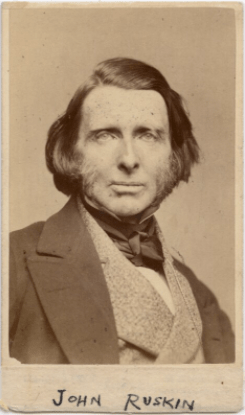
Effie (Euphemia Gray) had married John Ruskin, a celebrated art critic, in 1848 when she was nineteen. Ruskin was nine years older. The two had known each other since Effie was a young girl of twelve. Her family, the Grays, lived in the home in Scotland where Ruskin’s grandfather had killed himself. This may have been an ominous beginning to their relationship.
Ruskin was an artist, poet, writer, philosopher, and social critic. He was patron to the young painters of the age, and to JMW Turner and the pre-Raphaelites in particular. His works influenced other significant figures of his era, including Gandhi and Tolstoy.
At the time of their marriage, Ruskin was already a well-known figure in England. In spite of his many abilities, he apparently had big sexual problems. Six years after the wedding, Effie was still a virgin.
Ruskin’s explanation was as follows:
“It may be thought strange that I could abstain from a woman who to most people was so attractive. But though her face was beautiful, her person was not formed to excite passion. On the contrary, there were certain circumstances in her person which completely checked it.” (https://www.theguardian.com/books/2013/mar/29/ruskin-effie-marriage-inconvenience-brownell)
However, Effie reported that her husband
“had imagined women were quite different to what he saw I was, and that the reason he did not make me his Wife was because he was disgusted with my person the first evening”. (ibid)
In the film, Effie’s life grows more and more miserable. She meets and falls in love with the painter John Everett Millais, a protégé of Ruskin’s. She enlists help from a friend, played by Emma Thompson, who finds Effie a lawyer. Two doctors confirm Effie’s virginity, and Ruskin is served papers for an annulment on the grounds of impotence.
After the film ended, I took to the Internet to find out more about these two interesting people. The actual facts of the dissolution of the marriage and the reasons for it are still a matter of speculation. One biographer claims that the marriage was pushed on Effie because her father was in financial straits. It’s also implied that Effie may have been a bit wanton, but her family destroyed much of her correspondence to protect her reputation.
I was delighted to learn that Effie married Millais, and they had a happy union. She managed his business affairs and together they had eight children. It must have been a huge endeavor in the Victorian era for Effie to extricate herself from her miserable marriage, something that required courage and strength.
If you go to this link, you’ll find more information and some sketches of her by Millais. I like her face.
Here’s a quick expression of gratitude to all of you out there who follow my blog.
THANK YOU!
I’m curious about which posts caught your interest. If you have a moment, I’d like hearing from you in Comments. From your sites I see there are yoga aficionados, musicians, and writers. Any quilters out there?
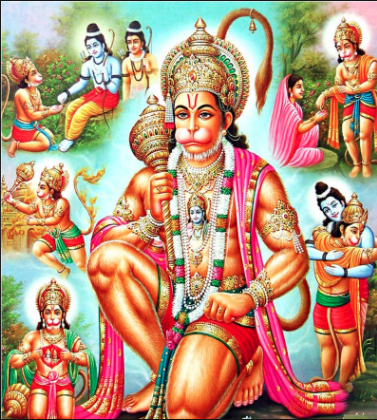
In the pantheon of Hindu gods, Hanuman is the deity with a monkey body. He is the devoted servant of Ram (Rama), an incarnation of Vishnu. Vishnu (if you’re following this) is one of the main deities of Hinduism. As part of the Hindu trinity (Trimurti), Vishnu is the Preserver, Brahma being the Creator, and Shiva, the Destroyer. Rama, as Ramachandra, is the seventh incarnation of Vishnu, the embodiment of chivalry and virtue. And Hanuman is Rama’s servant.
Why am I writing about Hanuman? In the legends that recount Rama’s heroic adventures, Hanuman plays a significant role. His devotion and service to his lord is unwavering. In a peculiar way, Hanuman serves as a model for me in my daily struggles to care for one man with dementia, my husband of almost eighteen years.
Perhaps Hanuman’s most famous heroics appear in the Ramayana, an epic tale of good versus evil. The demon Ravana kidnaps Sita, Rama’s wife. Hanuman discovers where Ravana has hidden Sita and tells Rama. In the ensuing battle between Rama and Ravana, Hanuman destroys several demons and then brings Rama’s brother back to life. Hanuman is the ultimate devotee, willing to risk everything to serve Rama.
I am no Hanuman. Surely the monkey god never gripes about his situation. We never hear him say, “This is not the life I would have chosen,” or “When do I get some me time?” or “I need a break!” Unlike me, Hanuman never complains. He probably never has a bad day.
He is, however, someone to emulate.
In the morning, while I do yoga, I like to listen to Krishna Das’s album Flow of Grace. This is a collection of six versions of the Hanuman Chalisa, a devotional chant to Hanuman. Here’s one to listen to:
My first granddaughter was born in Naples, Italy, in August, 2011. I stayed on with the family for a couple of weeks and then boarded a flight to London, with my yoga mat slung over my shoulder. I was about to begin a TTC: teacher training course, at the International Sivananda Vedanta Center. I was 60 years old.
A hired driver met me at Heathrow. This was a good plan because I had a lot of baggage, too much to drag on buses or the underground across London. It was dark when the driver deposited me in front of a yellow row house in Putney. A swami from Germany greeted me and led me to my room on the top floor.
The room was in a newly renovated part of the Center. It had two single beds, two rolling closets, and a shared dresser. I dumped my belongings and followed the swami back through the entry/reception, through a courtyard and into the kitchen/dining area where she gave me a plate of food she’d set aside. It was a delicious Indian meal. I was surprised to be fed, and grateful for the swami’s thoughtfulness.
Back in my room, I made up the bed and took in the view from the window. Roofs with chimney pots in varying shades of gray and terracotta totally charmed me. I found my way to the bathroom on the floor below, and met my roommate on coming back. Catherine was young, about 24, very focused on her path, and also very pretty. She was a sevite (volunteer) at the Center, working in exchange for classes. She rose later than I and came to bed later, too.
I soon discovered that one had to get up very early to beat the rush on the showers. One student in particular, a guy from Liverpool, was my chief competition at 5:00 a.m. We were expected to show up, dressed in our white yoga pants and yellow TTC t-shirts, for morning satsang at 6:00. At that first meeting, I studied my fellow teachers-in-training with curiosity. I was by far the oldest, save for an exotic-looking man, Omar, in his late fifties. The rest were mostly women, some men, and all around thirty years old. They came from all over: Ireland, Senegal, Spain, Greece.
Satsang included meditation, chanting, a talk, and announcements. There was a short break. Our first yoga class began at 8:00 a.m. At 10:00 we had our first meal of the day. Then it was karma yoga (chore) time. I was assigned to the laundry room, where I ironed whatever was needed. Sometimes I pressed the swami’s shalwar kameez (tunics and loose pants). Sometimes I ironed the brocade garments that the statues wore, sometimes the more elaborate altar cloths.
I liked it down in the laundry room. The washing machines and dryers kept the space warm. People came down to do their laundry, so I got to chat. I studied my vocabulary and practiced the chants we had to learn.
At noon we were back in class for kirtan or the Bhagavad Gita. From 2:00 to 4:00, we had the main lecture in philosophy or anatomy. At 4:00 we were back for more hatha yoga, asanas and pranayama. Dinner was at 6:00. We washed our metal dishes and utensils in cold water in the courtyard. By the satsang at 8:00, I was craving sleep. But no, it was meditation, chanting, and another lecture. Students vied for a place against the wall. At 10:00 they finally let us go to bed.
I cried for the first two weeks. My particular nemesis, other than the rigorous schedule, was the headstand. In retrospect, the main problem was that I lacked the core strength to hold the pose, or even to get into it. We were not allowed to practice near a wall. Falling out of headstand was scary for me and resulted in a neck injury. It felt like my cervical vertebrae were compressed like an accordion.
Another pose that literally caused me grief was shoulder stand. Every time I pushed up into that asana, I’d start to cry. My tears leaked down into my ears. Perhaps it had something to do with the compression of the lungs, because they are “the seat of sorrow.” I contemplated quitting the course and going home.
One morning, my favorite swami stopped me as I rushed to get to class on time. He was an extremely tall Midwesterner who had somehow slid into monkhood via music. When he played the harmonium for chanting, his eyes rolled upward in bliss.
“How are you doing?” he asked.
“I cry all the time,” I answered, tears welling up.
“It’s a common experience,” he said mildly.
For some mysterious reason, that short acknowledgment strengthened me.
We were blessed with a half-day of freedom once a week. I wasn’t interested in touring London, or even visiting a museum. My joy was to wander the high street of Putney, poke around in Sainsbury’s, and eat something interesting at the noodle restaurant. The swami teachers kept the yoga studio fairly cold, so I went into Marks and Spencers and bought leggings to wear under my cotton yoga pants.
The first two weeks passed by in a sort of fascinating, exhausted agony. But, when day fourteen arrived, I was still there.
“Where have you been?” you might ask, when I tell you about the amazing singer/songwriter/violinist Gaelynn Lea. I know, I know– I’m a little behind when it comes to cultural trends. She’s been around for a while, on NPR and Ted Talks.
In the car, waiting for my husband at his appointment, I tuned in to the On Being podcast. Krista Tippett was interviewing Gaelynn Lea. In her introduction, Tippett mentioned that Lea had a genetic disorder (osteogenesis imperfecta) that made her bones brittle, even before birth, and that she’d been in a wheelchair since age three. As they talked, I was captivated by Lea’s music and her realistic, spiritual take on life.
Lea won NPR Music’s Tiny Desk Contest in 2016. You can watch that performance here:
Lea is also an inspirational speaker. When I got home, I listened to her talk on why she chooses Enrichment over Progress. She’s an advocate for people with disabilities as well.
It’s been a long time since I’ve wanted to listen to any contemporary music, but I bought Lea’s album, Learning How to Stay, that includes the songs I want to hear again: Bound by a Thread, Someday We’ll Linger in the Sun, and Moment of Bliss. I’m intrigued by the way she uses the “looper pedal” to build a whole backup for her voice. Her lyrics offer sparks of beautiful language.
Our love’s a complex vintage wine All rotted leaves and lemon rind I’d spit you out but now you’re mine
-Someday We’ll Linger in the Sun
Check out Gaelynn Lea, if you haven’t heard her already, and let me know what you think.
Thank you for subscribing to my blog. As I am already an introvert, the isolation of caregiving and hiding from the corona virus have really impacted my opportunities for connection. So—you’re readership is greatly appreciated.
The most important things in life are the connections you make with others.