Oiling

*

Photo by Augusto Baldera on Pexels.com

*

somewhere

at the top of this world

a native of the snow

greases her skin

with whale oil

a layer between

the dry and the cold

*

here in the winter

I spread coconut oil

on face, feet and arms

a barrier between heated air

and hard water

*

I picture her

my mirror in action

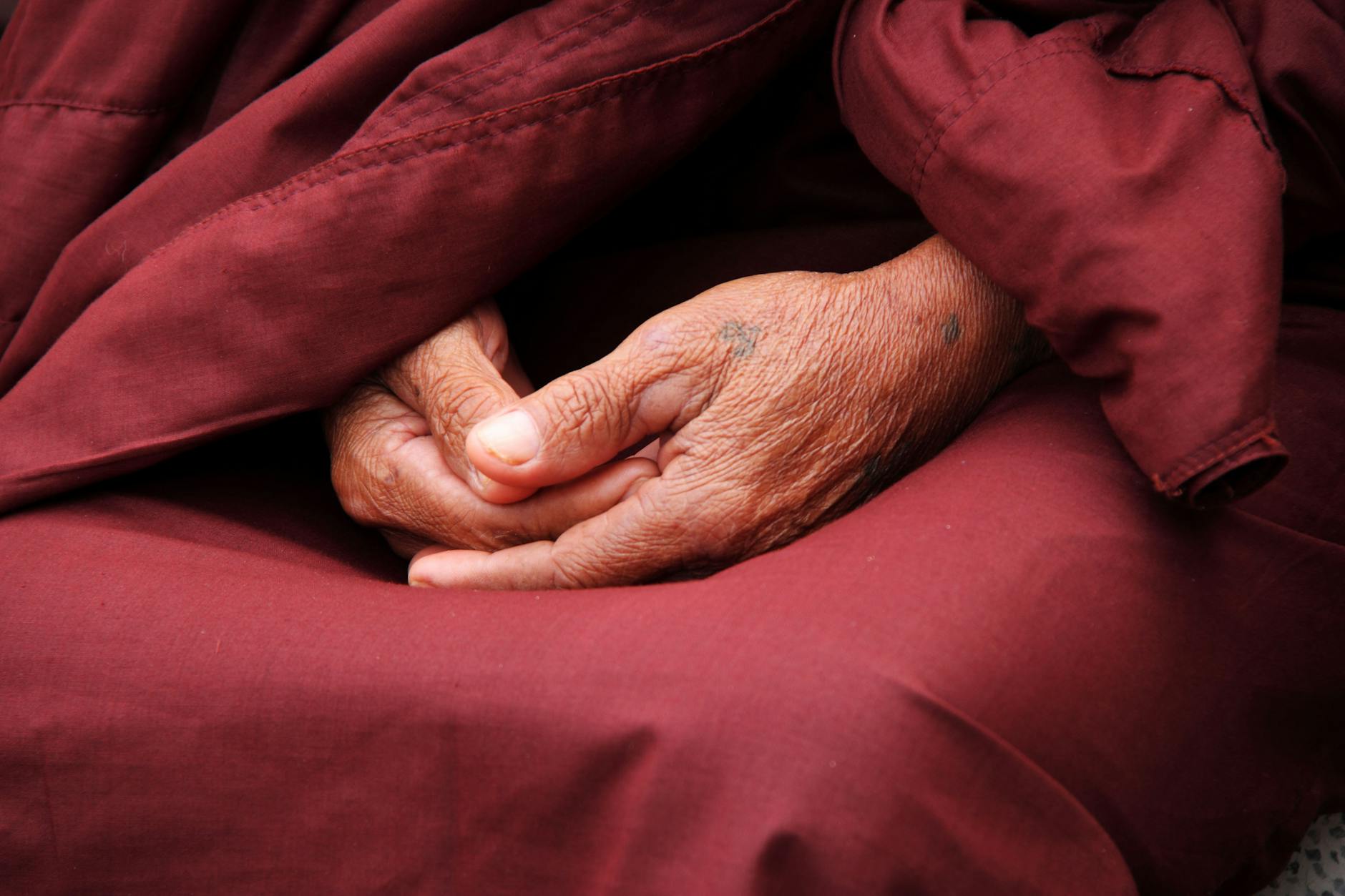
her gnarled brown hands

my wrinkled pale fingers

all shiny with grease

*

wrinkles that etch a map

across years and continents

connecting two wandering lines

into One.

The Manor House: Chapter 13

*

Photo by Pedro Figueras on Pexels.com

*

Chapter 13: Killerton House

            Later that afternoon, as she drives away from Killerton House, Teresa accuses herself of being jaded.  In her travels she has toured many of these old elegant homes that were turned into museums because the owners couldn’t afford the upkeep.  Killerton House was much like the others she has seen, except for the vintage clothing display.  For this exhibit it was worth the tricky drive in the rain.  The mizzle did eventually turn into a steady downpour.  Visibility is limited, so Teresa creeps along the slick roads at fifty kilometers per hour.  She reviews the outfits she saw that came from Margaret’s time.

            A woman in Margaret’s society would not have worn the fancy silk evening clothes on display.  Working women wore simple linen and woolen dresses with a cap or bonnet, an apron, and a shawl for warmth.  The colors were muted, but may have been brighter when they were new.  Hair was worn in loose curls.  Men wore knee breeches, boots, and loose blouse-like shirts for work.  Seeing the clothing of Margaret’s time, and the utensils and furniture the people used, brought the period into focus.

            Killerton House itself is grand indeed.  The grounds are lush with flowering shrubs, climbing vines, and long vistas across emerald lawns.  There is even a bear hut, an odd little cottage with a thatched roof and a barred bay window.  Though the Manor House is not imposing, Teresa prefers its human-sized earthiness.

            Teresa realizes that she is already planning the project, Margaret’s story.  It is typical of her process.  When she is in the middle of writing a piece and can see the end clearly, Teresa begins to mull over the next one.  She considers the research she will have to do.  She must look up the historic events that frame the time period.  She’ll need to find out about the lives of farmers in Devonshire, and, of course, the doings of the smugglers and wreckers. 

Tomorrow, Teresa thinks, I’ll make an appointment to talk to Miss MIcklewhite.  And maybe I’ll rise early enough tomorrow morning to hear what Mr. Braithewaite knows.

 Teresa’s plans occupy her until she is back again at her desk in front of the laptop.  She is wearing a dry sweatsuit; her wet clothes are hanging on the shower curtain rod in the bathroom.  A fresh cup of Earl Grey and some biscuits wait on a small tray.  After answering the five emails, one from her editor, and the rest from her sister, Debo, Teresa opens her writing file.

Cartography

*

Photo by John-Mark Smith on Pexels.com

*

Cartography                     composed on MLK and Inauguration Day

we map our days

on bent backs in cotton fields

on our verdant vineyards’ caretakers

our deli’s clean dishes depend on mojados

our apples are touched by invisible Jamaican hands

*

we map our days on crops of wheezing lungs

we turn away from wrinkled brown hands

we map our towns with dividing lines

we slide our eyes away from men on the corner

*

we map our waking hours

with condemnations and complaints

at night we dream of shadows

we can’t escape the truth of maps

the lines etched deep in America’s skin

The Manor House: Chapter 12

*

Photo by Pedro Figueras on Pexels.com

*

Chapter 12: Ghost Writing

            Teresa shivers.  The bedroom is chilly and damp.  She supposes it’s the sea air.  She pauses to go downstairs to make some tea and get her sweatshirt from where she left it on the sofa.  When she returns to her desk, as is her habit, she rereads the last paragraph she wrote.  She sucks in her breath.  The words on the screen now read:

            I waited until YOU the sound of his footsteps receded WRITE  into the echoing MY tunnel. STORY

            Teresa sinks down until her head rests on the back of the chair.  She holds her hand over her pounding heart, takes a deep breath. 

            “OK, Margaret.  I assume you’re in here and you are listening.  You want me to write your story?  How do you propose I do that?” 

            A chill runs up Teresa’s arm, as if it passed into a dewy spider’s web.  Her eyes dart around the room.  She sees nothing unusual, no mysterious shadow, no floating mist.  Teresa puts her head in her hands, rubs her eyes, stares at the screen.  It hasn’t changed.  The words are still there in caps between her own.  YOU WRITE MY STORY.  She thinks about the August deadline for this article about her father.  She goes back over the events of the past two days, the locked doors, the tricks with the electricity, the heavy sorrow hanging in Margaret’s room in the Manor House.  It would be a sad story to write, but the plot is compelling: danger, romance, loss. 

            “I can’t believe I’m even considering this,” Teresa thinks.  She deletes Margaret’s writing from the last paragraph and saves the morning’s work on the hard drive.  Then, just as a precaution against a meddling spirit, she saves everything on a flashdrive.

            Teresa takes in a long breath, blows it out so that her gray-streaked bangs spray up and stay feathered across her crown.

            “Margaret, if you’re listening, here’s the deal.  I’ll think about writing a story, but you must find a way to get the facts to me.  I’m sure you don’t want me making it up.  And for the last time, stay off my computer!”

            Teresa shuts down the laptop.  She has a quick lunch of leftover spaghetti, grabs her Michelin guide and steps out into a mizzling rain.  It’s not quite drippy enough to require an umbrella, but not light enough to be categorized as fog off the ocean.  Outside, on the way to the car park, Teresa meets the Dutch family carrying their luggage.  Stefan gives her a curt nod.  He is scowling, holding a duffel bag in each hand.

            Teresa comes up beside Rhoda.  “You’re leaving?  I thought you were here for five days.”

            Rhoda’s expression is solemn; there is a glint of fear in her eyes.  Stefan turns.

            “We cannot stay here to be molested at night.”

            “Molested?”  Teresa’s eyes widen at the strong word.

            “Yes, in the night, we could not sit up in our bed.  The girls were crying, and we were pushed down into the pillow.”

            Rhoda continues, “Then, when finally I could get up, I went to the girls’ room.  They were uncovered and crying in their sleep.  I covered them and two hours later they were uncovered again and shivering.” 

            “And you think that it was the gh—“

            “SSSHH!”  Stefan gestures to Teresa with his finger over his lips.   “The children!”  He indicates Tom and the little girls with his chin.

            “Oh.  Well, I’m sorry to see you go,” Teresa says after an awkward silence.

            “I hope you have a more pleasant stay than we have had,” Stefan says.

            Teresa just nods, not knowing how to respond.  Instead of continuing to the car park, she turns onto the path to the Tea Shop to buy a scone and a cup of tea to go.  Ted is sweeping up under the picnic tables.

            “Good morning, Ms. Salerno.  Where are you off to on this misty morning?”  Ted is a tall fellow with a beer belly that bulges out over his jeans.  He affects a cowboy look.  The buckle on his leather belt is a brass buffalo head, and he wears a cowboy shirt with snaps, a neckerchief, and boots with worn-down heels.

            “I thought I’d go to Killerton House.  But I just saw the Dutch family leaving.”

            “Aye. The gentleman demanded his money back.  Miss Micklewhite was quite put out.  She thinks Margaret took offense at the guy’s remarks.”

            “About there being no scientific evidence for the existence of ghosts?”  Teresa cannot help smiling.

            “Exactly.”  Ted smiles too.  “Herself is particular about the folks who stay here.  Mostly she just plays with the utilities, but she can do worse.”

            “Has she ever caused serious harm?”

            “Unh.”  Ted reaches under a table with his broom.  He turns away from Teresa and leaves her staring at his back.

            “Hmm,” Teresa narrows her eyes.  Was that a yes or no?  Obviously, the topic is closed as far as Ted is concerned, but later she’ll see if Trish is more forthcoming.

            With her tea and scone in hand, Teresa sets out again for the car park.  The Dutch family is gone.  The dry rectangle where their car had been is turning dark with the damp.

            As Teresa drives, she keeps confusing the turn signal with the lever for the windshield wipers.  It’s hard enough, Teresa thinks, to be driving a stick shift on the wrong side of the road.  Add in rain and windshield wipers and she feels like she needs two more hands. 

The Manor House: Chapter 11

*

Photo by Pedro Figueras on Pexels.com

*

Chapter 11: Mother

            After Junior died, my father was never the same.  He had Junior’s Purple Heart medal framed.  It hung above the living room mantle with a photograph of Junior in uniform.  I was still living at home, attending college.  I remember feeling such relief each morning when I shut the door on that sad house.  I’d stay in the library studying, hoping that my parents would be asleep or out when I got home.  Sometimes, I’d smell my father’s cigar when I was taking off my coat in the foyer.  He would be sitting in the living room, slumped in his recliner.  A half-smoked Cubana between his fingers, he’d swirl port in a glass and stare at Junior’s picture.  He appeared bulky and toad-like hunched in his chair, a bit reminiscent of Winston Churchill.  I tiptoed past the doorway, loathe to disturb him, even though I knew in truth he wouldn’t notice me if I stomped through like an elephant.

            About six months after Junior died in Vietnam, I discovered that my mother was having an affair with Cousin Alberto.  It happened like this.  I had stayed late at the library.  My friend, Larissa, and I took the subway downtown.  I got off at my stop and waved to Larissa through the closing train door.  I started up the long flight of stairs to the street.  In my mind I was still going over the points of the essay I was writing about The Brothers Karamazov.  I saw the couple at the top of the stairs, embracing shadows backlit by the neon lights of Mario’s Pizzeria.  Something about their posture tugged me out of my Russian musings.  Then I recognized my mother’s red burnt-out velvet scarf with the long fringe.  My heart halted, jumped, and pulsed in my throat.  I stood in the darkness of the stairway waiting, watching.  They kissed, drew apart, kissed again.  I saw the man’s face: Cousin Alberto.  My thoughts came in disjointed fragments.  Cousin Alberto!  He had to be at least a decade younger than my mother.   And what a creep, after all my father did for him, bringing him over from Italy, giving him a job at the company.  He even rented an apartment to Alberto, cheap. 

            Finally, the two went their separate ways.  Mother clicked off down the street in her four-inch heels.   Cousin Alberto turned and came slap-slap-slap down the subway steps.  I froze against the tiled wall.  It was cold on my back.  Our eyes met.  He recognized me, then cut his eyes away.  I waited until the sound of his footsteps receded into the echoing tunnel.  Then I followed my mother home.

The Manor House: Chapter 10

*

Photo by Pedro Figueras on Pexels.com

*

Chapter 10: Night

            Teresa looks at the clock on her laptop.  It is late, 11:40.  She has been writing for over two hours.  She rubs the back of her neck, rolls her shoulders.  With the computer shut down, Teresa gets ready for bed.  She makes sure the flashlight is on the nightstand before turning off the bedside lamp. 

            Sometime before dawn she is awakened by a dream.  Unlike most of her dreams, this one is clear and realistic, not murky with nonsensical events.  At first in the dream, she is at the park with her father, a stocky, swarthy man with thick black eyebrows.  Then the man changes into a taller, leaner person with brown hair and piercing blue eyes.  He is holding the reins of a small tan horse.  The Teresa of the dream knows him as her father.  His love for her lights up his eyes like small flames.  He lifts her up onto the butterscotch pony and begins to lead her around the circle of green grass. 

            “Oh, Da,” she says to the man.  ‘Is she mine to keep?”

            “Yes, my little love, she’s yours to keep.”

            Teresa awakens with her cheeks wet with tears.  She feels for the light switch.  Her chest is aching with yearning for this man, this dream father she adores whose eyes are alight with love.  Oh, how she longed to see that look in Father’s eyes.  Teresa wipes her face on the edge of the sheet. 

            I tried so hard, she thinks, but Junior got it all.  She recalls Junior as he was when he joined the Army.  He was a head taller than Father, with smoldering black eyes and a shock of wavy brown hair.  When not in uniform, he always stood with an attitude, hips cocked, thumbs in his belt loops.  He’d been a handsome man.  His death drew a dark curtain over all their lives.

            Teresa lies awake until she hears the birds begin their dawn symphony.  Two cups of tea help to chase away the night fog, yet the heaviness of loss is hard to dispel.  She decides to walk about the grounds before her morning work session.  The wrought-iron garden gate is open, and the gardener is kneeling on one of those kneepads avid gardeners like to use.  He is wearing the same crushed felt hat, but the pipe is absent.

            “Good morning,” she says, even though the morning still feels soggy and disjointed. 

            “Ah, good morning to you.  A fellow early bird, I see.”

            “Yes.  I’m Teresa.  Staying in the Garden View Suite.”

            “Yes, yes.  The writer from America.”   He removes his earth-smudged right glove and holds out his hand.  “Names Braithewaite.  Morris Braithewaite.”  His fingers are calloused and dry; it’s like holding stale toast.  In the bright morning light, Teresa makes him out to be at least seventy-five, maybe much older.  He has that leathery look of folks who have spent years in harsh weather.    Teresa is startled by the name he offers. 

            “Braithewaite?  As in the smuggler family that Margaret belonged to?”

            “The very same.  My grandfather bought back the property during the Great Depression.  Land was going for a song then.”  His eyes twinkled.  “But we’ve given up the wrecking, at least for the time being.”

            Teresa smiles with him.  “Did you grow up here at the Manor House?”

            “Oh, no.  Just spent holidays here.  It was a bit too rustic for my taste.  That was before the museum, before the cottages were added on.”  Mr. Braithewaite pulls his pipe and a lighter out of his breast pocket. Teresa watches as he sucks the flame into the tobacco until it is well-lit.    Mr. Braithewaite raises the pipe.  “My only vice,” he says.

            “And Margaret, the ghost.  Have you encountered her?”

            “Never.  But I keep my dress sword underneath the bed.  Deters intruding spirits.”

            “I’d like to hear more about the Manor.  Sometime.  If you’re willing,” Teresa says.

            “Certainly. You can find me here most mornings.  It’s good for me to take a bit of a rest and have a chat.  These old knees are not what they used to be. “

            “Thanks.  Well, I should go back to my work.  It’s nice meeting you, Mr. Braithewaite.”

            “Likewise.  Ta.”  He salutes her with the stem of his pipe, then lowers himself back onto his gardener’s knee pad.

The Manor House: Chapter 9

*

*

Chapter 9: Junior

            I had to be perfect.  If I were perfect, my father would love me again.  I obeyed my teachers to the letter.  I got top grades, even in math, a subject that caused great agonies once I reached sixth grade.  But King Olive spent less and less time at home.  He went to Italy two or three times a year, often for several weeks.  Sometimes my mother went with him.  After the twins were born, we moved into a big apartment on Central Park West.   We children always had a governess to look after us and a housekeeper to cook and clean.  The little girls, Dahlia and Deborah, barely knew Father at all.  On his part, he could never put the right girl’s name on the right face.  Junior and I called them Dolly and Debo.  Junior liked to tease them by holding a treat or a teddy bear out of reach until they wailed in frustration.  I became their protector, especially if the governess at the time proved to be too harsh.

            One governess, a young French woman named Monique, was our favorite.  She was kind and patient.  She never hit anyone, not even Junior, and he used to get into terrible mischief.  He liked to throw bags of garbage on to the people below our sixth story window.  While I was at the library, he tied the twins to their bedpost.  Once he locked them out on the fire escape when it was raining.  

            One day we were walking with Monique in Central Park.  I noticed some mothers watching us and whispering as we passed by.  Their eyes traveled up and down, evaluating our clothing.

            “Monique,” I said, “is Father rich?”

            “Yes, I think he would be considered rich,” she answered.

            “Very rich?” I persisted. 

            “I would say so.  He has the company Salerno, and the car dealerships.  He owns your apartment building and some others, too, yes?”

            It was true. I glanced again at the staring women with their narrowed eyes and felt my cheeks get hot.  The little fur-lined hat that I loved for its softness suddenly felt itchy and conspicuous.  I took it off.

            The society section of the newspaper began to show photographs of my parents at concerts and gallery openings.

            “Anthony Salerno, known as King Olive, and his lovely wife, Adela, attended the opening night of Don Giovanni at the Metropolitan Opera House.”

            “Anthony Salerno, King Olive, shakes hands with the president of General Motors.” 

            “Adela Salerno, wife of Anthony Salerno (King Olive) cuts the ribbon on the season’s latest model Fiat just arrived at Salerno’s Fine Cars.”

            Junior was in sixth grade and I was in tenth grade when he was kicked out of the public school.  The upshot of that was Catholic school for all four of us.  It was devastating for me to start anew in my second year of high school.  At this point in our lives, Junior and I fought constantly.  I was convinced that the girls at our new school avoided me because I was Junior’s sister, and his reputation had preceded him.  Yet, after some weeks, I made a few friends and showed myself to be a star pupil.

            Father believed the nuns would straighten Junior out, but they didn’t.

            “Why can’t you be like Teresa?” Sister Margareta asked Junior every time he was caught. 

            Junior just scowled and mumbled and concocted a worse transgression.  He peed out the window of the boys’ bathroom, plugged up the toilets with paper towels to cause floods, and started food fights in the lunchroom.  Junior never lied about what he had done. He admitted guilt with a cold glitter in his eyes.  When Father was home, he would yell at Junior in English and Italian.  Then he’d spank Junior with a belt, but after a few whacks he’d drop the belt and take Junior in his arms, both of them weeping.  “You’re my only son, my right eye.  Make me proud of you, Junior.  Be a good boy.”

            My mother no longer worked in the Salerno office.  Father had rented space in a building on Fifth Avenue.  He had a secretary, Mrs. Romano.  He brought one of Uncle Gio’s sons, Alberto, from Italy, and trained him to be his assistant.  Without secretarial work to do, Mother played bridge, ate out with friends, or went shopping.  She did not spend more time with us.

            When I was a senior in high school, Junior did something seriously bad.   He was fourteen.  All I knew at the time was that it involved a girl in tenth grade, alcohol, and the police.  He did it on the day of my graduation.  I remember sitting on the stage in my white polyester robe and mortarboard, searching the faces in the audience for my father.  My mother sat with the twins in the third row, her coat on the back of the seat beside her.  I was, of course, the valedictorian.  After the principal, Mother Mary Alice, gave her speech, it was my turn.  The seat next to my mother was still empty.  Swinging between rage and sinking disappointment, I managed to say the words I had memorized.  For me, the day had gone as gray as cardboard, and as flat.  At the end, I thanked the faculty and my parents for their support.

            After the diplomas were handed out, we took a cab back to our apartment.  Father had insisted on throwing a party for me. 

            “After all, you are the first person in my family to go on to university.”

            Some of my friends stopped by.  No one stayed long because they had celebrations of their own at home. 

            My best friend, Bridget, asked, “Where is your father?”

            “Junior got in trouble.”

            “Again?”  she rolled her eyes.  “What a jerk.  What’d he do this time?”

            “I don’t know.”  Tears threatened. I refused to cry until later, when I retreated to my room after most of the guests had left.  All those who remained were part of my parents’ inner circle, along with Cousin Alberto.  I heard my father come in.  He knocked on my door.  I pretended to be asleep.

            In the fall I began Columbia University.  Junior was sent to the New York Military Academy. 

“If the nuns can’t straighten him out, maybe the military can,” said Father.

            Somehow Junior lasted for all four years.  It was probably my father’s generosity that kept him enrolled that long.  There’s a Salerno Gym and a Salerno Science Complex on the campus.  Junior’s grades were barely passing, but they were high enough to get him into the Army as soon as he graduated.  He died in Vietnam, by stepping on a land mine.

The Manor House: Chapter 8

*

Photo by Pedro Figueras on Pexels.com

*

Chapter 8 Tricks

            The summer sky in England remains light until late into the evening.  Teresa arrives at the Manor House as the stars appear.  In the kitchen, she puts a pot of water on to boil for spaghetti. 

            “These electric stoves take forever!” she mutters.

             Teresa goes upstairs to turn on the computer and check her email.  She stops in the doorway, brows furrowed.  Books are upended; papers and tourist pamphlets are strewn across the floor as if scattered by a gust of wind.  The window is closed and has been since last night.  Teresa frowns.  She is sure that she stacked the books and papers before leaving for lunch.  She looks around the room with narrowed eyes.  Everything else is as she left it.  Had Trish or Ted come in to straighten up?  Perhaps one of them left the door open and…

            No.  Teresa shakes her head.  Papers whisked to the floor, maybe.  But not heavy books.  She turns on the laptop and goes back to the kitchen.

            The water in the pot is not boiling yet.  In fact, it’s still cold.  The burner is off.  Perhaps she turned on the wrong burner?  No, all the coils are cold.  Teresa blows her bangs up in a huff.

             “OK,” she says to the empty kitchen.  “You win, Margaret.  But please listen.  I’m here on a holiday.  Well, part holiday, part writing assignment.  I don’t mean you any harm.  The Manor House is a lovely place to stay.  So would you please, please stop playing tricks on me and let me enjoy my vacation?” 

            Teresa stops.  She is whining like a five-year-old.  Her face flushes.  Here she is, begging a ghost.

            Teresa makes her spaghetti without leaving the kitchen.  While she waits, she reads the first chapter of Jamaica Inn, glancing up every few minutes to make sure the stove is still on.  She eats and washes up.  Before taking her tea upstairs, she checks the stove burners.  If Margaret can turn them off, she could conceivably turn them on.  Margaret might be able to start a fire. Teresa shivers at the thought.

            In the bedroom, the computer screen is on, displaying a new blank page.  Three letters hang in the middle of the blue-white rectangle:

                                    Y

                                                            O

                                                                                    U                                                                                                                                                                                                        

            Teresa flops down on the side of the bed.  The room feels chilly, almost damp. 

            “Now what?”  she says into the cool air.  “Do you want me to leave?”  Teresa feels a surge of anger.  “Listen, Margaret, the tricks are one thing, but that laptop is my livelihood.  I have to write this memoir about my father by August.”  She stands up and goes to the desk.  “Look, I’m saving your page.”  Teresa clicks on “Save as” and types in Margaret.  “And anyway,” Teresa continues, “you died too long ago to know about computers.  So let me be.  I have to work.”

            Teresa opens a new page on the laptop.  After typing for a while, she realizes that the room is no longer damp and cool, but warm, as it should be, on such a summer night.

When

*

Photo by Rafael Guajardo on Pexels.com

*

Greetings, blog followers. It occurred to me that following the chapters of The Manor House might be tricky to maintain the continuity week to week. I’m still writing the occasional poem, so I thought I’d post some from time to time. Please do respond with comments. I’d love to know who is out there reading.—Thank you from Kim

*

When I die

My body will rot like compost

or burn like an old pine log

My scent—patchouli and orange—

will remain in my sheets and sweaters,

dissipating in days or weeks

*

When I die

The eggs and apples I bought

will be eaten by others

or tossed away

My clothes dispersed

to family or charities

*

When I die

they’ll close my bank accounts

cancel the newspaper subscription

any medical appointments

notify pension and social security

put the house up for sale

*

When I die

the Balkan dancers will miss me

My life’s furnishings and objects

displayed in a yard sale

for strangers to pick over,

perhaps to buy and value

*

When I die

my essence will drift away

a memory dwindling like smoke

while my ecstatic soul, free,

will rejoin its Source

as a raindrop falls into the ocean