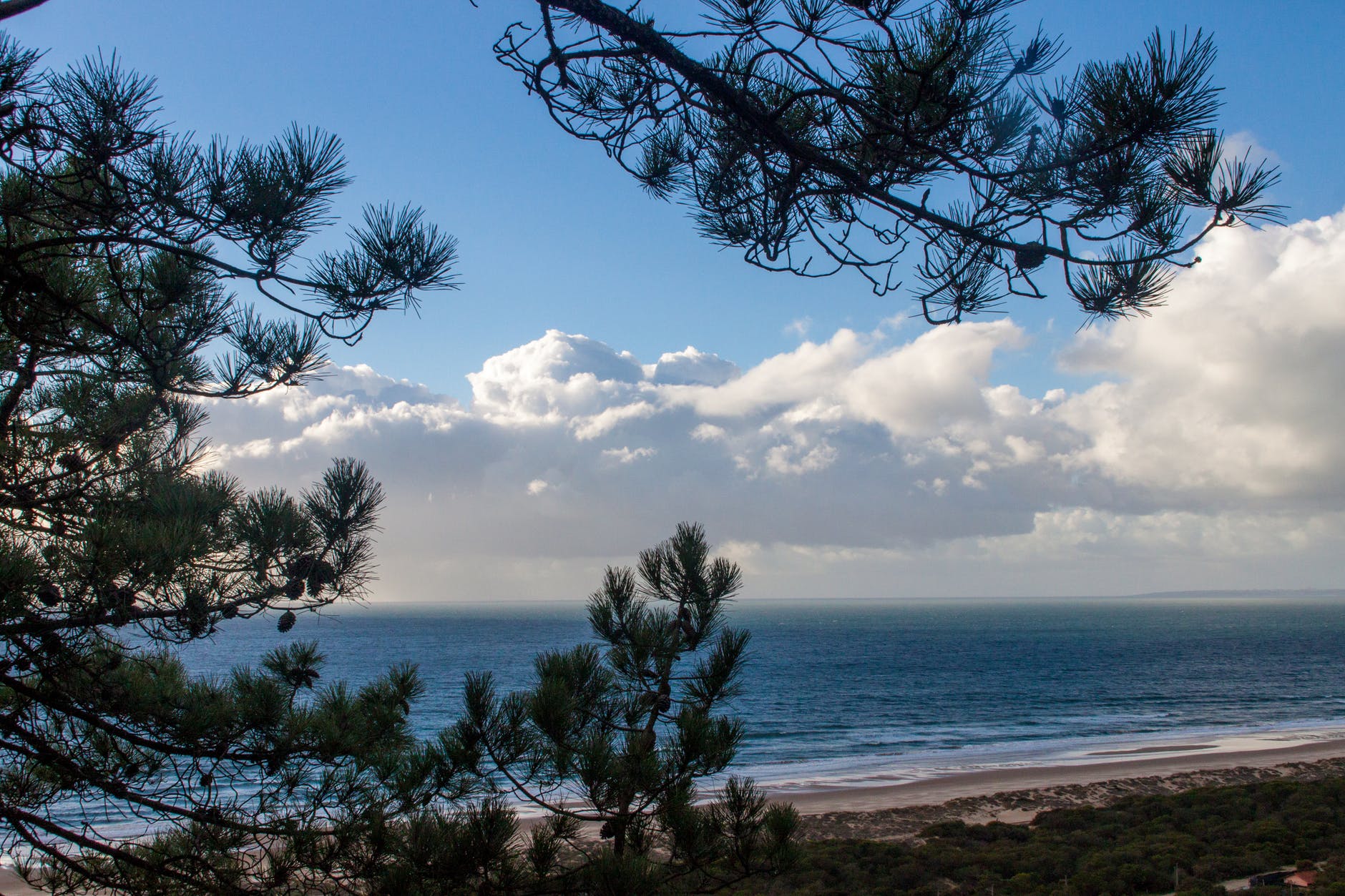
Signs

*

Photo by eberhard grossgasteiger on Pexels.com

*

Woodsmoke from the neighbor’s chimney

prickles our noses.

The old apple tree is down,

split white on mud.

Here a scattering of gray fur,

the remnants of a fox’s meal.

*

Long meadow grasses beaten down

dampen our boots

on the slope to the river

brown and swirling.

See where the water rose highest,

rotting leaves strewn

across the overturned canoes.

*

Rock wall tumbled down,

hidden by wild rose and fescue

where the snakes winter.

Squish uphill to home,

past a branch erupting orange lichen.

A thick vine of wild grape

winds its sinuous way

into bare branches above.

*

Feel how the rough twist of vine

becomes our wrists.

The boundaries blur.

Part tree, part muscle and bone,

entangled in the wild,

we see only light.

*

Welcome, new followers! And thanks to all of you readers out there!

Satya II: At the Fair

*

Photo by Szabolcs Toth on Pexels.com

*

The Satya stories are from my archives.

*

When Satya told me her mother and sister had her committed, I couldn’t stop thinking about it.  The questions popped into my head at the weirdest times, like when I was eating a crème filled chocolate doughnut on my coffee break, or brushing my teeth before bed.

            Satya and I were on the Arts Council, and she was preparing to do a yoga demonstration for a Health and Wellness Fair in our town.  Her daughter, Devi, and I worked as ticket-takers on the Saturday of the fair. 

            Toward the afternoon, the stream of visitors slowed to a trickle.  The two of us sat together at the long table sipping lemonade.  It was one of those terrible humid days that make me wonder why I ever left Arizona.

            “Your mom is brave, doing yoga in this heat.”

            “She’ll be wiped out tonight,” Devi agreed.

            “How long has she been doing yoga, anyway?”

            “She started in the psych hospital, I think,” Devi said.  “I was little, maybe four or five.”

            “And you were living with your grandma then?”

            “For a little while.  And then with my father.  But that turned out bad.”

            “You don’t have to answer this,” I said, “but I’m curious why your mother was in a hospital.”

            “Oh, it’s no secret,” Devi said.  “Gosh, it’s hot.” She lifted her curly hair off the back of her neck.  “Mom was talking to the archangels.  Which wouldn’t have been a problem—she still does—it’s just that she told the wrong people about it, like my grandma, the super WASP.”  Devi gave a dry chuckle.  “Ha, and worse yet, she told my grandma what the angels said about her.”

            “Not good, I gather,” I was probing, but Devi didn’t seem to mind.

            “Not good,” she confirmed.  “So my grandma and my aunt Delia got my mom committed.  Mom could have lied about her visions, but she wouldn’t deny the angels.”

            “You said she still talks to the archangels?”

            “Oh, yeah, but not as often now, what with the yoga classes and me to look after.”

            “What’s it like, having Satya for a mom?” I asked.  I thought of my own three kids, how the two teens are so easily embarrassed, like when I sing in the supermarket.

            Devi turned to look at me directly.  Her face was still and her usually wide, relaxed lips were drawn into a line.  “What do you mean?”

            I drew in a breath; aware I’d gone too far.  “Well, uh, like she’s not what people would consider…”

            Devi pushed her chair back and stood up.  “I have to check in with her now,” she said, and walked away, her lemonade cup in one hand, and running the other hand through her curls.


            “Whoa,” I blew out the breath I’d been holding. 

On That Morning

*

Photo by Alexas Fotos on Pexels.com

*

On that morning,

a thin crescent moon

dangled in a cloudless sky

peach apricot light smeared the trees

and the rambling water

*

On that morning,

a fox left his scat on the gravel

a mixture of tarry, seed-flecked turds

his way of owning the meadow

*

On that morning

the Queen Anne’s lace 

and mushrooms

glowed bone-white,

sudden alien visitors,

beacons in the mist

*

On that morning

a heart beat hidden under

a black trench coat

sought truth and miracles

waiting

for God to answer

Shipwreck

*

Photo by GEORGE DESIPRIS on Pexels.com

*

Angels make their hope here

on this struggling planet

of refugees and school shootings.

Why do they persist?

Because they’re angels.

How can they not weep for us?

*

Today the radio sent me

back to Sandy Hook.

Twenty children, six adults

Shot

And before Adam Lanza

entered that school,

he shot his mother.

*

What happened next?

*

Alex Jones of Infowars

told his listeners

that the shooting was staged

A government conspiracy

to take Americans’ guns away.

*

Grieving families were harassed.

Told that their children had been seen

Alive.

*

Will Mr. Jones have something to say

about the Russians bombing

a maternity hospital?

*

Oh, angels, do you have words

for this insanity?

I don’t.

Do you have hope?

Help for us.  Hope for us.

We are foundering.

***

Photo by Mabel Amber on Pexels.com

Welcome new followers! Thanks for reading. Comments are encouraged!

Satya I: Tea with Satya

*

Photo by Julia Sakelli on Pexels.com

*

Here are a series of stories about Satya from my archives.

*

Satya 1: Tea with Satya

            “My mother and my sister had me committed.  They got custody of Devi.”

            Satya said this the second time we had tea together. By then I’d met Devi, a tall, filled-out girl about sixteen years old.  Devi’s eyes were a young egg blue behind black frame glasses.

            Satya was tall, too.  She gestured widely with her pale arms when she spoke.  Her voice was smoky and deep, soothing like ocean waves.

            We were drinking tea outdoors on her patio.  Satya sat in a peacock fan-back rattan chair.  Her black, curly hair looked stark against the white reeds of the chair.  Her eyes were like an endless sky.  After she spoke those words, she went silent and simply held my eyes unblinking until I had to glance away.

            I wanted to know more: why had she been committed?  How long?  How did she get Devi back?  I didn’t ask.  Those eyes of hers stopped me.  They seemed to be challenging me to ask a better question, a profound one.  So I waited instead.

            Satya took a sip of her ginger tea and said, “I don’t have any contact with my family now.  It was too painful.  There was so much bad energy.  Easier to cut off contact completely.”

            “Mmm,” I said, being as non-committal as possible.  Thinking, “It’s not so easy to get someone committed.  Or is it?  A friend told me a long time ago that in some places, it takes only three signatures.

            Satya’s dog pushed her nose through the flap of the dog door.  It was a vizla, one of those golden dogs with the racing body, like a greyhound.  She padded over to Satya and placed her head on Satya’s knee.

            “This is Belle.  She is my familiar.  My sweet old dog Lazarus died two years ago and came back to me in her.  It’s so good to have him back again.”  Satya rubbed Belle’s head and traced a symbol on it with one pale finger.

            “This is my last lifetime,” she said to me, in the same way she might have said, This is my left shoe.  “That’s why I’ve had so much to deal with, you know, tying up all the loose ends.”

            I nodded.  It made perfect sense on that patio, with Belle waving her slim tail, with the taste of ginger and lemon prickling my throat, with the shifting shadows of leaves on the warm bricks.

            “I don’t go out much here,” Satya said.  “Too much bad energy out there,” she gestured toward town and the world beyond.  “How did you like class today?”  she asked.

The studio where Satya teaches yoga is behind her house.  This is where we met when I signed up for classes.

            “It was good for me.  My back is looser than it’s been in weeks.  No pain at all,” I answered.

            Satya smiled.  “You took some furniture out of your bedroom, right?”

            I was sure I hadn’t told Satya about rearranging my bedroom.  I had finally sold my mother’s oak dresser, after long agonizing days of indecision and guilt.  I hated the piece and its memories, but I’d carried it with me for years, for moves all over the country.

            “How did you know?” I asked.

            Satya waved her hand.  “I see things sometimes,” she said.

*

If your middle grader has blown through Harry Potter, give them these to read.

Available on Amazon and from Handersen Publishing.

Creation I

*

Photo by Sandeep Singh on Pexels.com

*

Shiva’s skin glows blue.

He sits on a tiger skin

on a rock

on top of Mount Kailasa.

He is still and silent.

Complete.

The sound is OM.

He rests in his own delight.

His heart is the sacred center.

He is a perfect, pure lake of love.

He needs nothing.

Desires nothing.

*

Shakti comes like a warm breeze.

Her golden veil billows out behind her.

Her movement stirs the still water.

Circles of ripples intersect in spiral patterns.

*

Shiva does not move.

*

Shakti tickles the lake’s surface

with slender brown fingers.

Fish appear—

sunset orange, crystal white,

transparent fins waving.

Shakti strokes the sky,

pokes holes with her fingernail.

Bursts of light shine through

the indigo dome.

*

Shiva opens one eye, just a slit.

*

Shakti smiles a secret smile.

She hums a lyric tune.

She dances on the surface of the lake.

Where her feet touch, islands appear.

Verdant vines twine up blossoming trees.

Jasmine scents the gentle air.

*

Shiva’s nose twitches.  His nostrils widen.

*

Shakti twirls to her own music.

Her hair flies free.

Where it touches the sky, birds take flight—

crimson feathers, feathers of turquoise and lime green,

dipping, floating against the cobalt sky.

*

Shiva opens both eyes.

The Writing Voice: M.T. Anderson

*

*

Feed and The Astonishing Life of Octavian Nothing

The importance of voice, the way a narrator or character speaks, is a topic that writers often discuss.  How do we make voice authentic?  How do we keep the voice consistent throughout a story? Does the voice go with the character? 

Have you ever read a book of fiction, and thought, “No five-year-old child would speak like that?”  It’s happened to me.  My appraisal of the author immediately drops several notches.  Or perhaps you’ve come across a dialogue that sounds stiff and unnatural, or a dull narrator?  The ability to write voice well requires talent and skill and a good ear.  M.T. Anderson has all three.

In his YA book, Feed, Anderson creates the voice of Titus, a teenage boy, living in a dystopian world.  Anderson even invents a futuristic vocabulary for Titus and his friends.

Chapter 1 Your Face is not an Organ

            We went to the moon to have fun, but the moon turned out to completely suck.

            We went on a Friday, because there was shit-all to do at home.  It was the beginning of spring break.  Everything at home was boring.  Link Arwaker was like, “I’m so null,” and Marty was all, “I’m null, too, unit,” but I mean we were all pretty null, because for the last like hour we’d been playing with three uninsulated wires that were coming out of the wall.  We were trying to ride shocks off of them. So Marty told us that there was this fun place for lo-grav on the moon.  Lo-grav can be kind of stupid, but this was supposed to be good.  It was called the Ricochet Lounge.  We thought we’d go for a few days with some of the girls and stay at a hotel and go dancing.

Here is the ISBN summary for Feed:

In a future where most people have computer implants in their heads to control their environment, a boy meets an unusual girl who is in serious trouble.

In Feed, Anderson has a lot to say about our consumer society and marketing, and the benefits and costs of technology.

In Anderson’s novel The Astonishing Life of Octavian Nothing, Traitor to the Nation, Octavian’s voice is educated and observant, as befits a boy raised by scientists in Boston during the American Revolution.

I was raised in a gaunt house with a garden; my earliest recollections are of floating lights in apple-trees.

I recall, in the orchard behind the house, orbs of flame rising through the black boughs and branches; they climbed, spiritous, and flickered out; my mother squeezed my hand with delight.  We stood near the door to the ice-chamber.

Around the orchard and gardens stood a wall of some height, designed to repel the glance of idle curiosity and to keep us all from slipping away and running for freedom; though that, of course, I did not yet understand.

How doth all that seeks to rise burn itself to nothing.

The book description, in part, says:

… Set against the disquiet of Revolutionary Boston, M.T. Anderson’s extraordinary novel takes place at a time when American Patriots rioted and battled to win liberty while African slaves were entreated to risk their lives for a freedom they would never claim.  The first of two parts, this deeply provocative novel reimagines the past as an eerie place that has startling resonance for readers today.

Octavian Nothing, Volume 1 won the National Book Award.  Feed was a National Book Award finalist.  As well as being a master of voice, M.T. Anderson will also invite you to think.

Weary

*

Photo by Pixabay on Pexels.com

*

Sometimes

doing the same thing every morning is safe and familiar.

Sometimes

saying the same thing every day is like putting on a lead coat.

Sometimes

returning dirty dishes to be rewashed, I wonder, “Is it worth it?”

Sometimes

 I am mean and impatient and full of guilt.

Sometimes

I see that I live in great comfort.

Sometimes

I think evil thoughts.

Sometimes

his warm hands on my feet are all I have.

Touching the Heart

*

Photo by Los Muertos Crew on Pexels.com

*

Here is another teacher story from my archives, dated 2004.

Paloma wept over a picture book today.  She came into my office-sized classroom hot and sweaty from recess.  First we studied the curriculum lesson, a poster about thermal currents.  Then I handed her a book to read: Now One Foot, Now the Other by Tomie DePaola. 

“Read this and then choose from the list and write a response in your journal,” I told her.  On the crowded walls is a list of possible ways to respond to reading: What surprised you?  How are the people in the book like your family?  How are they different? Etc.

            As Paloma read, I previewed the lessons for the coming week and made notes about materials needed for the next project.  At some point she paused in her reading and said, “It’s sad.”

            “Yes.” I said.

            We returned to silence and our respective tasks.

            DePaola’s story is about a five-year old boy, Bobby, and his Grandfather, Bob.  Bob teaches Bobby to walk.  They have a loving, special relationship that DePaola depicts with an economy of words.  Then Bob has a stroke and loses his speech.  Bobby helps his grandfather learn to walk again.

            When she finished the story, Paloma chose to write about what impressed her.  We were quiet again as she wrote a page in her notebook, and I organized my notes in my daily log. 

            “Done,” she said.

            “Do you want to read it to me?”

            “No, you read it.”

            I read aloud a passage about Paloma and her grandparents in Mexico.  She told how they taught her to take care of the animals and feed the chickens. 

            I finished reading and looked up.  Her eyes were shiny with tears.  We talked about missing grandparents and I told her about growing up with only my grandmother, who was not a warm and fuzzy grandmotherly person.  She asked about my mother and father and how they died.  We talked quite a while past her lesson time.

            After she left, I felt an angel had passed over.  Something magical happened there.  I sensed it but I couldn’t say what it was.  A heart was touched by a simple story; a connection was made between a 10-year-old Mexican immigrant girl growing up in the year 2004 and a five-year-old Italian boy growing up sometime before World War II.

            It’s a tribute to Tomie DePaola that he writes so well, and also to Paloma that she allowed so much of herself to be present and sensitive.  As for me, I think I witnessed a small miracle today.

*

Available on Amazon and from Handersen Publishing

Lesson 278

*

Photo by Pixabay on Pexels.com

*

Father, I ask for nothing but the truth.

For this I must be a steel container,

able to withstand searing heat

or Arctic cold.

I have had many foolish thoughts about myself and my creation

stamped and battered with labels

shy girl, poet,

teacher-artist-mother-wife

and have brought a dream of fear into my mind.

wrinkles, forgetting,

loss of purpose, death

Today I would not dream.

Courage, crone!

Release the balloon of reveries,

Let it zigzag, sputter,

airless bit of rubber rag

I choose the way to You instead of madness and instead of fear

Guide me on this rocky, narrow path,

this thin, true spiral thread,

the other way, a murky dark maze

For truth is safe, and only love is sure.

From the Course in Miracles, Workbook for Students, Lesson 278, p. 435.