Mother

*

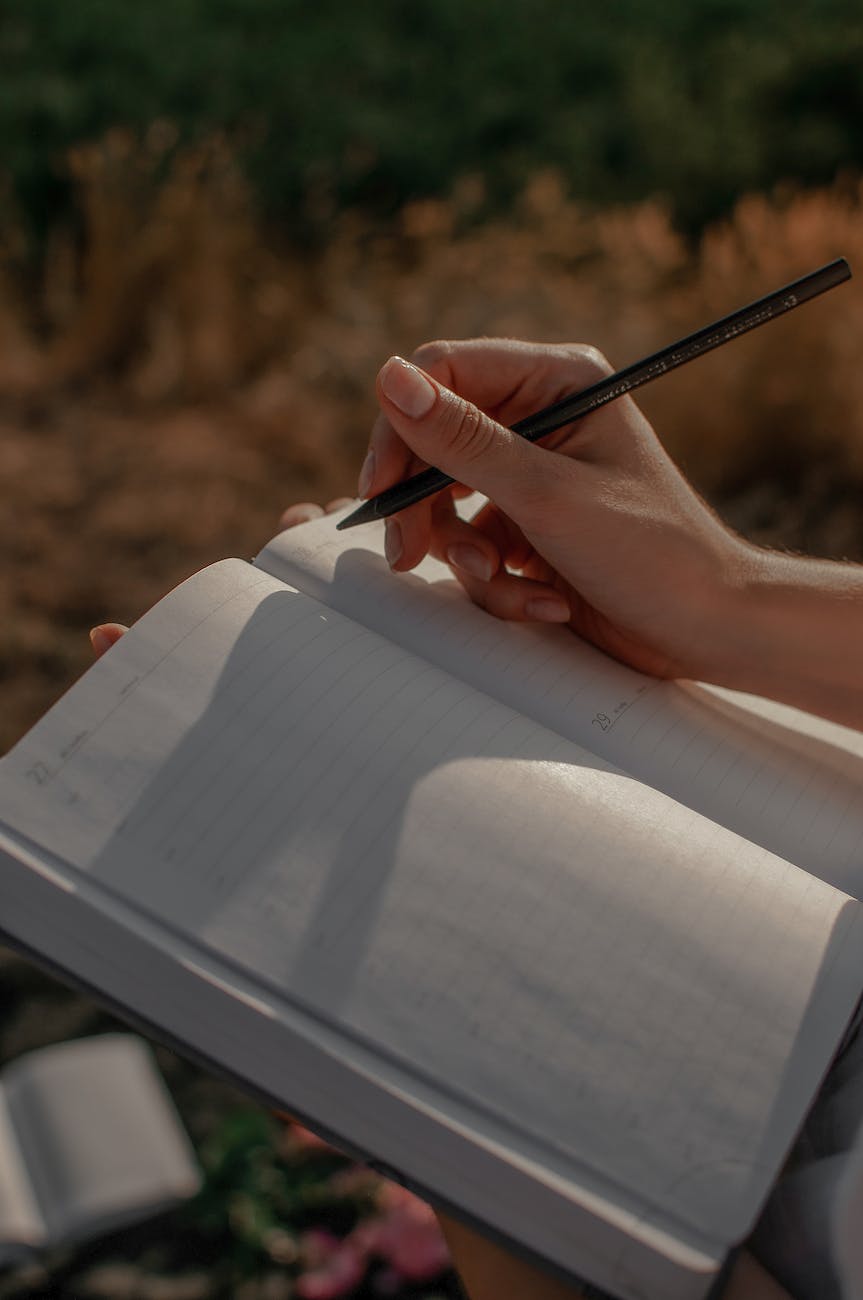
Photo by ROMAN ODINTSOV on Pexels.com

*

The first time I tried to write

about my mother,

the words exploded like grenades

all over the white paper field.

Pieces of A’s and T’s,

dead blackbirds on snow.

*

The second time I tried to write

about my mother,

the pen skidded away

as if skating on ice,

leaving slices

of purple bruised chasms,

with swift, deadly water below.

*

The third time I tried to write

about my mother,

the pen struggled through drifts

of burning white, windblown sand,

bleached bones of words unsaid,

questions unasked,

too hot to touch,

and too late,

too late,

too late.

Mariposa

*

Photo by prasanthdas ds on Pexels.com

*

Here is another story from my teaching archives. Amidst all the opinions on immigration, the plight of the children is often disregarded.

As shy as a butterfly, and as silent, Mariposa joined the ENL kindergarten group in the first week of October.  Her presence made the group into an even dozen.  The children were mostly of Mexican background, but there were also children whose first languages were Arabic and Korean.

         Mariposa refused to speak.  During my initial language interview, she not only would not answer any question, she turned her back on me.  Later, during the requisite screening, it became obvious that Mariposa understood a fair amount of English.  She pointed to the objects that I named in the cut-away picture of a house.  She simply refused to speak in English or in Spanish.

         The week following her admission, we began ESL lessons.  Mariposa sat wide-eyed and observant, and silent.  The other kids said, “She don’t talk.”

         “That’s ok,” I said.  “She’ll talk when she’s ready.”

         Many non-native speakers go through this “silent period” when they enter a new school.  Experiencing immersion in a new language, new culture and social situation can be overwhelming.  When other affective influences are considered, it is easy to understand the reasons for a silent period.  An English language learner may have arrived from a worn-torn country, or have left beloved family members behind at home.  The child may have lived in extreme poverty, may have attended school erratically, or not at all.

         One student of mine, not Mariposa, was also silent for the first weeks.  She also presented such blank eyes that we thought she might have a learning disability, or even possibly a hearing deficit.  Her mask was, it turned out, a type of self-defense.  Now that she is talking, this girl demonstrates an uncanny memory, in English.

         Many immigrant families have stories they dare not tell, stories of border crossings in airless, crowded trucks, or night-covered runs through the desert.  Many are living two or three families in one tiny apartment. All are seeking a better life for themselves and their children who come to me every school day.

         Mariposa’s first interactions were gentle taps on my arm to get my attention.  She pointed to a scissors she needed, or to a child who was not following directions.  She was a capable child, cutting and coloring accurately and finishing her work before most of the others.

         As part of our morning circle time, a hamster puppet named Bumble sings with the children and asks them questions.  Mariposa’s wide smile showed her enjoyment of Bumble, but she continued her silence.  After several days, she would seem about to speak, and then catch herself, remembering she had decided not to talk.

         About two weeks after her arrival, she was sitting at the table with the rest of the group.  Behind my left shoulder, I heard her whisper in Spanish.  I didn’t draw attention to this breakthrough, but I had to smile.  She was beginning to emerge from her chrysalis.

         Over the next few days, Mariposa could be heard making whispered remarks in Spanish to one of the other girls.  She began to smile when we picked her up for ENL time at her classroom door.  She came willingly, with a bounce in her step.

         Snails and turtles  from their shells; butterflies emerge from chrysalises.  These are the obvious analogies for these young English language learners.

         Mariposa’s metamorphosis was signaled by the word “pizza.”  One morning Bumble, the hamster puppet, asked each child, “What is your favorite food?”  I expected to pass over Mariposa as usual, but that morning she answered in an almost inaudible whisper, “Pizza.”

         Later on, we were singing the song about colors.

         What are you wearing, what are you wearing,

         What are you wearing today, today?

         I noticed that Mariposa’s head was bent; she seemed to be staring at her lap.  Then I saw that her lips were moving, forming the English words of the song. 

         At that moment, I felt like a butterfly had unfurled its wings before me for the first time, only it was my heart that was expanding and taking flight.

The Scent of Stone

*

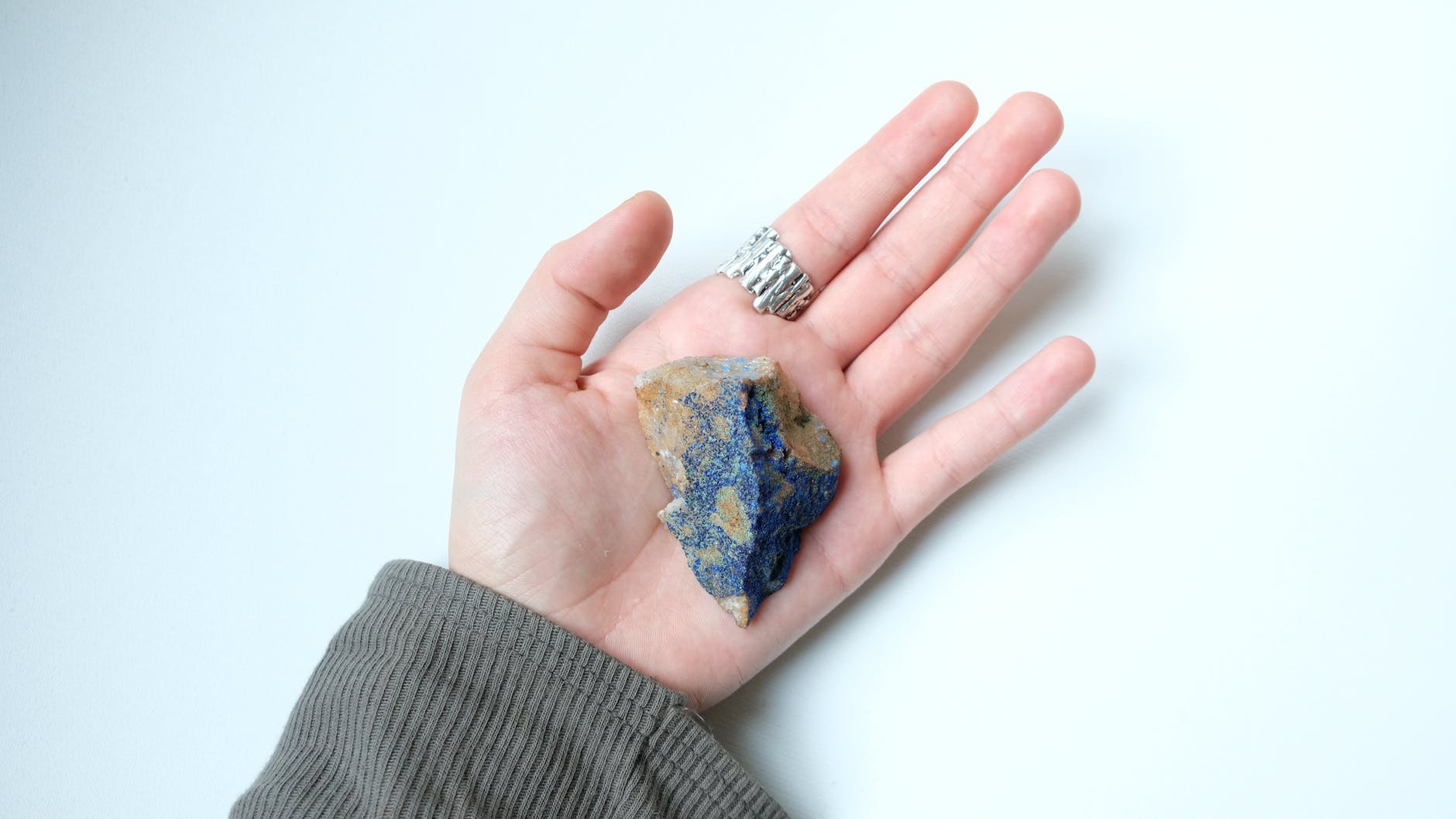
Photo by Skylar Kang on Pexels.com

*

In my palm

I hold a sphere of lapis,

blue with flecks of gold.

I found it in her drawer,

resting in a cloth basket.

*

It lay in her hand

for thirty years

during meditation.

“It’s a microcosm,”

she told me once.

“The blue is space.

The gold flecks are stars.”

*

She’s gone now,

but I hold the universe

on my palm.

When I lift it to my nose,

I smell the lemon verbena lotion

she spread on her hands.

Such small things connect us.

A Little Separation Anxiety Music

*

Photo by Jawad Jawahir on Pexels.com

*

Praises to the kindergarten teachers! Here is an article from my teaching archives.

Carlitos’s twelve-year-old cousin warned me about him before school started. 

         “He’s really bad,” she said in her lilting Mexican accent.  “He don’t listen to nobody.”

         She was right.  The first three days of kindergarten, this little dynamo only wanted to play in his newfound heaven of toys and kids.  The fact that he spoke only Spanish had nothing to do with his wayward behavior, since he would ignore his own name.  Carlitos did not want to have a moment of silence or a quiet time after lunch, and he certainly did not want to sit still and listen to stories in a foreign language.

         The first major meltdown must have happened in P.E. because I soon got word that Carlitos was crying and didn’t want to go to the gym.  But that was just the beginning.  In less than a week the rosy glow of kindergarten’s novelty wore off for this five-year-old.  There were too many rules, too many people saying, “do this” and “don’t do that”, and way too much English.  Staying home with mom was much more comfortable.  So Carlitos became a crier.

         Carlitos cried when his parents put him on the bus.  He cried when he got to school and he cried on the way to his classroom.  Just when he’d settled down to “pintar” (color), an activity that he liked, along came another teacher to take him away for ENL class.  Then he cried some more.

         Usually it was Mrs. D., my ENL student teacher, who picked up Carlitos and a handful of others from the upstairs teachers and walked them to our improvised classroom on the stage.

         One Monday Carlitos was having an especially hard re-entry after the weekend at home.  I could hear him wailing as I led my group of students up the stairs toward the hallway between the main building and our end of the school.  At the top of the stairs, we all stopped short.  Mrs. D. was trying to keep one hand on the sobbing Carlitos while preventing her little group from walking into the pool of his vomit.  Carlitos continued to weep and wail and choke while the nurse, and then the principal, came to investigate the ruckus.

         One of the steadfast custodians was called for clean-up.  Principal Mrs. K meanwhile ascertained that Carlitos was not ill, only overwrought.  She took him for a wash in the boy’s room.  The rest of our brood, considerably subdued, made its way to the stage and began the daily calendar lesson.

         Soon Mrs. K appeared with Carlitos, who was still shrieking in major Spanish decibels.  She brought a chair to the edge of the carpet, saying to the pint-sized siren, “Carlitos, this is the crying chair.  You may sit here until you are finished crying.”  She put a box of tissues on the table beside him and a trashcan next to his chair. 

         The class was agog.

         In between gagging and retching, Carlitos wailed on.

         “Quiero mi mami!  Quiero mi mami!”

         The rest of the kids were frozen by the display, so much so that there were no sympathetic tears, just wide eyes and awed silence.

         Over the piercing noise, I made a futile attempt to be heard.  Holding up a letter card, I said, “This is the letter D.  It sounds like /d/.”

         Not a head turned my way. Not an eye blinked.  I forged on.

         “Here’s a picture of something that begins with D,” I called out, louder now, holding up another card.  “It’s a kind of pet—“

         “Quiero mi mami!” Carlitos screamed and vomited into the trashcan.

         “—that says ‘woof, woof!”

         “—mi mami!”  Gag.  Wretch.

         Ms. G., the basic concepts teacher, poked her head around her door, stared for a moment, and retreated.

         I looked at my watch: twelve more minutes of class.  Reaching behind my chair, I grabbed my guitar and checked the tuning.

         “If you’re happy and you know it, clap your hands,” I warbled.

         No response.

         “If you’re happy and you know it, clap your hands.”

         Two heads turned.

         “If you’re happy and you know it—“

         Slowly the heads of the kindergarteners rotated toward me.  Some hands clapped.

         Carlitos’s volume lessened.

         Second verse: “nod your head!”

         Carlitos’s crying was equaled by some voices singing along.

         Third verse: “stamp your feet!”

         The wailing changed to whimpering.  We finished the song with a flourish: “jump up and down!”  Everyone but Carlitos jumped up and down with vigor.

         Ah, the power of music!  Pete Seeger would have been proud. That legendary folksinger has always claimed that music can make a better world.  It sure worked for me. 

blank

*

Photo by Lisa Fotios on Pexels.com

*

if he cannot recall his own past,

relations, stories

if he forgets where he lives,

the year, the president’s name

if all that disappears,

those are his losses

*

if I am not remembered as wife,

as friend, as the one who cares

who plans, who cleans

if he can’t recall my name,

my special place beside him,

then I am erased too

Shadow

*

*

She awoke knowing she wasn’t alone.  Faint moonlight slid through the gauzy summer curtains.  Her heart struck like a gong.  A dark shape, a figure in the corner, appeared as a darker outline where the closet met the wall. 

She pulled the sheet up under her chin, hands trembling.  “Who-who are you?”

The figure moved slightly, emerging into the thin, dim light. 

She saw the feet first, bare, and then cloth wrapping to shoulder, bare arms and hands, a stack of bracelets, an armband. 

The head remained obscured, but even in the dimness, she could tell it wasn’t human.  Large and square, with a huge, curved beak.  A glittering eye reflecting moonlight.

“Who am I?” the reply came in a scratchy, unused whisper.  “You should know.  You called me.”

The one in the bed drew back further.  “I-I called?”  Flashing thoughts reviewed her most recent phone calls and texts.  Nothing.

“In prayer,” came the crackly whisper.  “You called for a healer.”

True.  She had prayed, just that night, for help.  Help with the unraveling health, and guidance.

“Can you help me?” she asked.  “Heal me?”

“Where I come from, no one would ask that question.”

“Where do you come from?”

“Saqqara.  Egypt.  From the time before the desert, from the beginning.  From the green Nile and the rains making furrows in the holy Sphinx.  From those who read the stars and moved great stones.  They called me Horus.”

Neti Neti

*

*

More than this body of humming cells,

Swish of blood, strumming muscles

More than sweat or bones

More than ears missing tones

Clogged nose, unreliable eyes

Skin melting into wrinkled ridges

More than a restless mind,

Skittering thoughts to past or future

More than the mirror’s reflection

More than the labels, jobs, relations

Not this

Not that

Only breath

Only presence

Only now

Escondido

*

Photo by Daniel Jurin on Pexels.com

*

Turning right off the Pacific Coast Highway

the dirt road becomes sand

ocean fills my nostrils, my ears

at the road’s end is the house

bamboo blinds down, but waiting

*

While parents unload the car

I run across the patio

fling off my flip-flops

tumble downstairs to the beach

*

Hot sand and slick kelp

waves swirl to my knees

dogs splash and bark

my paradise, my ocean mother

I’m home again

After

*

Photo by Anthony DeRosa on Pexels.com

*

I have read that your loved ones greet you

at the end-of-life tunnel

You see their silhouettes against a glorious light

They welcome your spirit with love

once it’s shed the body, a discarded husk

*

I have wondered how–if I am met

by my mother’s spirit–

how she could also reincarnate again.

Can souls be in a body and the afterlife, too?

*

I have felt the rising pulse of awe

at the various and myriad forms of Creation

that burst from a pinpoint of light

and one single thought: to become

*

I have been in, and also out

I have risen in the violet flame

I have heard your moon song

I have sung you across the river

Time Bending

*

*

A luna moth emerges

from its rough, camouflaged cocoon

pale green grace, soft night angel

spiral tails, feathered feelers

No mouth.

No

Mouth.

Her cycle: mate, lay eggs, and die

*

Damsel flies, shiny blue, scaly

slim window wings

skim a handful of weeks

Gypsy moths cycle through a year

*

Boulders birth in earth upheavals

Jagged or rounded by weather

Dense consciousness, witness

to passing millennia

one exhale in one thousand years

*

We unshelled humans

spin in between

the slow life of stones

and 24-hour mayflies

We bleed and we heal

scabs and scars mark

skins and hearts

*

Our convoluted brains

seek the Presence behind

this strange mosaic of being

always becoming more

expanding to perceive Itself

in every wing, every breath