*
*
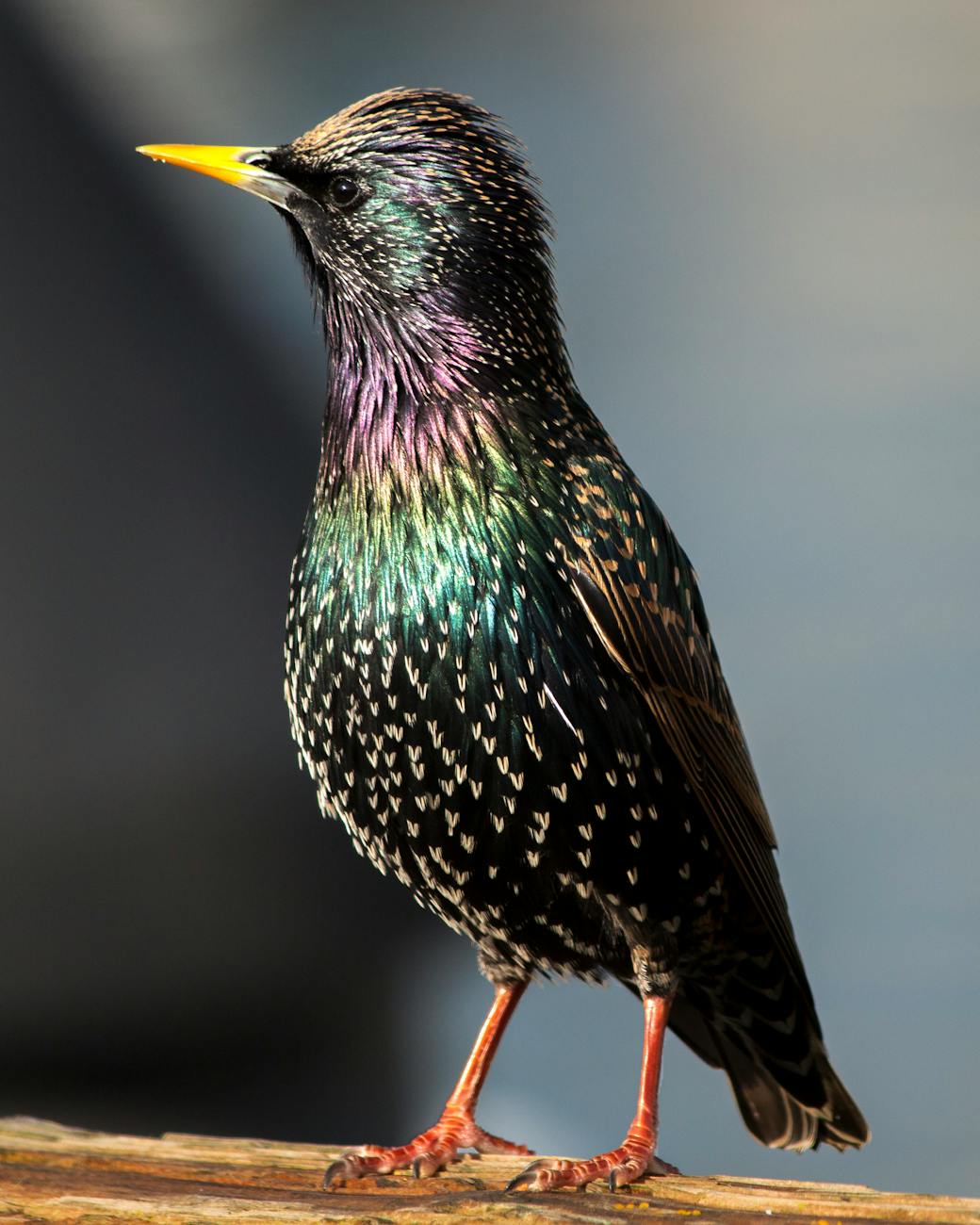
I’m not a big fan of starlings. They are invaders who displace our native birds. Starlings are messy, noisy, and travel in huge flocks. You may have seen their amoeba-like acrobatics in the sky. For the starlings’ takeover on the American continent, we can blame Eugene Schieffelin, a pharmaceutical manufacturer, who imported sixty starlings from Europe and released them in Central Park on March 6, 1890.
Schieffelin was a great admirer of Shakespeare, and he also loved birds. He, along with other members of the American Acclimatization Society, thought it would be a great idea to bring all the birds mentioned in Shakespeare’s poems and plays to live in the New World. Big mistake.
The starlings liked Central Park. In fact, they liked most of North America. Other imports, such as nightingales and skylarks, hadn’t fared well. But the starlings survived and multiplied. The birds have a beak that allows them to pry for food in the soil, even during the winter. Thus, they don’t have to migrate, and since they’ve never left for warmer climes, the starlings have the first pick of the best nesting places.
Which brings me to the pair of starlings who decided that the best place for their nest was the aluminum tube that vents the hot air from my clothes dryer. The outlet for this tube is located on the top floor of this house. The circular opening was covered by a small plastic box with a flap. No deterrent for these birds.
I first noticed the situation when I was making my bed one morning. There was a skittering, scratching noise coming from the tube leading out of the dryer. “Oh, no,” I thought. “More mice.” When I banged on the tube, the creature sounds stopped, but some sort of something fell down inside the tube.
This procedure continued periodically, whenever I was home and heard the noises. I’d bang, the noise would stop, and stuff inside the pipe would tinkle and rattle further down.
One time when I shook the tube, a bird flew out and hovered in front of my window. We glared at each other for several seconds. “Starlings!” I muttered and notified the landlord.
To replace the outside vent, it was necessary to climb a tall ladder to the second story of the house. The landlord brought his ladder over, as well as a new slatted vent that looked a bit like a cage. Before installing the new vent, he cleaned out the tube. The birds had brought in a large pile of pine needles that was mixed in with some gray dryer lint. Among the pine needles was one blue egg.
I collected all the nesting material, marveling at the amount of pine needles the birds had brought in. I suspected that every time I banged on the tube, their nest-in-progress fell apart, so they had to start over. When I dumped the nest material in the woods, I did feel a small pang of regret, especially about the egg that wouldn’t hatch after all the birds’ hard work. Still, I didn’t feel sorry for long. They were starlings, after all.
 Tangled Magic