You or Me?

*

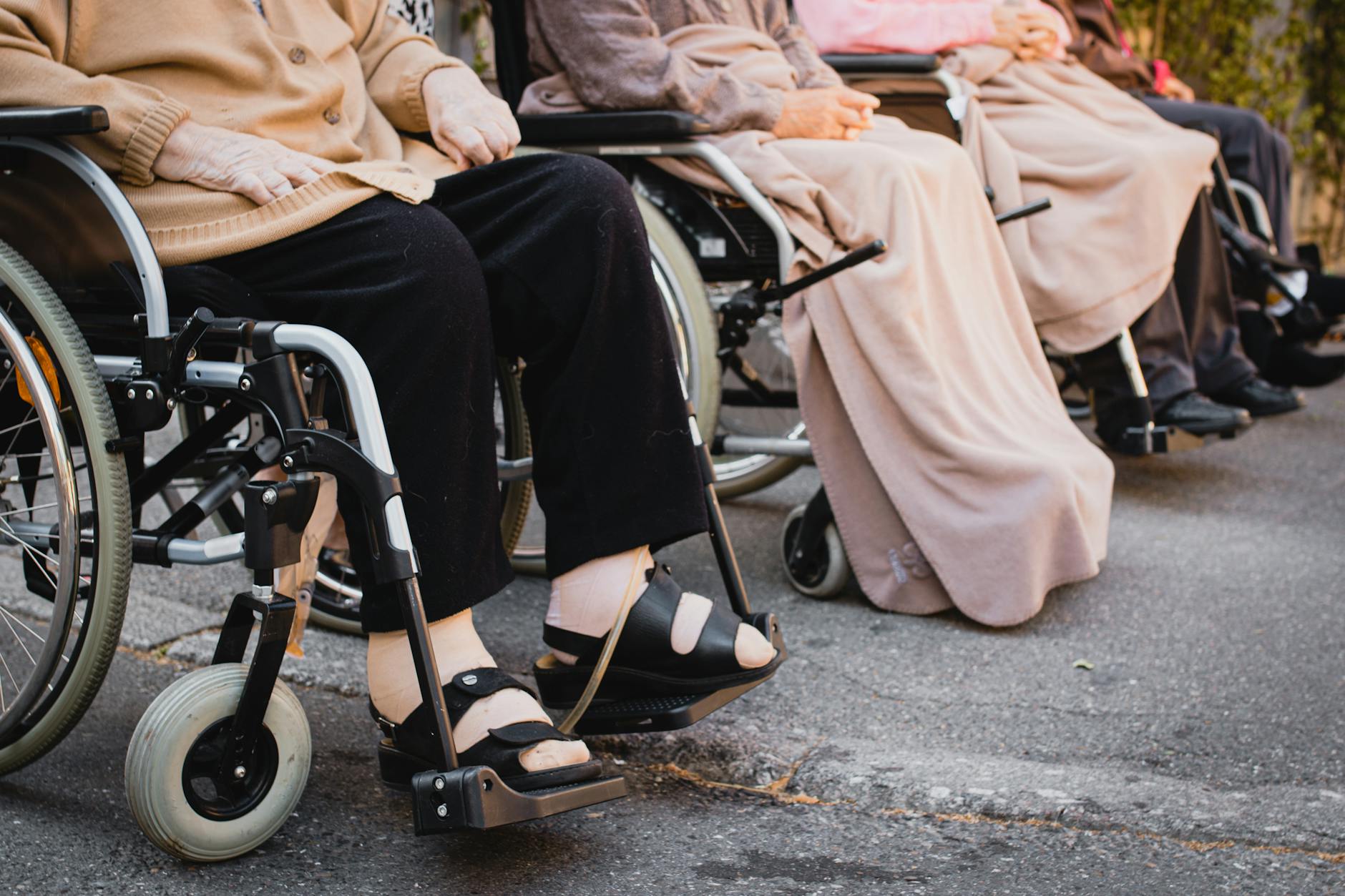
Photo by alexandre saraiva carniato on Pexels.com

*

The one I left behind

has blank eyes of amber brown

stares at a future of days unchanging

leans forward in the wheelchair

tries to stand on legs too weak and trembling

*

The one I left behind

eats from another hand

like a baby bird

lives among others who wait

for something new or different

or death

*

The one I left behind

left me behind

retreated into a place

mysterious, unreachable

Perhaps he’s on a divine mission

perhaps he’s dancing with angels

perhaps, in his eyes,

I’m the impaired one

lagging far behind.

Where

*

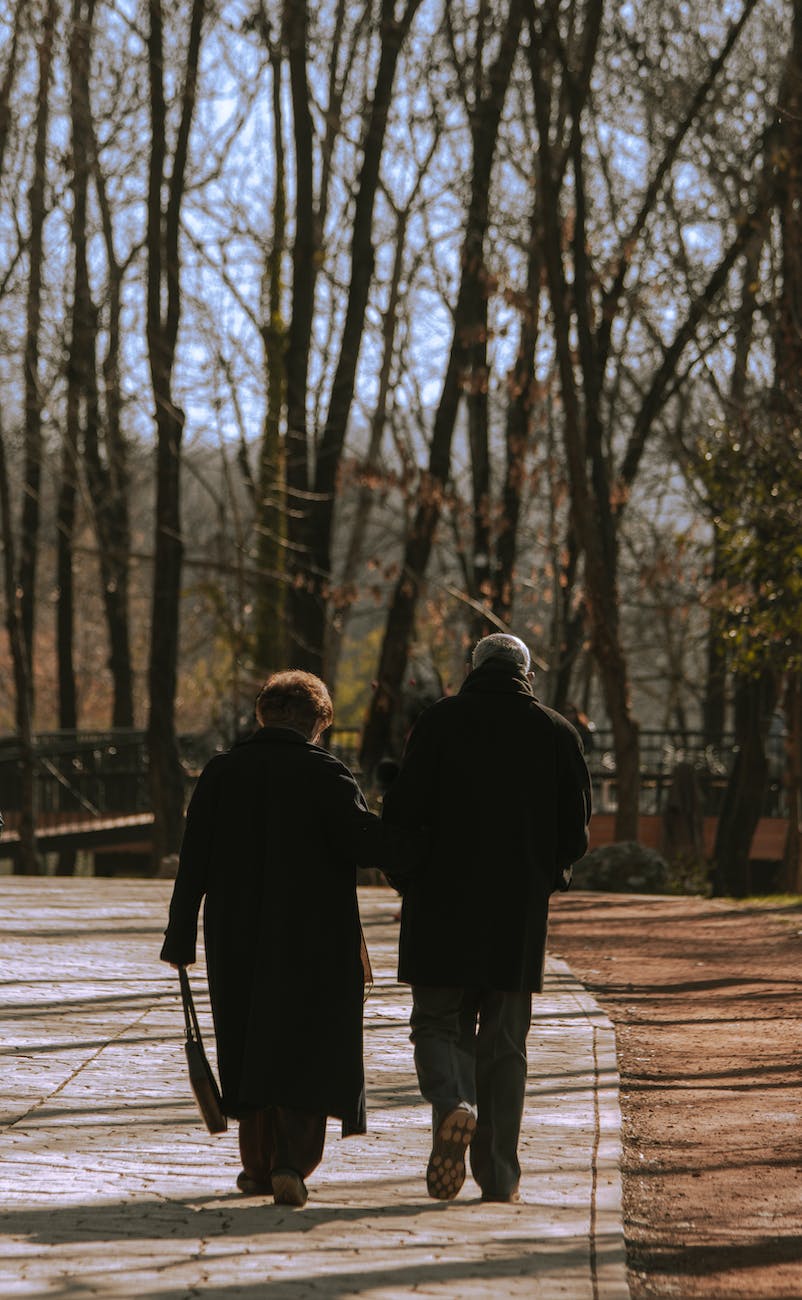
Photo by Harun Tan on Pexels.com

*

Where

                  did he go,

that busy, silly man

with the terrible sense of humor?

Look into his eyes

dull, fogged windows.

*

Where did he go

the fount of Irish blarney,

trim of leg but lacking rhythm?

Look at him now, silent

wheelchair bound.

*

Where did he go,

my companion on Mexican highways,

the agreeable explorer?

Take his hands, warm and dry.

Hug the solid body of a person lost.

Miss him.

Love him.

Hold his truth and goodness

for him.

Music in the hour of waiting

*

Photo by locrifa on Pexels.com

*

A youngish man, the music therapist

passes out maracas

to folks in wheelchairs, side by side,

many doze, a few eyes are open

*

He glides through the oldies,

Patsy Cline Crazy, Everly Brothers Dream,

These boots are made for walkin’

under the boardwalk

*

David, who rarely sits,

shuffles across the room,

smelling of shit—again—

Someone alerts the staff

*

Leaving on a jet plane

no one here will fly anywhere

Talking ‘bout my girl

No one here talks much

*

The music therapist always ends

with Amazing Grace, this being

a Catholic facility, those

who are here were once found,

but now are lost

In his closet

*

Photo by Craig Adderley on Pexels.com

*

left side

his wedding suit, charcoal pinstripe

slate blue business suit

navy jacket, no matching slacks

one tweed jacket, brown and pine green

*

These suits, the dress shoes,

the waterproof rain pants, the silk

handkerchiefs, long underwear

What use have they now,

now his work is past,

his history misty and dissolving

*

He breathes and moves

dressed in sweatpants, t-shirts

every garment labeled,

all stuffed in a narrow cabinet

next to a bed that goes up or down

the window there doesn’t open

*

He won’t be in this house again

yet his clothes reside in the closet

insist on his absence with questions

that trap me between there and here

pressed dark and stifled

Carolyn

*

Photo by uc131uc218 uae40 on Pexels.com

*

Carolyn

She lives at the nursing home in a padded wheelchair, legs curled up, feet bare.  Wiry gray hair, teeth worn down from grinding.  All day she barks, “Eh, eh, eh, eh!” In bed, she continues.  Does she sleep or keep barking?  I don’t know; I’m not there at night.

Her name is Carolyn. The staff and the other residents ignore her noise.  It is part of the day’s sounds, along with carts wheeling down the halls, announcements over the PA system, and the eternal beeping of call buttons.

The first time, on my way out, I asked her, “Are you singing?” “Singing,” she said, and after a pause, continued to bark.

The next time, I stopped and said, “Hello, Carolyn. I’ll sing you a song.”  I sang, “You are my sunshine, my only sunshine.” 

“Sunshine,” she said, and moved her lips with some of the lyrics.

After one chorus and a verse, I said, “I have to go now, but next time I’ll sing you another song.”

“Thank you,” she said. A conversation.  An appropriate response.

I was surprised.  And I wept as I waited for the elevator.

What It’s Like

*

Photo by Karolina Grabowska on Pexels.com

*

talking to the Mad Hatter

who’s wearing a backward baseball cap

and headphones

peering into the empty, locked car

who says, “Don’t make me a third.”

meaning the guy he sees in the reflection

himself

is…who? Come inside. Please.

“Go away,” he says.

“Leave me alone.”

*

being a Dalit

who cleans toilets

with bleach water

several times a day

knowing that put the seat up first

or

stand closer

if understood,

won’t be remembered

*

Hand him the tissue

say, wipe your butt

to the blank stare

Your ass! Wipe your ass!

Sometimes he does

sometimes doesn’t

left to me to clean up

two-hundred-pound baby

blank

*

Photo by Lisa Fotios on Pexels.com

*

if he cannot recall his own past,

relations, stories

if he forgets where he lives,

the year, the president’s name

if all that disappears,

those are his losses

*

if I am not remembered as wife,

as friend, as the one who cares

who plans, who cleans

if he can’t recall my name,

my special place beside him,

then I am erased too

To Love What is Left

–Mary McCue

*

Photo by Mikhail Nilov on Pexels.com

*

The stranger who sleeps next to me

looks like an older version

of the man I married 20 years ago

but that person no longer resides in his body. 

Dementia steals him away every morning

when I shake his leg to rouse him

remove his watch and necklace of rudraksha beads.

He lies there like a sack of sand

not raising arm or head to help me.

*

He’s a toddler going backward

not intending to provoke or obstruct

forgetting that the pants

go on before the shoes

while I seek a way to forgive

my spouts of anger, bouts of tears

His disease tethers me to home

like a dog on a line

*

Bitter words, vinegar sour

dare not look back at years lost

dream of a better time

Then waken next to a stranger

with his face.

Slipping

*

Photo by Sabina Kallari on Pexels.com

*

Restless in the afternoon

He puts on his coat,

Picks up the flashlight

Where are you going?

It’s daytime

You don’t need a flashlight.

*

She gives in, gives up

sewing the quilt pieces

Takes him for a walk

in the bright April wind

he shuffles too slowly for exercise

asks to go back too soon

It’s been barely ten minutes!

Already heading home

*

Where do you live? He asks

In Wallkill.  You live with me.

Do you know who I am?

What’s my name?

I don’t know.  I’m sorry.

*

Now he is further gone

And she is erased

Caregiver’s Nightmare

or Why My Sister Got No Yarn

*

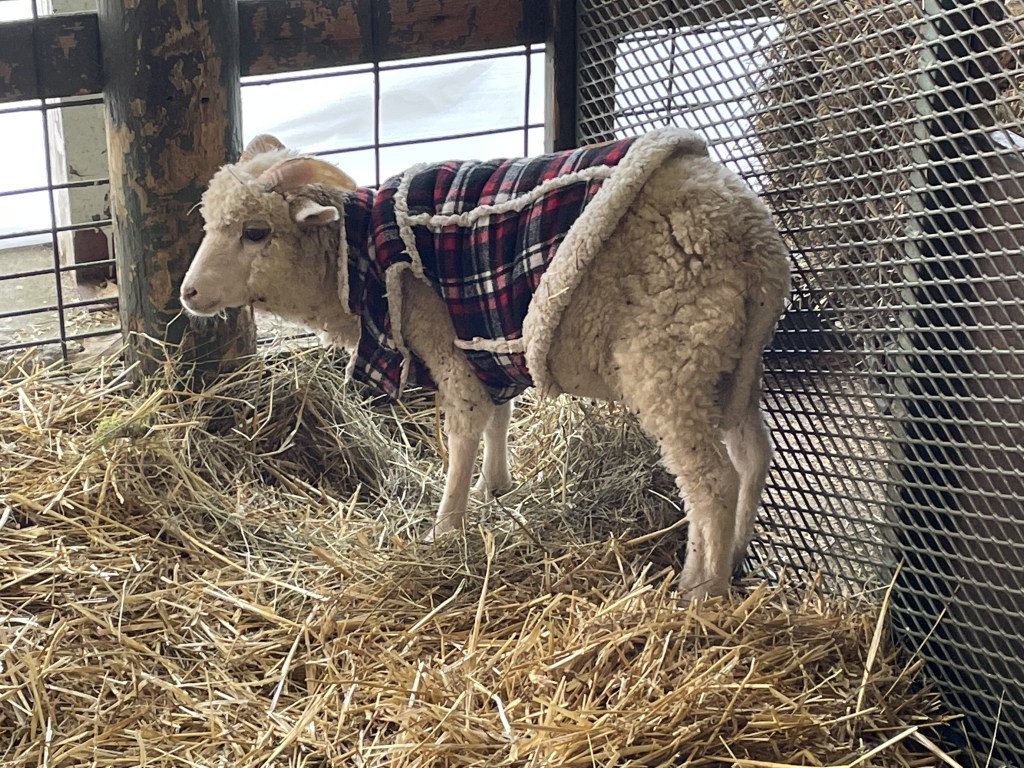
Photo by Pixabay on Pexels.com

*

The traffic was backed up on the west side of the Hudson River, a mile or more before the entrance to the Kingston-Rhinecliff bridge. 

“If these cars are all heading to the Sheep and Wool Festival at the fairgrounds, this does not bode well,” I said to my husband, Pat.  He didn’t seem bothered.  Pat has dementia and enjoys car rides even though he rarely remembers where we are going.

The car jam broke up a bit on the other side of the river but slowed to a crawl waiting to turn into the fairground parking. 

Pat was astounded at the number of cars.  It was only about 11:00 a.m. and the rows and rows of vehicles glinted in the autumn sunshine.  I reeled off the states on license plates: Florida, Massachusetts, Connecticut, New Jersey. 

Fortunately, we had our tickets, so we skipped the buyers’ lines and followed the crowd.  For crowded it was.  Our first stop was the llamas and alpacas (and I still don’t know the difference).  We bumped and jostled our way through the goat and sheep barns. 

The one thing I was determined to see was the demonstration of Frisbee-playing dogs.  It wasn’t the sheepherding dog demo that I really wanted to watch, but we made our way slowly to the grassy area marked off by flagged poles where an audience three deep was already gathered. 

The dogs were amazing.  They obviously loved the game, and the trainers/owners loved the dogs. 

By this time, Pat and I were both hungry.  I consulted the map and pointed the way to the food trucks.  It turned out that everyone else at the festival was also hungry.  Each vendor had lines of fifty or more people waiting to order food.  Even the fried pickles truck had a line of obviously desperate people. 

The hordes in the food plaza were worse than Oxford Street in London at Christmas time. 

“I don’t want to wait in these long lines,” I said to Pat.  Ever since Covid, I get anxious in large groups of people. 

And it wasn’t just masses of people waiting to eat.  Every barn and booth was packed.  

The only thing I wanted to do now, having seen the dogs and given up on eating, was to choose some colorful handspun yarn to send to my sister in California.

“Let me get some yarn and then let’s go,” I said.  “We’ll eat somewhere else.”

Pat, agreeable as always, held onto me as I dragged him through the crush.

After consulting the map multiple times, I figured out the way back to Gate 4 and our parking area.  The barns of yarn and wool vendors were still crammed with people, but I pulled Pat into the one near our exit.

Halfway down the swarming aisle, I yanked Pat into a booth.  I began to examine the yarns and the prices.  Sixty dollars for one skein— uh, no.  I turned around and—he was gone.  No Pat.

Pushing my way back into the aisle, I looked around for an Irish cap and gray beard.  There was a cap, but the wrong color and the man was too tall. 

“Oh, no, oh no,” I moaned, elbowing my way to the entrance.  No Pat.  I turned and shoved back the other way.

Already I was imagining finding the festival police, if there was such an entity, and having someone call for Patrick Dillon on the PA system—if they had one.  How in the world would I find him in these mobs of people?  I got out my phone and called his mobile.  It rang and said he was not available.  Did he even hear it? 

My mind played out more scenarios, such as me searching until closing time, when at last people would have gone and he might be easier to spot. 

What would Pat do if he were trying to find me?  Would he use his phone?  Press his emergency medical button?  Ask for help?

Eventually, I suppose, I would have remembered the app that locates him and his phone.  Later,  though, I discovered that he’d unknowingly turned it off in September. 

But then—hallelujah–I spotted him, standing bewildered in front of the next barn over.  What an incredible relief!

“Let’s get out of here!”  I said, grabbing his hand. 

Back in the car, I went over the protocol of what to do if we get separated. 
“Stay in one place,” I directed. But would he remember?

Should I tie us together the next time we’re out in a crowd?—if I ever attempt that again.