Before

*

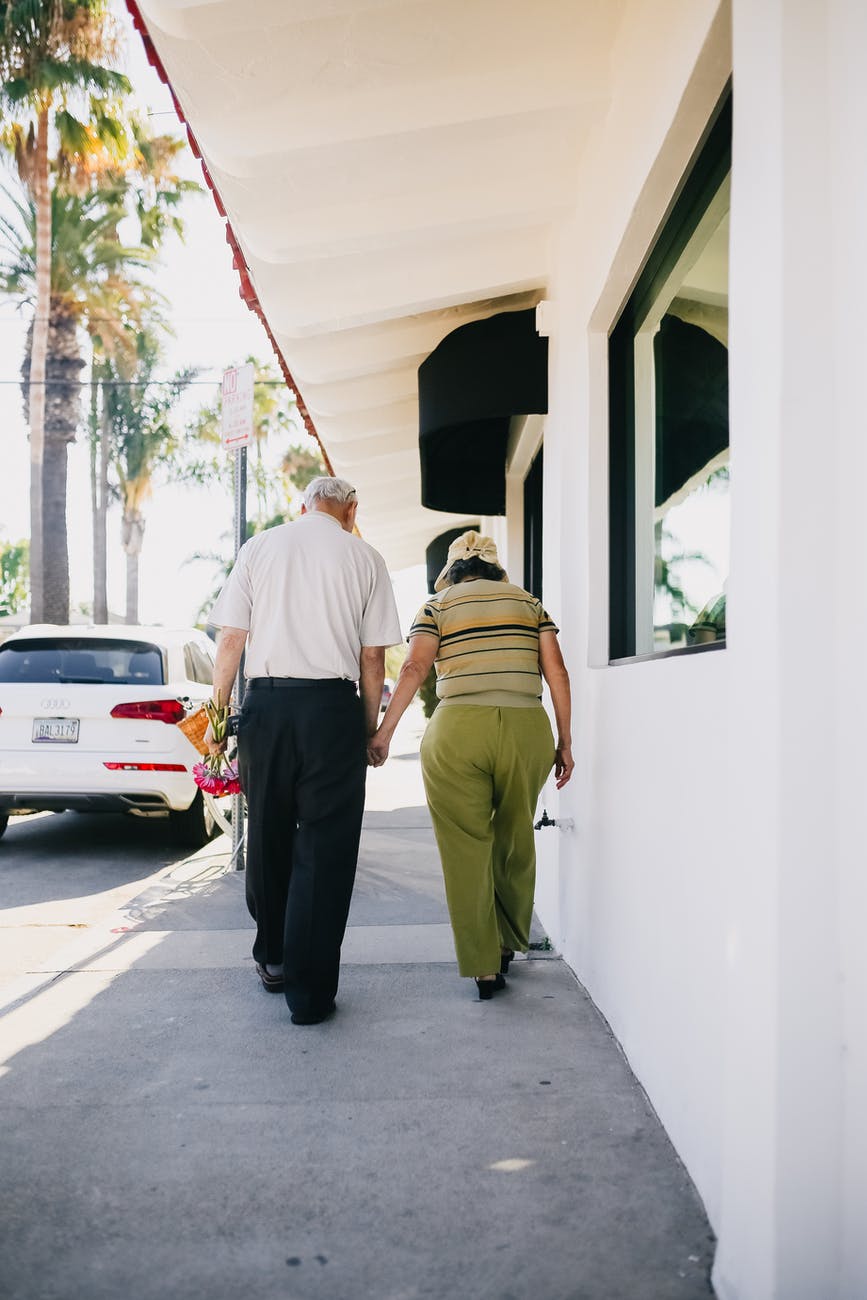
Photo by Magda Ehlers on Pexels.com

*

Before he lost his license,

we traveled.

In Mexico, he braved insane traffic,

maneuvered a Ford Fiesta

through bullying buses.

Before he lost his profession,

he saw clients,

put out brochures

in three counties.

Before he lost his skill,

he could fix anything

with a motor.

Before he lost his agility,

he was a fourth-degree black belt.

Before he lost his past,

he sent out dozens

of holiday cards.

Before he lost his bearings,

he led the way.

Sad Time

*

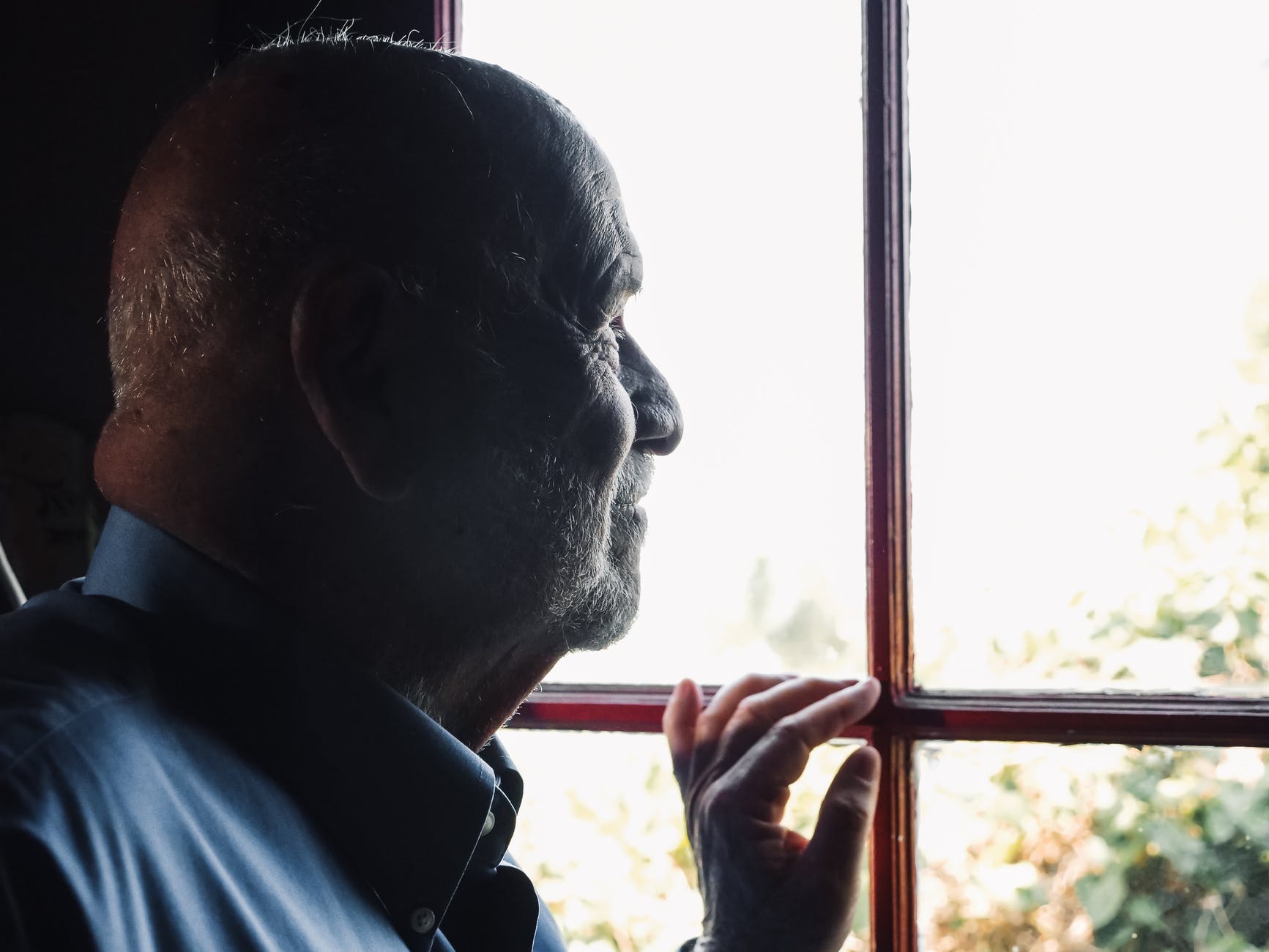
Photo by Sachith Hettigodage on Pexels.com

*

Step outside myself

Watch the morning unfold

Watch him shuffle to the bathroom

Watch me coach him through the shower:

*

Wash your face with soap

Use the bar of soap under your arms

In your crotch, the butt too

Hold out your hand

Here’s shampoo

That’s my towel and

This is yours

Underwear, incontinent pad

Arms up, deodorant underneath

Now brush your teeth

*

He is so grateful.

Thank you, dear.

For trimming my toenails

For shaving my beard.

Thank you, dear.

*

Oh, if only I could say

Thank you, dear God,

For this life of service

Thank you for his gratitude

Thank you for the restrictions

Thank you for the loss

Tell me how to say it.

Teach me how to believe it.

Day Care

*

Photo by Pixabay on Pexels.com

*

He has his pull-ups on.

I’ve shaved him. (It’s fun.)

He’s got just one hearing aid.

Lost the other one.

He’s had his breakfast,

taken his pills

brushed his teeth.

*

“Where are we?” he says.

I tell him again.

*

“I’ll be here when you get home,”

I say.

“You don’t need to call me.

You’re safe.”

*

I send him out to the van.

Watch him climb in

wipe away familiar tears

like a mother.

Rail Trail I

*

Photo by Karol Czinege on Pexels.com

*

Honeysuckle breeze carries

scent of cut grass.

Mower drones

behind shaggy hickories.

He stops to listen.

Maples flutter,

serious oaks think

about making acorns.

*

Slow walking

One step to his two-step

shuffle-crunch gravel.

On the verges

phlox lilac pink

dandelion fluff

sinister poison ivy,

innocent in shiny green

*

One chorus of

Zippity-do-dah,

He’s happy

under the canopy

shade and sun

in his eternal now.

Words

*

Photo by RODNAE Productions on Pexels.com

*

Gait apraxia.

Two new words have sneaked into our house.

Commonly seen in vascular dementia,

gait apraxia

is that shuffling walk

as if feet are stuck to the floor.

*

The neurologist tossed the two words

into the air, casually,

but I caught them phonetically

in my notebook

and looked them up later.

*

No cues or modeling or suggestions help.

He can’t change how he moves,

so says Sciencedirect.com

We go for walks, and he shuffles along

behind me.

*

Before gait apraxia came in the door,

I would say,

“This isn’t exercise!  Walk faster!”

“I can walk you into the ground,”

he’d reply,

lagging further behind.

*

Gait apraxia isn’t alone

in taking up residence.

We have anxiety

wringing its hands in the corner.

We have incontinence in paper diapers,

hanging around the bathroom.

But table manners left for the south,

forgetting to close the door.

Words

Photo by Skitterphoto on Pexels.com

I come from a mother who talked, advised, and organized,

all from her desk in the bedroom.

Words, words all around.

I come from a father who gave speeches and lectured.

Professorial, he delivered words,

words all around.

Now I come from a talkless home.

My own words land like oil on the man’s ears

and slide away.

His words are mostly forgotten—

the names of things, like gossamer,

tantalizing, just out of reach.

It’s a conversational desert where I am,

a parched land.

The word prints erase as soon as they land on the air.

No memory of what I said or he said.

The only words around me

are those I gather for myself

and hoard as company.

*

What were your first language experiences? Drop me a comment.

*

The fifth Karakesh Chronicle, now available from Handersen Publishing and Amazon.com

Gone, But Still Here: Ambiguous Loss

*

Photo by Kindel Media on Pexels.com

*

Not long ago, I was listening to a podcast when this phrase, ambiguous loss, came up.  I’d heard it before but had forgotten that such a predicament had been identified and given a name.  Now here I am, six years into caring for my husband with vascular dementia, still struggling with the same ambiguity and loss.

For those unfamiliar with the term, “ambiguous loss” first appeared in the work of psychologist Dr. Pauline Boss.  “Ambiguous loss can freeze the grief process.” says Dr. Boss, “People can’t get over it, they can’t move forward, they’re frozen in place.” ( https://www.wellandgood.com/how-to-deal-with-ambiguous-loss/)

 Boss first studied families whose members were pilots missing in action during the 1970s Vietnam War.  Ambiguous grief could occur when a family member was physically absent but psychologically present, in cases of military MIAs, divorce, desertion, or miscarriage.

The same ambiguous loss may occur when the member is physically present, but psychologically absent, as with chronic mental illness, dementia, traumatic brain injury, or addiction.

These days, my husband is unrecognizable as the man I met eighteen years ago.  I try to recall his personality, his presence, and way of being in the world from that time, and I can’t form a clear picture.  He is present in body, slower but still healthy for his seventy-four years.  Except he needs so much guidance, so much supervision, so much of my mental energy.

I have passed through many emotions in six years.  For a long time, I was enraged.  My imagined future, the travels, the freedom of movement, the solitude so necessary for an introvert like myself, evaporated like a puddle after rain.  I grieved for those losses, too, and the companion I no longer had. 

Only recently, I realized that there were some bright sparks in this life his illness has imposed on me.  I can work on my creative projects with little interference.  I’ve established a daily routine that works for me, making only two meals for us each day.  We have our regular activities with friends.  Despite the burdens, these adaptations lighten my load.

Boss recommends ways to cope with ambiguous loss.  I’ve done all of them.

Here they are:

Five tips for coping with ambiguous loss:

  1. Give a name to what you’re experiencing
  2. Find a therapist
  3. Join a support group
  4. Celebrate what remains
  5. Discover new hope for the future

Are you a caregiver?  Have you any additional tips for those of us dealing with ambiguous loss? Send me a comment.

*

Available from Handersen Publishing and Amazon.com

Grail Center Labyrinth–May 15

Word of advice regarding a labyrinth walk:

Do not bring your husband who has vascular dementia.

He cannot remember that this is a sacred activity.

A silent activity.

I send him in ahead of me. 

I wait.  Close eyes.  Find my question.

Slow step.  Heel to toe step.

*

He makes silly Halloween noises when he passes me.

I’m in a bubble, I tell him. Be quiet.

He walks fast.  He sits on a bench. 

He says, People leave stuff here.

Sssh! I hiss.

Slow step. Heel to toe step.

*

Focus, I tell myself, focus on your question.

He repeats, People leave stuff here. 

I give up on the spiritual and focus on the material.

Stones delineate the paths.

The makers have laid down weed deterring cloth

fixed it to the earth with spikes

and metal washers the size of doughnuts.

Then a layer of mulch on the cloth.

Slow step. Heel to toe step.

*

I examine the trinkets visitors have left.

A beaded bracelet and one made of string.

Several cartoon character plastic toys

A dream catcher

A row of scallop shells

A painted red word: peace.

Slow step. Heel to toe step.

*

I am in the center

sacred leftovers jumbled at my feet.

What was my question? 

A laminated photograph of a young man

Latino. 2000-2019

A card about suicide prevention.

Is that my answer?  Gratitude?

*

Get away! Get away! he says, swatting at gnats.

The stone walls stand witness.

Trees breathe green.

Scent of honeysuckle

On a rush of wind

A spatter of rain

Slow step.  Heel to toe step.

*

So many seekers walking

I hold them all within me.

As they hold me

And this bumbling, noisy man as well.

January 6

If the Second Coming was at hand,

would he,

my partner of the muddled brain,

recognize Jesus?

As the chaos spread appalling

across the screen,

he wondered if Raphael Warnock

was the new president,

and why

angry white men

smashed the Capitol’s windows.

When Trump told his supporters

to go home,

he laughed.

Perhaps—

as has been said—

dementia is a new day,

not like the now infamous

January 6.

Police in riot gear,

shifting foot to foot

behind plexiglass shields—

he’ll forget the vision

in a moment.

“Who is the new president?”

he asked six times,

anxious about his visit to the neurologist,

who might test him.

That the leader of the country

is a mad man

only troubles him

for as long as the image

stays on the screen.

What is it like,

inside that mind?

Soft and clean,

like a new pillow?

A fearless place to rest?

Or could it be a dark, roiling ocean

of anxiety and confusion,

a reflection

of the events

on the bigger screen?

California

Photo by Paul Deetman on Pexels.com

The postcard of California

is from his son in L.A.

He reads aloud every word on the map.

“Santa Rosa—I lived there.

Eureka—my family came from Eureka.

Then we moved to San Francisco.

I think I lived in Santa Barbara once.

Have you ever been to California?”

he asks me,

showing that another piece of memory

has broken away,

gone sailing off

into the dark ocean of oblivion.

“I grew up there,” I answer.

“What part?”

He used to know this.

He used to say he was from the north

and I was from L.A.

and we had to get special dispensation

to marry.

He used to—

But now he rereads the postcard.

“Have you ever been to California?”

Photo by Tae Fuller on Pexels.com