What I’m Reading

Since March and the advent of the corona virus, I’ve been staying out of the library.  Instead, I downloaded the Libby app that allows me to borrow books on my iPad or iPhone.  The new releases almost always have waiting lists, so I go to “available books.”  Lately I’ve been choosing historic fiction.

  1. Blood and Beauty by Sarah Dunant

This novel about the Borgia family was a good, fast read.  It centers around Lucrezia Borgia and chronicles her life up to her third marriage into the d’Este family.  The corruption, politics, murders, and wars of this period in Italy’s history are so extreme that it’s almost unbelievable.  Pope Alexander VI and his son, Cesare, were ruthless manipulators. Dunant is promising us a sequel.

  • 2. The Night Diary by Veera Hiranandani

Told through the letters a young girl writes to her deceased mother, this book recounts the flight of twelve-year-old Nisha’s family from Pakistan. It is a dangerous journey during the time of partition, when Pakistan is carved out from India after India gains independence.  Nisha, half-Muslim and half Indian, feels as torn apart as her country.
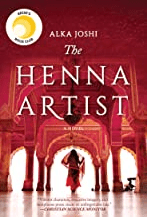
  • The Henna Artist by Alka Joshi

Another tale of life in India.  Lakshmi escapes from an abusive marriage and establishes herself as a henna artist for wealthy, upper class women.  Her plans for her own independence are overturned with the appearance of a sister she never knew she had. I enjoyed learning about all the cultural paths and obstacles of India in the 1950s.

*****

Right now I’m reading The Signature of All Things by Elizabeth Gilbert – for the second or third time.  This round, I’m reading partly as a writer, looking more closely at Gilbert’s technique.  What a change from Eat, Pray, Love!  Yet the confidence, warmth, and humor of her memoir still manage to shine through a very different type of story.  Highly recommended.

The Sweetness of Chanting

chant 1

59. Sakala-buvana-srstih

kalpitasesapustir,

Nikhila-nigama-drstih

sampadam vyarthadrstih;

Avaguna-parimarstis

tat-padarthaika-drstir,

Bhava-guna-paramestir

moksa-margaika-drstih.                       (missing the diacritical marks)

(May the divine glance of the Guru ever dwell upon me.  It creates all worlds.  It brings all nourishment.  It has the viewpoint of all holy scriptures.  It regards wealth as useless.  It removes faults.  It remains focused on the Ultimate.  It is the highest ruler of the three gunas,  which constitute the world.  Its only goal is (to lead others on) the path of liberation.)

If you’ve ever read Elizabeth Gilbert’s Eat, Pray, Love, you might remember her ranting on and on about the early morning chant called the Guru Gita.  It’s one of my favorite parts of her book, because I, too, have felt the weight of those 182 verses.  And yet, I’ve been chanting those verses on and off for more than thirty years.

Only last week, on another quiet COVID-19 Sunday morning, we finished our regular meditation and decided we might as well chant the Guru Gita.  

What a fortunate decision!  With nowhere to go, and nobody around to distract me, I sank into the familiar chant as if sinking into a warm, fragrant bath.  The Sanskrit tasted good in my mouth, like ripe, juicy fruit.  It felt like coming home. Why had it taken me four months of social isolation to start chanting? I wondered.

chant2

Later, I recalled something that (I think) was said by  Swami Muktananda. If your mind is too agitated for meditation, chant instead.

Chanting was what brought me into Siddha Yoga.  I still choose to listen to kirtan with Alexa or Spotify.  If the chant sticks in my head (I’m susceptible to ear worms), I don’t mind because the continuous repetition of names of the Divine is preferable to pop lyrics.

In Gilbert’s memoir, she solves her battle with the Guru Gita by dedicating it to her nephew.  The corona virus seems to have reopened a path for me.

chant 3