
Two Dead Mice

*

Photo by Skitterphoto on Pexels.com

*

one, skull crushed

the other, eviscerated

Such a mélange of triumph,

disgust, and guilt

once these twitching, furry bodies

sought crumbs, nest material

left shreds of tissue

tiny football turds

in MY car

Mornings before their demise

I found droppings,

glossy streaks of urine

on dashboard

on floormats

Had one peed

on my water bottle?

They chewed holes

in my yoga mat

and yoga bag

made a nest that jammed

 the air vent dial

A guy at the hardware store

mentioned how mice destroy

the wiring in the car

said his uncle killed a rat

with his shotgun—what a mess!

I paid for my four traps

Set the traps front and back

snapped my forefinger so many times

it bruised blue

And the next morning–

two dead mice.

I gave them a decent burial

out by the wild rose bush

said a Hindu prayer

contemplating

the impossible choice

that made me a killer

Dark

*

Photo by cottonbro studio on Pexels.com

*

In the hostess’s bedroom

they are too close

in the shadows

*

She doesn’t want to

see them too close

then she’ll have to know

*

She was looking for the bathroom

They are murmuring

leaning too close

They hold hands

They see her

*

She slinks away 

as if she is the guilty one

The Wrong Poem

I am not wrong. Wrong is not my name.
– writing prompt from June Jordan 


An old boyfriend of mine once asked me, “What would be the defining phrase of your life?”


My name is not wrong.

My name is not good enough.

The pink eraser is there

on top of the pencil,

but if I use it,

I am not good enough.


The algebra twists me

into paroxysms of wails

x is unknown

y is imperfect.

I am not A or B, but

my C is wrong, and

I am not good enough.


The big father raises his eyebrow

when I say what I know.

He doesn’t like what I know.

He says I can think it

but I can’t say it

because my truth is wrong, and

I am not good enough.


The yogi man and his ex-wife

tell me how

to bring back a slackening brain,

to fight the blackening blankness,

with COQ10 and mushroom powder,

exercise and cortex power.

Even if I do all they say, all day,

every day.

I will still be

not good enough.


NGE

Where Sorrow Resides

sorrow

Years ago I read that sorrow affects the lungs.  The idea remained buried in a back drawer of my mind.  Recently, though, I’ve had cause to unearth this notion while dealing with a persistent health issue.

In December, while vacationing with my husband in California, I caught a bad cold.  Normally I would rest at home and kick such a virus in a few days.  My illness was exacerbated by an upended routine, long days of travel, and demands to be present for West Coast family gatherings during the holidays.

Three days before our flight back to New York, I realized that it was more than a cold.  My chest felt like it was imploding.  At the local urgent care I was given a “Z-pack” for bronchitis.  Things got a little better until the flight home, when the symptoms got worse. Back I went to another urgent care on a Sunday and was given another antibiotic.

Eight weeks later, I was still wheezing and tired, with stuffed sinuses.  The ENT specialist that I visited said I had a sinus infection and–you guessed it–gave me a third round of antibiotics.

The point of this narrative is this: in Traditional Chinese medicine, lung illnesses are connected with grief.

cycle of creation

ottowaholisticwellness.ca

I’m a grieving spouse, having lost the future I’d imagined with a spouse who is no longer the person I married.  Although I keep active and engaged with caregiving and many activities, I live with an underlying river of sadness, that springs up into my eyes often, sometimes with the slightest surprising provocation.

Grief  must be expressed to let it go.  We can’t measure the severity of loss with instruments, but only by how strongly it is felt. Unexpressed grief harms the lungs.  Coupled with the all the other emotions that caregiving can produce (fear, anger, guilt–see above diagram), caregivers’ health may be threatened.

So how do caregivers cope and keep illness at bay?  Exercise, meditation, support groups, Emotional Freedom Technique (EFT)*, time with friends, religious practice: all of these help me stay healthy.
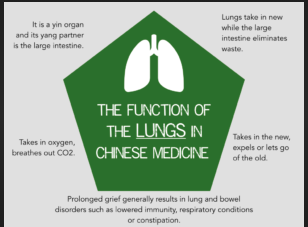
lungs in chinese medicine


The website below was enlightening.

https://www.chinesemedicineliving.com/philosophy/the-emotions/grief-the-lungs/

*more about this in another blog

Compassion and Guilt

7BaS98D9RZyQVaRPKtRPVA

Caregiving 24/7 often feels like a rollercoaster of emotions. The two up there in the title are Big and Frequent for me.  Compassion: How horrible it must be to literally lose one’s mind!  How awful to be so dependent!  How frightening to search for words and not find them!

Reality intervenes.  Is it anxiety or forgetfulness that prompts the persistent questions I get daily: Where are we going? (4 times en route), Do the tulips need water? (three times during breakfast).  Who is coming over?  When are we getting the car back from the mechanic?  I can’t discern whether it’s his anxiety or memory, but–alas!–I do become impatient.

So then comes the guilt. I “should” on myself.  I shouldn’t snap back.  I shouldn’t use that tone of voice.  He can’t help it. I should be kinder, more patient, more forgiving, more COMPASSIONATE, more–more–more.  Give me my hairshirt and lash.

Compassion does come from the outside as well.  Some friends offer visits, outings, understanding, golden ears that just listen to me whine.  But there’s another kind of compassion that isn’t necessarily helpful.  There are folks who want to help by offering ways to fix the problem.  They provide suggestions about herbal supplements and links to websites that tell how to reverse dementia.

I’m ashamed to say that my initial reaction is negative.  You’re asking me to do more than I’m doing already?  I already make weekly rounds with doctors, provide activities and entertainment, meals, transportation–and now I have to watch infomercials and read articles about magic bullets?  My first thought is No, thanks.  

But then I think: What if?  What if the brain tonic helps?  And so off I go into cyberspace, just in case.

If I find a cure, I’ll certainly let you know.