
Years ago I read that sorrow affects the lungs. The idea remained buried in a back drawer of my mind. Recently, though, I’ve had cause to unearth this notion while dealing with a persistent health issue.
In December, while vacationing with my husband in California, I caught a bad cold. Normally I would rest at home and kick such a virus in a few days. My illness was exacerbated by an upended routine, long days of travel, and demands to be present for West Coast family gatherings during the holidays.
Three days before our flight back to New York, I realized that it was more than a cold. My chest felt like it was imploding. At the local urgent care I was given a “Z-pack” for bronchitis. Things got a little better until the flight home, when the symptoms got worse. Back I went to another urgent care on a Sunday and was given another antibiotic.
Eight weeks later, I was still wheezing and tired, with stuffed sinuses. The ENT specialist that I visited said I had a sinus infection and–you guessed it–gave me a third round of antibiotics.
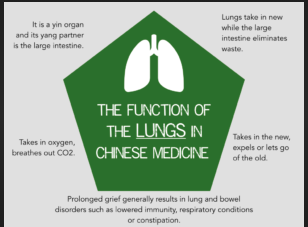
The point of this narrative is this: in Traditional Chinese medicine, lung illnesses are connected with grief.

ottowaholisticwellness.ca
I’m a grieving spouse, having lost the future I’d imagined with a spouse who is no longer the person I married. Although I keep active and engaged with caregiving and many activities, I live with an underlying river of sadness, that springs up into my eyes often, sometimes with the slightest surprising provocation.
Grief must be expressed to let it go. We can’t measure the severity of loss with instruments, but only by how strongly it is felt. Unexpressed grief harms the lungs. Coupled with the all the other emotions that caregiving can produce (fear, anger, guilt–see above diagram), caregivers’ health may be threatened.
So how do caregivers cope and keep illness at bay? Exercise, meditation, support groups, Emotional Freedom Technique (EFT)*, time with friends, religious practice: all of these help me stay healthy.
The website below was enlightening.
https://www.chinesemedicineliving.com/philosophy/the-emotions/grief-the-lungs/
*more about this in another blog


 Tangled Magic