Here is another teacher story from my archives, dated 2004.
Paloma wept over a picture book today. She came into my office-sized classroom hot and sweaty from recess. First we studied the curriculum lesson, a poster about thermal currents. Then I handed her a book to read: Now One Foot, Now the Other by Tomie DePaola.
“Read this and then choose from the list and write a response in your journal,” I told her. On the crowded walls is a list of possible ways to respond to reading: What surprised you? How are the people in the book like your family? How are they different? Etc.
As Paloma read, I previewed the lessons for the coming week and made notes about materials needed for the next project. At some point she paused in her reading and said, “It’s sad.”
“Yes.” I said.
We returned to silence and our respective tasks.
DePaola’s story is about a five-year old boy, Bobby, and his Grandfather, Bob. Bob teaches Bobby to walk. They have a loving, special relationship that DePaola depicts with an economy of words. Then Bob has a stroke and loses his speech. Bobby helps his grandfather learn to walk again.
When she finished the story, Paloma chose to write about what impressed her. We were quiet again as she wrote a page in her notebook, and I organized my notes in my daily log.
“Done,” she said.
“Do you want to read it to me?”
“No, you read it.”
I read aloud a passage about Paloma and her grandparents in Mexico. She told how they taught her to take care of the animals and feed the chickens.
I finished reading and looked up. Her eyes were shiny with tears. We talked about missing grandparents and I told her about growing up with only my grandmother, who was not a warm and fuzzy grandmotherly person. She asked about my mother and father and how they died. We talked quite a while past her lesson time.
After she left, I felt an angel had passed over. Something magical happened there. I sensed it but I couldn’t say what it was. A heart was touched by a simple story; a connection was made between a 10-year-old Mexican immigrant girl growing up in the year 2004 and a five-year-old Italian boy growing up sometime before World War II.
It’s a tribute to Tomie DePaola that he writes so well, and also to Paloma that she allowed so much of herself to be present and sensitive. As for me, I think I witnessed a small miracle today.
I wrote this article over a decade ago, but the ideas presented are just as relevant today.
In the time I taught English language learners, I was daily intrigued by the differences in their backgrounds, their stories, and their learning behaviors as they struggled to master the vagaries of our language.
Along with their material belongings, many of these children brought emotional baggage with them to their new schools. A child’s emotional state can impact the manner and speed with which s/he learns a new language. Researchers in language acquisition call this factor the “affective filter.” The filter can be loosely meshed and let in a lot of new information, or it can be almost a solid wall of resistance and shut out communication.
The concept of the affective filter originated with Stephen Krashen, an expert in language acquisition. It is one of five hypotheses Krashen developed about the process of language acquisition. (The other four are acquisition-learning, monitor, natural order and input) The affective filter addresses the socio-emotional variables that impact language learners. According to Krashen, the most important affective variables that encourage new language acquisition are: low anxiety learning environment, student motivation to learn the language, self-confidence, and self-esteem.
Learners of a new language may not only lack motivation, they may also be downright resistant. I experienced this first-hand when I lived in Israel. The summer after I finished sixth grade, my parents sold our home in Los Angeles and took me to Israel with the intention of emigrating. For almost half a year we lived on the outskirts of Tel Aviv and I attended the local public school, where all classes were taught in Hebrew.
My parents found a tutor who tried to teach me Hebrew. Six months is plenty of time to pick up the basic functional communication skills of a new language, especially if you’re young. But I was uprooted, pubescent, lonely, and sullen. My affective filter was on high and I determinedly learned as little Hebrew as possible.
Fast forward thirty years to the summers when I worked with high school age migrant students. One boy from Colombia was a continual behavior problem. From his writing, we learned how angry he was at being taken from his home, and how desperately he missed his grandparents and friends. He was passionate about his country. The longing he had for his home was heartrending. And yet, amidst all this turmoil, he was supposed to learn English.
Another time, a classroom teacher and I met with the parents of one of my ENL students. This little kindergartener refused to speak in school, in English or Spanish. Our inspired principal arranged for the parents to record their daughter at home. In her own house, the little girl rattled on in both languages, teaching her younger sister all the stories and songs from school—in English.
During the conference, the child’s mother said that, a few days before, her daughter had asked her, “ Mami, should I talk like you or should I talk like my teacher?”
What amazing discrimination for a five-year-old! We teachers could only wonder at the way this child chose to deal with her conflicting loyalties. How to choose between her mother, and mother tongue, or her new teacher and English? Silence was her answer to the problem. Her affective filter was tuned to let everything in and nothing out unless she was safe at home.
Teachers who interact with ENL students need to be aware of the power of the affective filter. Emotional issues can strongly influence the rate of English acquisition. Cultural conflicts can impact students’ learning as well. Children can find themselves caught between the traditional or religious practices of their family and the freer American lifestyle of their peers.
A child who seems unresponsive, lazy, slow, or sleepy may be showing just the tip of the iceberg. If we have ever traveled in another country, we know how tiring it is to keep trying to decipher the speech. Eventually we may shut down in self-protection, just to get some rest.
It’s up to the teaching adults to inform themselves about each child’s country, culture, and customs. Were they willing or reluctant immigrants? How did they come to our country, and whom did they leave behind? The more teachers can help to lower that affective filter, the more comfortable the child will feel when tackling our rather complicated English language.
I suppose I saw the ENL students as being a little more fragile than our homegrown kids. Sometimes enormous sacrifices are made so that these children can take advantage of the opportunities offered in this great country of ours. Families often endure long and painful separations, not to mention stressful living conditions. Listening to their stories, I was constantly reminded that this kind of fortitude and aspiration is what built the United States.
(This piece of writing comes from 2007, during my days of teaching English as a New Language (ENL–once called ESL). Working with these children and their families was my delight and good fortune.)
On the second-to-last day of school, I give my English Language Learners (ELLs) in first grade a farewell party. We have mini-muffins and fresh strawberries. For Anton, I bring a peach pie.
“I never taste pie,” he said a few weeks ago when the word came up in our lesson. “What pie?”
We told him it was made with fruit and a crust. He didn’t forget about the pie. When I told the first graders we’d be having a last day party Anton perked up.
“You bling pie for we eat?” he asked me. Along with ESL classes, Anton is getting help from the speech teacher for his articulation.
“OK, but I probably won’t bake it myself,” I said. At the end of the school year, I am weary, as well as inundated with paperwork. I know for sure that homemade pie is not going to fit into my schedule.
On Thursday, Pie Party Day, I give the students some free time to play games or draw. Our daily classes are usually crammed with lessons; there’s so much to learn about speaking, listening, reading and writing in English. On this day, I kick back and have relaxed conversations with my kids.
I call them “my kids.” You would probably call them my students. Most of them I’ve known for two years, and one has been with me for three years. In any child, the change from a frightened five-year-old entering kindergarten to a cocky seven-year-old heading into second grade is astounding. But my kids—my kids—make enormous changes. To me, this metamorphosis is as miraculous as whatever goes on inside a chrysalis. Only I get to see it happen in a way that regular classroom teachers don’t, because my job is truly special.
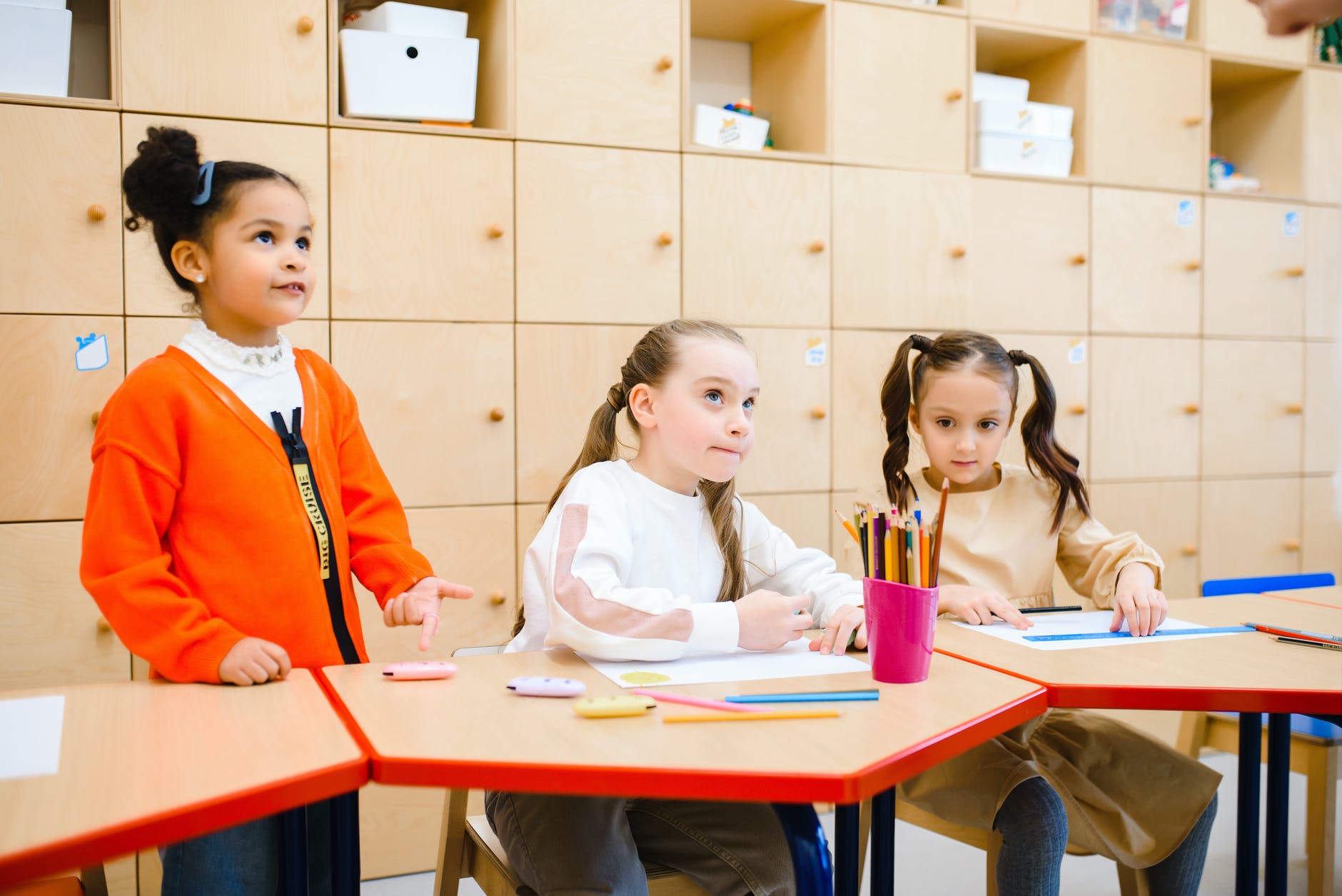
I’m a teacher of English as a Second Language (ESL) and my skinny classroom that was once a storage closet is a safe haven for many bewildered, anxious children, children like my Leticia. Three years ago, when she trustingly took my hand and walked with me to our ESL classroom, Leticia was tiny, even for a kindergartener. She spoke no English at all and had not attended preschool. She spent her first five years in the constant company of her mother and loving relatives, none of whom spoke English. I remember being struck by the great courage of this small person. How very brave to spend hours every day in a place where no one speaks your language, where there is not one familiar face.
Today Leticia is a leggy, confident first grader who reads well and converses fluently in English. Many songs and language games later, here she is, able to move back and forth between two languages. How many adult Americans can do that?
As we eat our muffins and pie, I ask what everyone is doing for the summer. Anton speaks first. “I go to Uklaine.” He bounces with happiness and his straight, blond bowl cut hair bounces with him. “I go see my glandma and glandpa.”
Alberto of the bright, mischievous chipmunk eyes tells us he is going to Mexico. “I’m going to my uncle house in Puebla. He take care of my dog.”
Kenny, whose glasses are always slightly askew, is going to visit his Filipino cousins in California as soon as school lets out. “We’re going to eat crab at the beach! I love crab!”
I can’t believe I won’t see my kids again in September. They will be new second graders, learning the layout of a new school. I’m worried about them. How will they manage the tougher curriculum? Will their new teachers help them with unfamiliar vocabulary and explain science concepts?
In our ESL classroom, we have a photo album full of pictures of our school year. There’s Noodle Day when we ate with chopsticks while practicing restaurant vocabulary and ordering from a menu. There’s Rice Day when we researched and wrote a book about rice. There are pictures of the kindergarteners dressing for the weather in my family’s oversized raincoats and snow boots. There’s Rani, with her birthday crown; showing her gap-tooth smile. She’ll have her grown-up teeth by September.
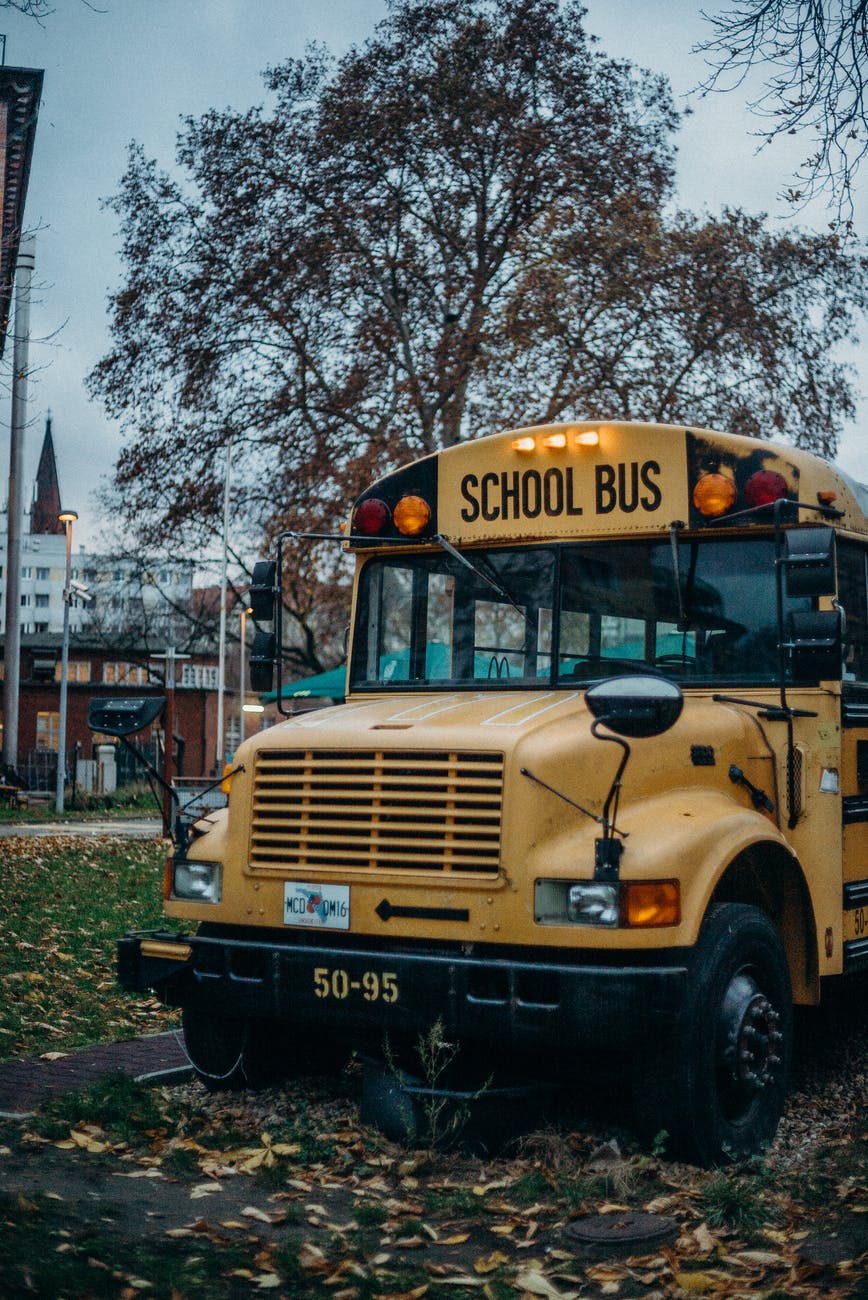
On the last day of school, it is tradition for all the teachers to gather on the grassy bank by the bus parking lot. We wave goodbye to the students as they leave for the summer. In my seventeen years of teaching second grade, I always felt a sense of relief as the buses honked and pulled out on to the road. During the ten months of school, I usually enjoyed my students, but I wasn’t sad to say goodbye until I started teaching ESL. This year I am already missing my kids. This year I see those beautiful children’s faces pressed against the school bus windows and my eyes fill with tears.
Lately my husband and I have been sorting through our bins of stuff in an effort to reduce the amount in our storage unit. This is a COVID-inspired activity that actually produces a positive result.
While digging around in a bin of my old teaching materials and my kids’ artwork, I found the little book More Anguished English by Richard Lederer. The book’s subtitle reads: An expose of embarrassing, excruciating, and egregious errors in English. I bought this book second hand at least twenty-five years ago. Finding it again brought back a vivid memory of the time I first read it.
It was spring break and I’d rented a house on Chincoteague Island. I had my two kids and two of their friends with me. The kids were finishing dinner and I picked up the book. Soon I was laughing so hard that I couldn’t read it aloud to them.
Some examples from students’ essays*:
Rambo was a French poet.
A great Jewish leader in Scotland was Rabbi Burn.s
A harp is a nude piano. (This image delights me every time.)
As I reread pages a quarter of a century later, I wasn’t as amused. In fact, I found myself feeling compassion for the beleaguered writers, and slightly irritated that the author and my former self made fun at their expense. My change of attitude was rooted in the eight years I taught English as a new language (ENL) to children from kindergarten through fifth grade.
English is a difficult, often nonsensical language. A famous example of its challenges is the variation on /ough/: rough, through, slough(two meanings, two pronunciations), though. Sometimes English seems to have more exceptions than reliable patterns.
My experience as an ENL teacher changed the way I read the “bloopers” in More Anguished English. Some errors were caused by mishearing, such as The big artery on your neck is called the jocular vein. Other mistakes were misspellings: At night we stayed in a youth hostile.
Instead of finding humor in the errors, I found that my heart hurt a bit for the authors struggling to communicate in a challenging language. Whether English is a first language or a new language, learning it isn’t easy. How many native speakers are confused by there, they’re, and their? Were and where?







 Tangled Magic