Linen fabric has been around for a long time. In her book The Golden Thread: How Fabric Changed History, Kassia St. Clair delves deep into linen’s ancient life. These facts stood out for me:
The production of linen involves several labor-intensive steps. I wonder how the ancient peoples figured out the process. It’s much more complicated than shearing a sheep and spinning wool.
The ancient Egyptians used hundreds of yards of linen for wrapping mummies, precious statues, and other valued items in the tombs, but they also wore linen clothes. How did they produce so much cloth?
Without modern machinery, the ancient Egyptians wove cloth as fine as “200 x 500 threads to the square inch.” (p. 40) How did they spin and weave such fine thread?
Linen “is also one of the strongest fibers, twice as strong as cotton and four times as strong as wool.” (p. 44)
Here are the 8 steps for producing linen from flax:
Planting. Seeds are sown, usually in April. Flax crops deplete the soil so they can’t be continuously grown in the same field.
Growing. Seeds are placed close together to cut down on branching and to keep weeds away.
Harvesting. After about one hundred days, the plants are pulled up with the roots (the roots contain usable fibers) and spread out to dry.
Rippling. The upper parts of the flax bundles are pulled through coarse combs to remove the seeds. Then the long inner fibers are separated from the straw and inner pith.
Retting. The purpose of retting is to loosen and decompose the unwanted fibers. Retting can be accomplished by exposing the flax to the elements out in a field. Another method is to soak the flax in a pond or trough. Ideally, the flax is immersed in running water, like a stream.
Drying. When the straw comes away from the fibers, the bundles are untied and laid out to dry in a field. The crop is turned to maximize drying. When thoroughly dry, it can be stacked inside to age.
Scutching. Scutching works to remove the linen fiber from other unwanted plant material (“boon”). A large wooden machine called a “brake” is used to get rid of the trash material. Then the flax is beaten against a board with a blunt wooden knife. This is called “scutching.”
Hackling. The flax fibers are drawn through several metal combs for a final cleaning. The resulting bundle of long fibers is called a “strick.”
When I learned about the labor-intensive process of preparing flax, I was amazed that anyone could discover that a durable, attractive type of cloth resided in that pretty, grassy plant. Who was that person of ancient times? Probably a woman.
Below are some resources if you’re interested in more information, photos, and videos about making linen from flax.
It’s unbelievable. We’re coming up to a full year of masks, remote schooling, and social distancing. And so many deaths.
Gratitude: I am alive. Turning seventy years old this month, and grateful to be here, in this good body, ensconced in a lovely house with loving family in touch, if not physically present.
I’ve been reflecting on the ways I’ve devised to get through a year of fear, political chaos, and isolation. Here’s my list of what has helped:
>Yoga: Good for maintaining flexibility and strength, it also eases muscle tension.
>Daily Energy Medicine: Donna Eden’s 5-minute routine is really helpful for setting up good energy pathways each day.
>Tapping (aka Emotional Freedom Technique or EFT) I belong to Nick and Jessica Ortner’s Tapping website. They offer lots of tapping scripts to help with a variety of concerns, including routines to help with COVID issues. There are free routines available, or you can join for a minimal $12.95/month.
Zumba: I wish I’d discovered this resource months ago! I love to dance, and Zumba is great exercise that doesn’t require a lot of space. No equipment is needed except a pair of sneakers and your body. All those rhythms, salsa, cumbia, merengue, really lift my mood and moving to the beats makes my body feel good.
Meditation: Oops, I almost forgot to mention meditation. It has been my daily practice for so long (45 years!) that it slipped my mind. We meditate for twenty minutes every morning. Lately I’ve been using the Oak app because it’s fun to keep track. However, nothing is needed except a quiet spot and a method. I practice mantra meditation, but there are many other possibilities.
>Walking: When the weather permits, getting outside and breathing fresh air is a great way to expel staleness.
>Zooming: I participate in two online writing groups, one group for caregivers and one for folkdancing, but there are many other groups to join to help one feel connected.
>Crafts: I like to make things. I sew quilts and baskets, do applique, paint rocks, and make books for my granddaughter.
>Cooking: I’ve never been an enthusiastic cook, but since we don’t go to restaurants or order in, I’ve been trying out new recipes to stave off meal boredom.
>Jigsaw puzzles: The 1000 piece puzzles can keep me busy for days.
Maybe some of these activities will inspire you as we enter the second year of the pandemic. Wishing health and peace to all.
On a whim, I chose to borrow the ebook The Autobiography of Mrs. Tom Thumb by Melanie Benjamin. I’m only a third of the way into the book, but it’s already given me lots to ponder.
Imagine being an adult who is 32 inches tall. Imagine the world from that height: legs and shoes and the bottoms of furniture. Consider the obstacles you would encounter, such simple things as getting into a chair, or opening a door. Children at that height are dependent and usually there is a bigger person around to assist them. An adult of that size, however, would wish to be as independent as possible, as did Lavinia Warren.
Born Mercy Lavinia Warren Bump in 1842, she was a “proportionate dwarf,” a true “little lady.” She began her life’s journey in Middleborough, Massachusetts, the daughter of a farming family descended from Mayflower ancestors. She had two older brothers and one older sister, all normal-sized. Her younger sister, Minnie, was also a proportionate dwarf, and even smaller than Lavinia.
Lavinia pushed back against the protective environment at home and went to the local school where she excelled. She became the teacher of the primary class and managed her position and the students well. But Lavinia wished to experience the wider world. She joined a circus-like showboat company that motored up and down the Mississippi. Here she got plenty of exposure to the rougher side of performing life.
When the Civil War put an end to the showboat tours, Lavinia went back home where she soon became bored. She wrote a letter introducing herself to P.T. Barnum, whose famous American Museum in New York City featured another proportionate dwarf, General Tom Thumb.
Barnum happily signed Lavinia to perform at the American Museum. She toured the United States. She married Charles Stratton (General Tom Thumb) in a spectacular wedding attended by the elite of New York City (Astors, Belmonts). Her sister joined the company. When the transcontinental railroad was completed, they embarked on a world tour for three years.
And that’s as far as I’ve gotten in the book, so I suggest you get a copy if you’re interested in learning more about this ambitious and interesting woman.
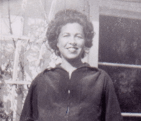
Lately, my husband and I have been listening to Alexa’s soothing classical harp music. In the collection is Pavane Pour Une Infante Defunte (Pavane for a Dead Princess) by Maurice Ravel. It is a sweet, mournful piece of music that, for me, evokes memories of my mother. When I was in tenth grade, she bought me a record album of Ravel’s music. On one side was Bolero, and on the other side, the Pavane. Bolero was too intense for me, much like a musical headache, but I listened to the B side often enough to know the music well.
Bolero was one of the pieces of music I needed to recognize for my history class. Tenth grade social studies at my high school included a two-week series of lessons called “Culture Vulture.” In this short time period were crammed all the works of art and music deemed significant by our teacher, Mr. Occhipinti, in the era we were studying in Modern History. At the end of the two weeks, we took a test with slides and recordings.
Those fourteen days of Culture Vulture created a thrilling panic among Mr. Occhipinti’s students. We met in study groups, quizzing each other, and inventing mnemonic devices for remembering the titles of the works.
My mother may have enjoyed Culture Vulture as much as we did, possibly more. At last, I was being exposed to the music she loved. In addition to the Ravel recording, she gave me a compilation of Baroque music, and another from the Romantic era.
That was my mother. She constantly supplemented my learning. If I was studying ancient Greece, she went to the library and brought back books of mythology and architecture (Doric, Ionic, Corinthian—burned in my memory). She went into the local record store and asked the clerk what was new and popular with teens. That’s how I got a recording of the musical Hair before my friends had ever heard of it.
I owe my mother infinite gratitude for the parenting model she provided, a model that I hope, to some extent, I carried on with my own children and grandchildren. My mother encouraged and enhanced anything academic or artistic in which I expressed interest. I’d be willing to bet that it was my mother who introduced me to Lawrence Durrell’s Alexandria Quartet. It’s because of her that I know and love the opera La Boheme and that I can hum along to Ravel’s Pavane.
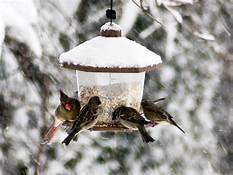
For the past two months, we’ve been enjoying the bird show on the deck outside the living room windows. The three feeders draw different customers. The hopper feeder, filled with black oil sunflower seed, brings chickadees, titmice (titmouses?), goldfinches, nuthatches, and the occasional cardinal.
The chickadees are the boldest. They zip in and out, grabbing one seed at a time. Then they take it to a nearby branch to peck it open. When I come out onto the deck, they scold me, “Chicka-dee-dee-dee!” They are also the first to notice any changes in the feeding arrangements.
The downy woodpeckers and red-headed woodpeckers like the suet cakes. The smaller woodpeckers climb in through the wire grid to eat. The chickadees take the occasional nibble, too.
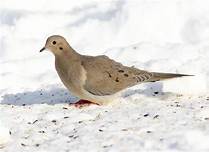
Recently, we put out a tray sprinkled with the fancy “fruit and nut” birdseed blend. This mixture contains shelled peanuts, sunflower, and safflower seeds, plus bits of dried fruit. Everybody likes this offering, but the competition is extreme. Highest in the bird hierarchy are the mourning doves. We have two pairs who come to eat. The king or queen mourning dove sits itself in the middle of the tray, and no one else dares come close, not even the jays. The jays are next highest bosses. They eat all the peanuts, wolfing them down until we wonder how they’ll be able to fly. Juncos and wrens visit the food tray, too.
Interestingly, the little nuthatch is one of the more aggressive birds. It spreads its wings or tail feathers to warn off other hungry birds. Its acrobatics are charming, as it clings upside down under the hanging feeder.
Until the temperature fell into the single digits, we had a gang of squirrels dominating the food tray. One was black, the others gray. They haven’t been around for a week or so. I thought they might be hibernating, but after a bit of research, I found the answer. Squirrels don’t hibernate by the scientific definition, that is, their metabolism doesn’t slow down in order to conserve energy. Squirrels prepare for winter by stashing food in their nests, as well as burying food in many other places. So perhaps we haven’t seen them because their eating in while it’s so cold.
Two pairs of cardinal parents come to the deck tray. They are midway in the bird order. They come mostly for the sunflower seeds, which they cleverly shell with their beaks. That flashy red costume is such a welcome burst of color against the browns and whites of winter days.
We’re looking forward to the change of seasons, wondering who our springtime visitors will be.













 Tangled Magic