When Orgull, the foreman at the Red Thunder Mine, made his plans to kidnap Prince Emric, the dwarf didn’t think past the satisfaction of revenge. The High King’s edict, banning slavery from all the dwarves’ mines and forges, had almost ruined the miners’ livelihood.
But Orgull also had a personal vendetta, for his face and body bore the scars of burns inflicted on him by the king’s advisor, Lord Malcolm of Hawk Hill.
In his hut at the Red Thunder Mine, Orgull sat at the table with the slave trader, Morg.
Rubbing his palms together, Orgull then spread out his fingers and studied the shiny, raised scars that covered his hands.
“I expect that Lord Malcolm, as a loyal subject of King Karbac, will be drawn into the search for the Prince,” Orgull said. “He’ll come to me like a moth to a flame.”
Morg shook his head and scowled. “That Lord Malcolm is a powerful warlock,” he said. “Ye’ll not be challenging his magic.”
“Oh, not face to face,” Orgull grinned, showing his blackened teeth. “I’ll shoot him down from afar, when he’s unsuspecting, like.”
“Murder from behind?” Morg frowned. “That’s not the dwarf way.”
“Oh, and should I invite him to tea first?” Orgull said. “Look at these hands, and this face,” he said. “Was that a fair fight?”
Morg shook his head again. He’d already heard this speech from Orgull many times. “Where will ye put the boy?” he asked Orgull.
“In the Labyrinth, of course,” Orgull replied.
Below the caves and the forges of Red Thunder Mine, the Labyrinth spread like a spider’s web of tunnels, winding and twisting deep in the earth. It had been created, and later abandoned, by faeries centuries ago.
“But what of the Snatcher?” Morg asked.
“Ain’t my concern,” said Orgull. “And what if it does eat the boy? When we get the ransom, and our slaves back, the king himself can seek his son in the Labyrinth.” Orgull snorted a laugh. “Maybe the monster will eat ‘em both, father and son.”
“The boy is well-guarded, ye know,” Morg said. “How will ye nab him?”
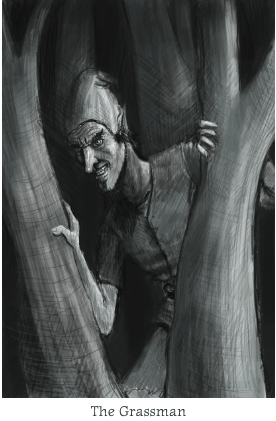
“Not me,” Orgull said. “I’ll be getting a Grassman to do that job.”
So begins the adventures of Prince Emric, the twelve-year-old boy who wants only to compose and play music, and write poetry. His father, the king, has other ideas about the educationof his heir. When kidnapped by the Grassman, Emric is swept into a task that demands great courage and sacrifice.
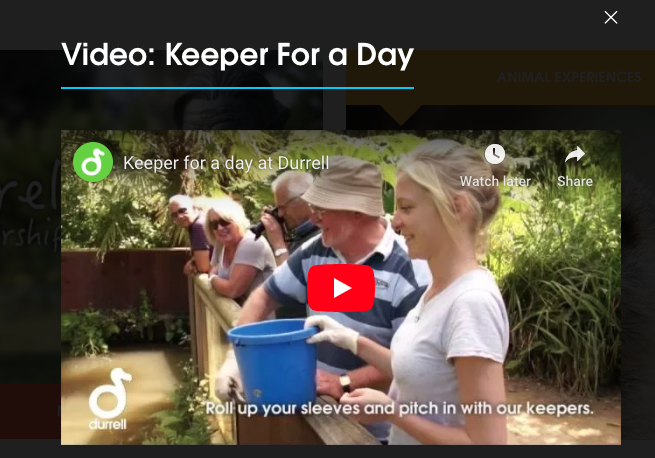
When I was twenty years old, I made a literary pilgrimage to the island of Jersey, to Gerald Durrell’s zoo. I no longer remember how the idea came to me. I’d read all of his books, some multiple times. My Family and Other Animals was my favorite. These stories of the Durrell family were recently popularized on television. But I was a fan of Gerald’s and Lawrence’s books long before that.
At the time of the trip, I was part of a study abroad program in France. We students were given a week or two break between the intensive language course in Pau and the beginning of classes at the University of Bordeaux. Most of the other students had already made plans. I hadn’t formed any strong friendships yet, and neither had another student named Jo. She and I decided we would travel together.
Jo had the face of a fox, reminiscent of Jodie Foster: pointy nose and chin and a thick shock of chestnut hair. We hitchhiked out of Pau, catching a nightmare ride in a sports car with a young Frenchman. I scrunched up in the back—no seat–while we rocketed through the night. I asked him to slow down, and he just laughed. It felt like the devil was at the wheel.
We landed, rattled but safe, in La Rochelle. The youth hostel there was closed for the season, but they kindly gave us beds. The heat was off. Luckily, we had sleeping bags. The next morning we had bowls of café au lait and bread for breakfast.
Eventually we made it to St. Malo on the English Channel. A storm had just passed through. The sea was still rough. We bought tickets to take the hydrofoil to Jersey. Knowing my sensitive stomach, I swallowed some Dramamine. The trip across was a rollercoaster on waves. It seemed like everyone but me was seasick.
My memories of this pilgrimage are sadly slim. Jo and I found a pension to stay in. Then we made our way to the Jersey Zoo. Durrell wasn’t in residence. The zoo was small and clean; the animals well cared for.
We met the person in charge, a man with the wonderful name of Quentin Bloxam. I recall sauntering along the narrow country roads in beautiful autumn weather, eating wild blackberries off the bushes. I fantasized about tossing out my French studies and working at the zoo.
Durrell opened the zoo in 1959 with the intent of preserving endangered species. Today it is a much larger operation than the zoo I visited in 1971. You can check out its website at
Unfortunately, Jo and I were ill-suited traveling companions. One problem for me was that she liked to “share” the food that I’d ordered for myself. Who knows which of my habits irritated her? Yet, after we returned to Bordeaux, we never willingly interacted again.
Cremation, that’s what I choose. Even though it’s not a Jewish custom. When I first pondered the question of my remains, probably a decade ago, my first idea was to have my ashes planted under a tree, a maple or a gingko because I like the shape of the leaves, at the Siddha Yoga Ashram. At that time, students of Siddha Yoga could participate in a program called Trees for Eternity. People planted trees for loved ones around Lake Nityananda. I used to walk around the lake and read the plaques. Sometimes people hung crystals or windchimes or mala beads from the branches.
That choice disintegrated when the ashram ended the Trees for Eternity. Maybe they ran out of room. My next thought was to have one or more family members visit the ashram with my ashes concealed in pouches under their pant legs. They would walk around the lake and surreptitiously dribble my ashes on the path while scuffing them in with their feet. This is what Steve McQueen and the POWs did in the film The Great Escape. The film was based on the book The Colditz Story, a true story about Allied officers who were imprisoned in an old castle or fortress. They got up to all kinds of escape-related mischief, digging tunnels (the dirt from which they spread in the prison yard as described above) and even building a plane inside the walls of the prison—if I’m remembering correctly. But I digress.
Now that even day visitors are restricted at the ashram, I have to come up with a better way to dispose of my ashes. I don’t really cotton to having them sitting around in a box or urn somewhere, whether in a columbarium or some person’s basement, like my ex-husband has done. He’s got his father’s ashes and his brother’s sitting in his house. I don’t mind Tio Jose’s spirit hanging around the property, but Abuelo should definitely have been put to rest years ago. His ghostly cranky energy is not something you’d want to entertain.
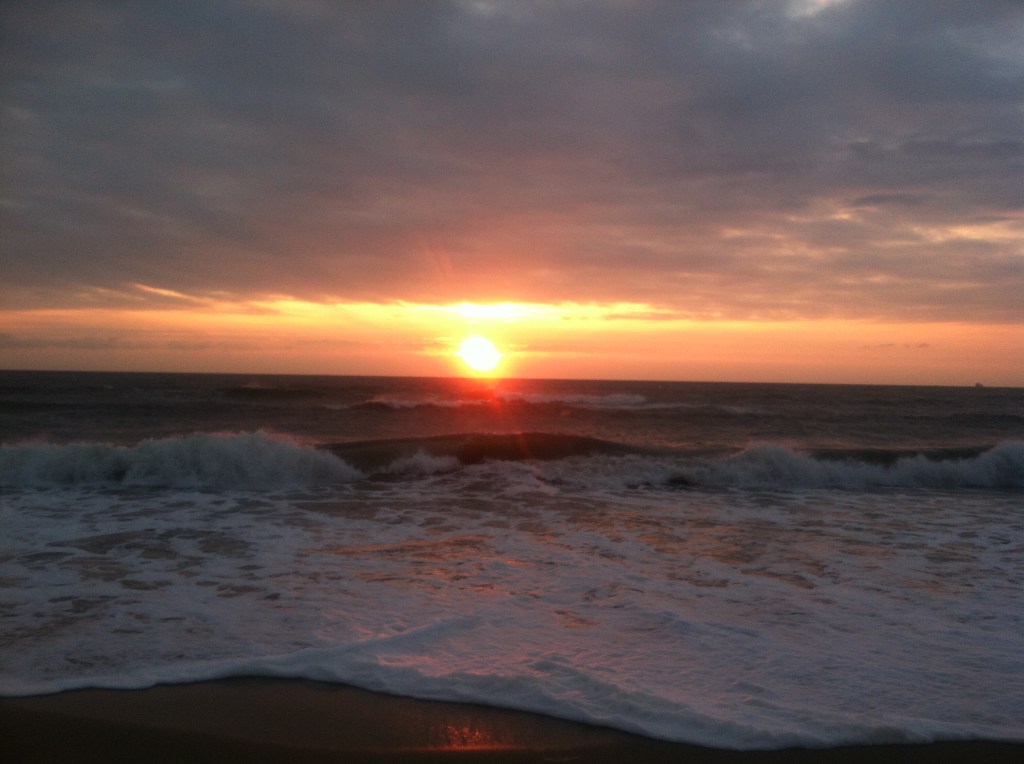
My thoughts fly west then, to the Pacific. To Malibu, to Escondido Beach, where I spent the happiest summers of my young life. The house on the dunes smelled of sea grass matting. I slept and woke to the sound of the waves. The mornings were misty, the dunes were hot, the waves were rough, the two dogs ran and barked. It was glorious.
Now there would be a place to set those gray particles of bone free. Let them blow out over the ocean I loved.
*Saturn enters Aquarius on December 17 until March 2023. In the airy climate of Aquarius, Saturn turns its slow and steady gaze outward, reordering structures and boundaries in order to make connections, distribute information, and develop innovations…Altogether we can expect deep-seated changes in our underlying values and the way they manifest into aspirations in relationships and work.
I never told anyone that I saw the Grassman steal our baby. I was four years old, minding my newborn baby sister, Toola. Mam had set Toola in a basket in the sun.
“Keep the baby quiet, Sada,” Mam said. “Don’t let her holler.”
She went into the cottage to gather the washing.
The day was fine, bright and sunny, and I closed my eyes while I leaned on the porch rail. It was a rare moment that I wasn’t doing some chore or other, like picking burrs out of my brothers’ socks, or carding wool for Mam to spin.
A shadow fell across my eyelids. I opened one eye just a slit and saw a small green man carrying a bundle. He was hurrying along the neighbor’s wall. Jumping down, he tiptoed up to Toola’s basket. He set down his burden, and peered at Toola asleep in her blankets. Then he leaned over and pinched her cheek between a long green finger and thumb.
“That’s my sister,” I said.
“Oooh, yes, that’s so! And a fine wee worka girly she is, too. We Grassmen be making a trade today–a girly for a girly,” said the green man. He bent down with his arms outstretched.
“Leave her alone!”
“Hush, little worka girl,” the green man said.
“Mam! Mam!” I called out. I didn’t know if I should run for my mother or stay with Toola.
“Oh, too bad!” said the green man. “The noisy little worka girl must have the sneezie powder.”
The man reached into his pocket and threw dust in my face. In an instant, I started to sneeze and sneeze. My eyes watered and my throat burned. I ran blindly into the cottage. I felt my way to the water cask, rinsing my eyes and mouth over and over until the pain and the sneezes subsided.
Out at the back of the house, with her hands in a basin of sloshing suds, Mam had heard nothing. I blundered my way to the wash table, blubbering and wiping my eyes.
“Toola! Toola!” I wailed.
“What is it, Sada?” Mam scowled. “I’m over my elbows in work here.” She pushed hair off her forehead and left a scum of soap instead.
When at last Mam believed my desperation and followed me to the front porch, the green man was gone. In Toola’s basket lay a different baby, all pale skin and spun glass hair. She smiled and waved her little fists.
Mam’s face looked shocked, then furious. I was ready to run, thinking she would knock me into next week, but she didn’t. A dazed smile came to her lips. As Mam lifted the infant out of the basket, a strange and lovely fragrance filled the air. I breathed in the scents of cinnamon and apples, and new-cut hay.
“Well, well, what have we here?” my mother cooed, in a gentle voice I’d certainly never heard. “Such a pretty little thing.”
“What about Toola?” I asked.
“Toola? Aye, but the babe is here, is she not?” Mam said.
“That’s not Toola,” I said.
My mother nuzzled the baby’s neck, breathing in deeply. “ A little apple dumpling, you are,” she murmured, and put the baby to her breast.
And that is how my sister got her first name–Apple.
Guided by Magic is the second book in the Karakesh Chronicles. Sada sets out to find her changeling sister (Apple) who was abandoned in the forest by their fatherwhen Sada was eleven years old.While searching, Sada rides with Travelers, spends time in a witch’s house, and deals with slave traders. Does she find her sister?
Guided by Magic and the rest of the Karakesh Chronicles are available at
On this Thanksgiving Day in this strange pandemic year, I send out gratitude to all of you in the world who read and subscribe to the tangledmagic blog.
I’m grateful, too, for the peculiar freedom the blog provides me. It offers a place where I can share my poems, my thoughts, and my memories without the kind of organization and pressure of a regular publishing process.
So thank you all. May you have safe, happy holidays, and may we all see a better, healthier 2021.





 Tangled Magic