Daughter Anna performed with singer Mario Rincon last night (September 26th).
What can I say? I’m still informing the stranger sitting next to me, “That’s my daughter!”


Come to the Festival in October! It’s going to be fabulous!
Daughter Anna performed with singer Mario Rincon last night (September 26th).
What can I say? I’m still informing the stranger sitting next to me, “That’s my daughter!”
Come to the Festival in October! It’s going to be fabulous!


Flamenco has its roots in a gathering of cultures from India to Morocco to Spain. The rhythms are complex; the lettras speak of love and pain, but some are clever and funny.
Come immerse yourself in this amazing art form!
Mark your calendars and don’t put off getting your seats, as last year’s show sold out. Tickets are available through the Unison website:
www.unisonarts.org or call the office at 845-255-1559

When a good story is also educational, the reading pleasure multiplies. Author Holly Black of The Cruel Prince opened new vistas of faerie for me.

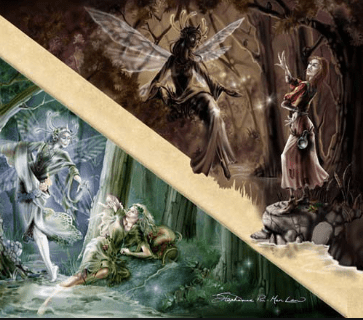
In the kingdom of Elfhame, the Seelie and the Unseelie Courts come together to swear fealty (or not) to the new High King.
What are Seelie and Unseelie Courts?
Here’s Faeriepedia’s explanation:
The Unseelie Court consists of the darkly-inclined fairies. Unlike the Seelie Court, no offense is necessary to bring down their assaults. As a group (or “host”), they appear at night and assault travelers, often carrying them through the air, beating them, and forcing them to commit such acts as shooting at cattle.
In addition to the faerie courts, author Black weaves in other faerie beings: sprites, hobs, pixies, pookas, nixies, and merrows.




The Korobushka was the first folkdance I learned. I was in fourth grade. I had an unusual teacher that year. Mr. Holabird played the bagpipes. Along with the third grade teacher, Miss Simpkins, he taught us some folkdances. We kids were sure they would get married, but they didn’t.
We learned a few more dances that year: the Troika, Miserlou, and maybe the Salty Dog Rag.

In high school, we had a folkdance unit in P.E. The teacher assigned small groups of us to learn a dance outside of class. Two of my friends and I learned Ahavat Hadassah from Dani Dassa, the owner of Cafe Dansa on Pico Boulevard in Los Angeles.
By the time I got to U.C. Irvine, I was a hard core folkdancer. Hora Mamtera was my favorite dance. It was so expansive, so wildly energetic, and took up so much space.
After leaving Irvine, there was a short dead space of dance until I moved to Santa Barbara. Still a sleepy, seaside town, Santa Barbara was a folkdancer’s heaven. We danced almost every day of the week. Tuesday dances were at U.C.S.B. Wednesday we danced at Oak Park, outdoors on a wooden platform that creaked and groaned under our weight. On Fridays, the dancers took over the Plaka, a Greek cafe near the beach. In between the belly dancer and the owner’s table dance, we folkdancers provided free entertainment to the diners. I stretched out one glass of retsina from 8:00 to past midnight. It was glorious.
On Sundays, we’d recovered enough to spend the afternoon dancing on the grassy strip along the beach.
Eventually, I joined an amateur Balkan dance troupe, Zdravitsa. Here’s a version of Daichevo.
This last link above is of Aman, a professional dance troupe out of U.C.L.A. dancing a kopanitsa. To be a member of Aman was the height of accomplishment.
Today, in my golden years, I’m blessed to be able to keep on dancing, here in New Paltz, N.Y., with a group of seniors as passionate as myself.

What is more hopeful than a house plant?
Yesterday, I saw a slender stem lifting up from our prayer plant. Sure enough, this morning, one flower had bloomed atop the stem. 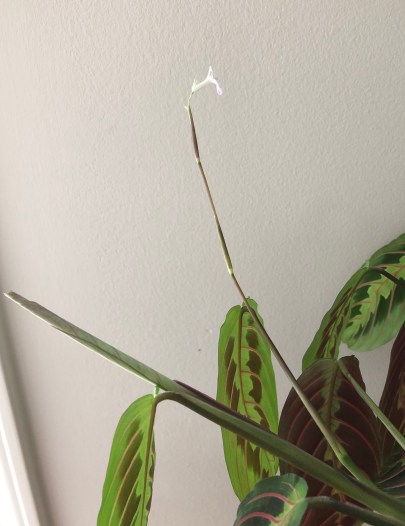
What sort of pollinator could this plant hope to attract, sitting by the sliding door in our house? A fruit fly? And yet, it flowered. (And yet, she persists.)
The prayer plant (maranta leuconeura) is native to tropical forests in Brazil. It prays by folding its leaves at night, like a pair of praying hands. The red-veined leaves remind me of dragons’ wings.
Persistance or optimism? To flower in a place so unlike her natural environment seems like hope to me.

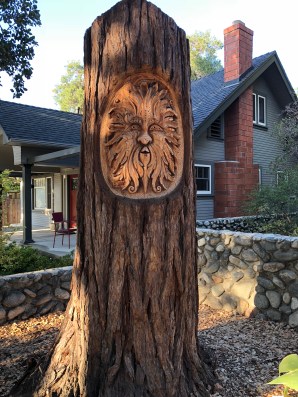 Claremont, California
The Green Man, known as the Leshi in Eastern Europe, is an ancient pre-Christian deity found in many cultures. In early times, winters were hard and long, the forest spread wide and was often dangerous, and folk revered the Green Man, symbol of rebirth, spring, and new growth.
The Leshi is a character in Book V of the Karakesh Chronicles. He has the ability to shift his shape from the old man of the forest to a young, attractive fellow. This youthful Leshi, feeling lusty in the spring, begets a son with—well, I’ll keep that a secret until the book appears in print.
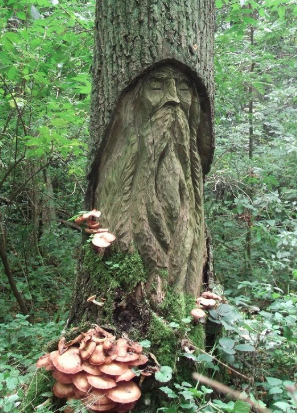
Take this link for more about the Green Man:
https://www.learnreligions.com/the-green-man-spirit-of-the-forest-2561659
I find it fascinating that hundreds of years later, artists and writers are still creating works depicting the Green Man. Here are just of the few representations that appealed to me.

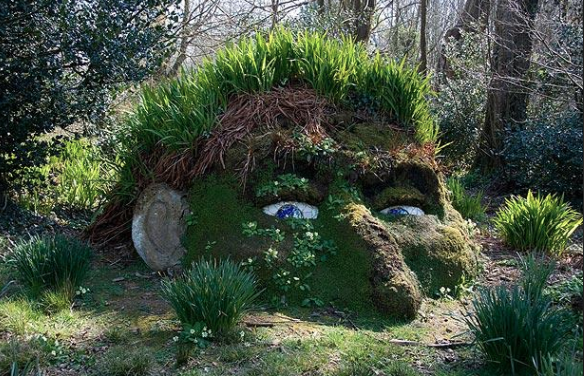
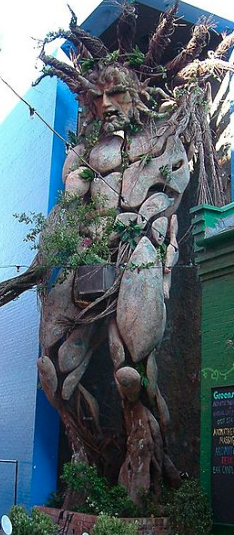
by sculptor Toin Adams, Birmingham, England


Why do these two activities give me so much pleasure? As Pat and I finished this quilt, I was considering the similarities.
You wouldn’t think that sewing and writing are alike, but they are metaphors for each other. I plot a story in much the same way I arrange quilt blocks, choosing the elements of color, characters, and pacing. In quilts, the design wall is my area of creation where fabrics move around until there is a harmonious whole. Novels are more complex, but story elements are arranged, inserted, and removed to create a whole book.
Both activities are immensely satisfying, especially when they are complete and can be shared with an appreciative audience.
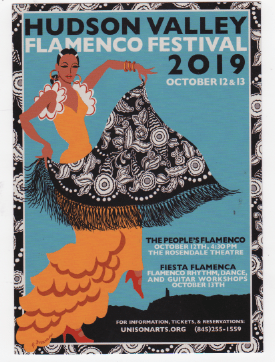
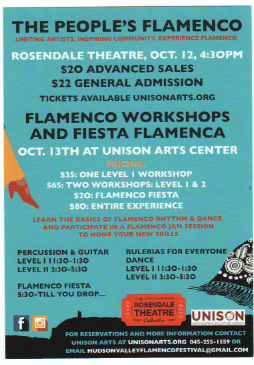
Anna Georges has gathered a stellar group of performers for the Second Annual Hudson Valley Flamenco Festival.
In addition to the October 12th performance, aficionados can participate in workshops at Unison Arts Center the following day.
Go to this link for more information
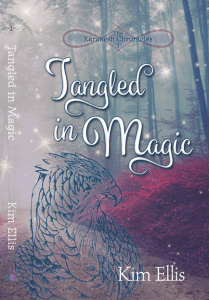
Tangled in Magic
Kim Ellis
Handersen Publishing
9781941429518, $11.95
Diana Perry
Reviewer
When 15-year-old Agatha learns that her twin brother Malcolm may still be alive, she will sacrifice everything to find him. But powerful magic and conjured beasts are soon tracking her every move. The tiny Grassmen and their awful sneezie powder, a mystical Kermode bear, the Fens, a neverending forest, and a deadly panther are just some of the battles she must face. Archer, a wise but arrogant gyrfalcon, is her guide throughout her dangerous quest. Even if Agatha can locate her brother, they will have to battle the evil warlock that plotted against them and murdered their parents. Middle grade to young adult readers will find this a most adventurous tale. A great read! (Ages 14+)
These reviews also appear in the Cengage Learning, Gale interactive CD-ROM series “Book Review Index” which is published four times yearly for academic, corporate, and public library systems.
Additionally, these reviews will be archived on our Midwest Book Review website for the next five years atwww.midwestbookreview.com
 and a human have a baby…
That was the question that sparked Book IV of the Karakesh Chronicles, currently titled Ripples of Magic.
What if the selkie and his wife had a second child? Would it look the same as the first?
My answer is in the book I just finished editing. Sorry–it’s not yet available in print.
Twelve-year-old Demara is the child of such a union. With a selkie father and human mother, Demara longs to be pure selkie and swim with her father and the seals.
 Of course, realizing wishes have unexpected results–and can produce a whole story, if you’re a writer like me.
Many writers and artists are fascinated by selkies and the tales that surround them.
Here is the briefest explanation from Wikipedia:
In Scottish mythology, Selkies (also spelled silkies, sylkies, selchies) or Selkie folk (Scots: selkie fowk) meaning “Seal Folk” are mythological beings capable of therianthropy, changing from seal to human form by shedding their skin. They are found in folktales and mythology originating from Orkney and Shetland.

If a selkie’s skin is stolen, the selkie will belong to the thief until he or she can recover the skin.
And what about Demara? Will she get her wish, and return to the sea?


