Claremont, Rearview

Y9i%GFjdRlSQEfyeYAkADA

The trees of Claremont, above.

We’ve returned to New York, to the lush green and the humidity of the Hudson Valley.  My conclusion: Claremont is a wonderful place, full of culture, friendly people, and beautiful scenery.  BUT– the rest of LA between Claremont and LAX is mostly ugly.

So here are photos of Claremont that I couldn’t wrangle onto my iPad when in Claremont.

fullsizeoutput_1ea0   This garden is typical of the desert landscaping around Claremont houses.


yxEl8eviSS+8FBGlaus+aw

I met this rangy coyote on my morning walk.

It was great to hang out with my sister and her friends.  I loved the cool, breezy mornings and evenings, when the air stroked my skin.

Travel provides new perspectives, and a respite from the responsibilities of life at home. I’m sure we’ll be back in Claremont within the year, as we have a new family member on its way.


Claremont, California

image

My sister has lived in Claremont for many years.  She has an extensive network of interesting, talented friends who have been dropping by with news and goodies now that she is post-surgery.

I actually lived in Claremont in 1973, just after graduating college.  My sister, Jan, found me an apartment and a job.  Even back then she had many connections.  I worked making hand-forged jewelry for a now-defunct store named Figg.

Recently I read that Claremont is known as the City of Trees.  There are many venerable eucalyptus, pepper, palm, and sycamore trees, along with many others I can’t identify. And of course there are the six colleges whose quads and gardens make for great walking.

The houses around the village are highly individual and imaginatively landscaped. Here’s my sister’s front walk.

imageThe inside of my sister’s house is more like a museum.  We wander around looking at the art on the walls and the collections of old dolls and wooden chests of drawers full of beads and yarns that she uses in her artwork.

image


The figures in the foreground are a collection of carved wooden doctors she found in a shop somewhere.  We had fun guessing which specialist each depicted.

image

Writer’s Corner

Thinking About Plot

School will be starting soon, and I’m gearing up to do some author visits.

One of the class presentations I’m developing is about plot.  It started me considering how I created the plots of the five books of the Karakesh Chronicles.  Each book involves one or more characters on a quest.  For me this theme is no surprise, as I view life as a quest.  We may not all be seeking the same thing, but I believe we do have some common goals.

In the beginning of Awakening Magic (Book III), Prince Emric knows what he doesn’t want.  He must defy his family and the social structure, and make a great sacrifice to achieve the life he desires.  True to the quest plot, Emric encounters obstacles and setbacks as he moves toward his goal.

Book IV, as yet untitled, stars Demara, a girl whose father is a selkie. Her mother is a Traveler.  Demara longs to be a pureblooded selkie, and to be able to live with her father in the ocean.  She, too, encounters obstacles and opposition, and in the end, discovers what she really wants to be.

In the fifth book of the Karakesh Chronicles, the main character, Bimi Lightfoot, longs to find his birth parents.  Bimi wants to know who he is, and where he came from.  All he does know is that his mother is a faerie, and that she let Liri Flare, her cousin, give Bimi away.  As he searches for his parents, Bimi experiences his own transformation.

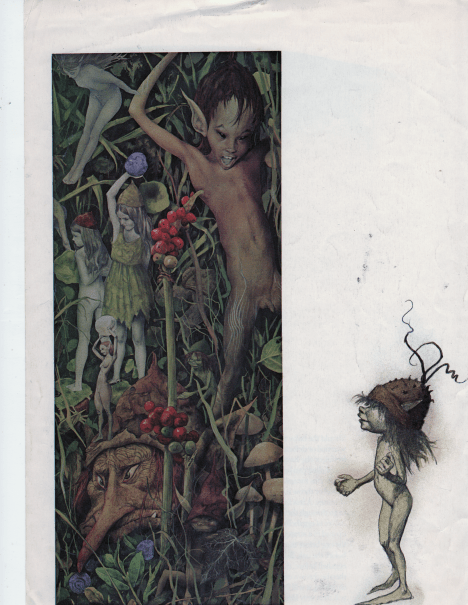
young faeries.png

I’m looking forward to exploring the quest plot with students.  Writing with kids is fun and full of surprises.


Fabulous Flamenco

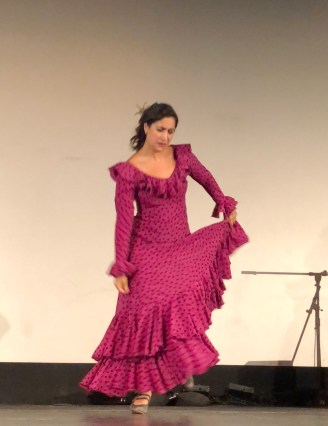
fullsizeoutput_1e81Anna Librada Georges

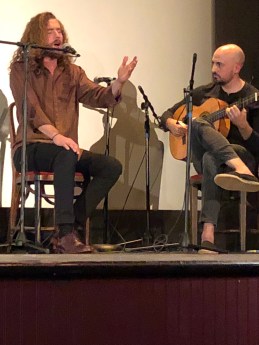
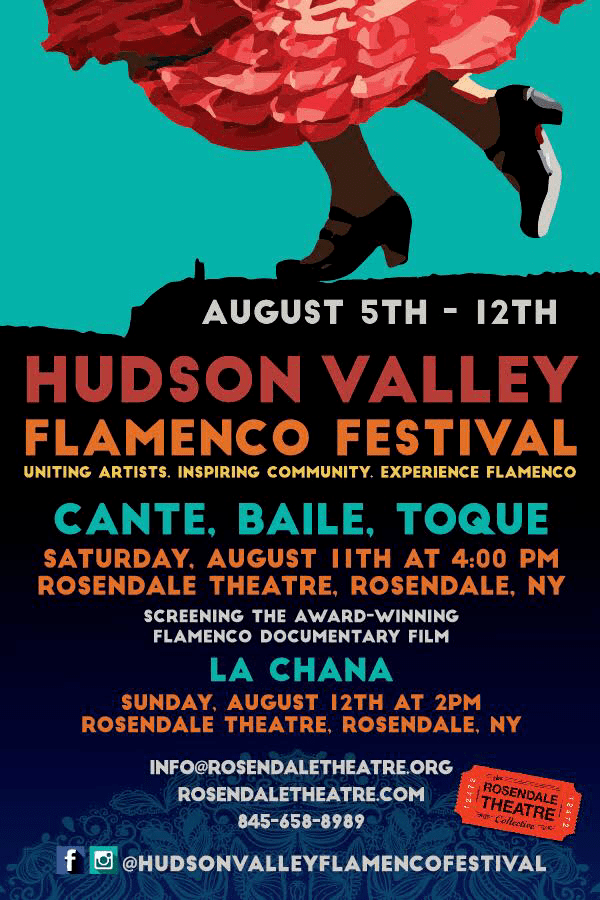
The musicians and dancers of the first Hudson Valley Flamenco Festival performed for a full house at the Rosendale Theater on August 11.  At the end of the show, the audience was standing, shouting, and stamping feet.

The director, my daughter Anna, managed to bring together a dozen local artists to dazzle those attending.  Most of the groundwork for the festival was laid from Anna’s home in Spain.  That she pulled off such an accomplishment speaks to Anna’s skills and determination.

UTdcPoNNS3KRC97czUYIYgMario Rincon and Mike Diago

Anna is already working on the second Hudson Valley Flamenco Festival.

If you missed the show on August 11, you’ll have another chance to enjoy great music and dance next year.

Ole!


What I’m Reading

Into the Beautiful North by Luis Alberto Urrea

Back Bay Books, Little, Brown and Company, NY, 2009. (YA and Adult readers)

into the beautiful north

I loved this book.  LOVED IT.

After listening to an interview with Urrea in an On Being podcast, I was so impressed with his responses, his poetry reading, and his humor that I ordered the book.

When I was reading the end of the story, I think I actually shouted at our heroine, “No!  Don’t go away now!”  I was instantly struck by the fear that I was turning into my Aunt Helen who got so swept away during a Broadway play that she yelled advice to  the actors.

Urrea’s characters are broad and deep, original, and delightful.  I enjoyed the back-and- forth with English and Spanish, and the street talk.  Atomiko, in particular, was a stroke of brilliance.

Into the Beautiful North is a quest novel, but it also provides an education for those of us who don’t know of the conditions at the U.S./Mexican border.

These days, I firmly control my book-buying and use the library system.  However, I’m glad to own Into the Beautiful North, because I plan to read it again, more carefully.  The first read is for the story.  The second read is for the writer.  I kept asking myself, “How does he DO that?”  I want to write like Urrea, to be able to use description, devices, and humor in such a smooth, fresh way.

Regarding humor, my stories tend toward the serious, even though Archer and Carl the Third are amusing in Tangled in Magic. I just take the world too seriously, even worlds with talking birds and magic.

It’s tough to be learning a craft in my golden years, but certainly a welcome challenge that keeps me working.

Thanks, Luis Alberto Urrea, for a wonderful book.


Guided by Magic: Coming in September


GBMCoverBeeKim copy

Guided by Magic, the second book of the Karakesh Chronicles, will make its appearance this fall.  I’m still amazed that the characters who began in Book I, Tangled in Magic, multiplied and insisted that their stories be told, too.  I’ve stopped for now at Book V, although there are more characters with stories knocking at my door.

For me, the most significant theme of Guided by Magic is the bond between sisters.  And “sisters” includes females who are both related and not.  In the book, the sisters seek and support each other, and become strong women who know their minds.

I have a dear sister who lives in California.  For many years, she has “marched to her own drummer,” traveling the world and creating surprising, whimsical, and beautiful art of beads, fabric, paper, and fiber.

pgoat                                                         jan's collage

You can view her work at persimmon goat designs on Facebook.


Experience the Heart of Flamenco

hvff fan

Flamenco, form of song, dance, and instrumental (mostly guitar) music commonly associated with the Andalusian Roma (Gypsies) of southern Spain. (There, the Roma people are called Gitanos.) The roots of flamenco, though somewhat mysterious, seem to lie in the Roma migration from Rajasthan (in northwest India) to Spain between the 9th and 14th centuries. These migrants brought with them musical instruments, such as tambourines, bells, and wooden castanets, and an extensive repertoire of songs and dances. In Spain they encountered the rich cultures of the Sephardic Jews and the Moors. Their centuries-long cultural intermingling produced the unique art form known as flamenco.
–from brittanica.com
HVFF poster

What I’m Reading

Flora and Ulysses cover

Flora and Ulysses by Kate DiCamillo

published by Candlewick Press, 2013.

won the Newbery Medal in 2014.  It’s a pretty crazy plot involving a girl named Flora Belle Buckham and a squirrel superhero who writes poetry.  Ulysses acquires his powers in an unfortunate tangle with a vacuum cleaner.  Flora rescues him, but her mother wants Ulysses out of the house.

Reading this book requires one to believe the impossible.  All of the characters are funny and quirky, including Flora’s father and mother, the neighbors William Spiver and his great aunt Tillie. However, the children’s problems are serious and real.

I expect Flora and Ulysses would be vastly entertaining for middle grade readers.  It’s scenes are so absurd, the characters’ voices so humorous.  Particularly interesting to me as a writer was the blending of graphic novel and narrative.  The graphics moved the plot forward.

I’ve liked other Newbery winners better, but this was a fun, fast read.

Dryads

dryad 1 sahva

I had to do a little research about dryads when I was writing Book V of the Karakesh Chronicles.  As yet it is without a real title, but for my own purposes, I called it Bimi Lightfoot and the Bad Faerie.  As the story progressed, the bad faerie became only a part of Bimi’s harrowing adventures.

But back to dryads.

In Greek mythology, the dryads are minor goddesses.  There are dryads who live in trees, and others who live close to their trees.  Their lives are usually long, and they remain within their tree, or the forest where it grows.

There are many stories about dryads in Greek mythology.  A famous example is the story of Eurydice.  Eurydice was an oak dryad who fell in love with Orpheus and his beautiful music.  After they wed, she died of a poisonous snake bite and ended up in the Underworld.  Hades allowed Orpheus to lead her out of the Underworld if Orpheus did not look back.  At the threshold of the living, Orpheus turned around to make sure she was following, and Eurydice was swept back to Hades’ realm.

dryad 3 best

I was surprised to learn that different kinds of trees have specific dryads.  Oreiades inhabit mountain pines.  Meliai live in ash trees.  The Maliades and Epimiliads live in fruit and apple trees and also guard sheep.  Caryatids live in walnut trees.  Hamadryads are born in oak and poplar trees.  Laurel trees are home to the rare Daphnaie.

In Book V, Bimi Lightfoot encounters several dryads.  From them, he learns something surprising about himself.

Reading about dryads made me wonder: does a dryad die when her tree is cut down?  Does she move into another tree with a sister?  Is there room for two dryads in one tree?

Dryad2

Reminders:

>Get your tickets for the Hudson Valley Flamenco Festival on August 11 at

http://www.hudsonvalleyflamencofestival.brownpapertickets.com

>Look for Guided by Magic, Book II of the Karakesh Chronicles, coming in September

>Please follow this blog!