The Continental Circus

*

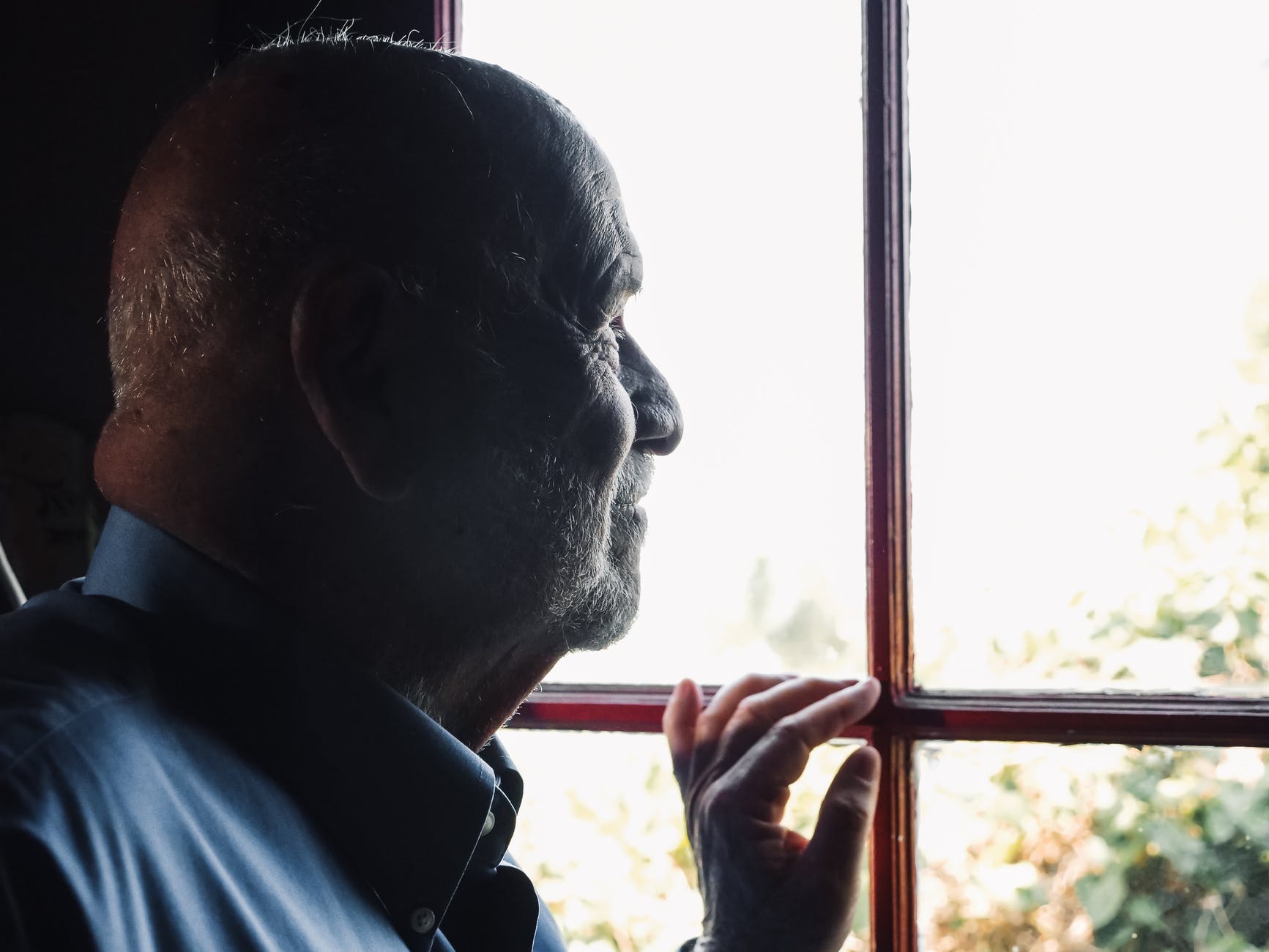
Photo by Pixabay on Pexels.com

*

On the way from here to there, my husband and I see a fancy motorcycle at a stoplight.  It is metallic teal with red spokes and wheel rims. 

“Did I ever tell you about my summer with motorcycles?” I say to him, knowing that even if I had, he would no longer remember.  We have a twenty-minute drive ahead of us.  Why not tell him again–from the beginning–?

“So I met this French-American guy through a friend of a friend who was living in Paris.  I’ll call him Jean-Claude.  He grew up in Connecticut, but his parents were French and lived in Paris.  Jean-Claude was tall and lean.  He had a space between his front teeth, longish brown hair and hound dog brown eyes.

“I was in school at the University of Bordeaux, and when the semester was over, I moved into a Paris sublet with Jean-Claude.  He had a job as assistant producer for a documentary film about the Continental Circus.  That’s what the motorcycle racing season in Europe was called.  It may still be going.  I don’t know.

“Anyway, we shared this tiny studio apartment.  I got a silly job as the gatekeeper at the American Center in Paris.  I sat around on a bench by the front gate, reading a book, and occasionally letting approved people in or out.  Of course, I slammed my finger in the gate, but that’s not part of the motorcycle story.

“The producer of the documentary was a young Frenchman named Jerome Laperrousaz.  He had made a contract with Jack Findlay, a private motorcycle racer.  Jack agreed to let Jerome film him for the whole season, everywhere he went.  Jack was Australian.  Private riders like Jack had to support themselves during the season.  Jack’s girlfriend and manager was Nanou, a French woman.  They lived in a trailer while they followed the Circus.

“The star of the Continental Circus in those days was an Italian playboy named Giacomo Agostini.  He was dashing and handsome.  Agostini was a factory rider, sponsored by Moto Agusta, the manufacturer of the winning MV model motorcycle.

“Jean-Claude brought me along to one of the races, somewhere near Lyons. We got press passes that allowed us to be on the track.  Jean-Claude went off with Jerome.  I wandered around and found a good vantage point on the median near the track’s edge.  I must have watched a number of races, but I remember only two things. First, Jean-Claude was impressed that I was able to identify the sound of the Norton bike before it rounded the bend.

“The second memory still makes my legs weak.  I watched the side-car racers come around the curve.  These side cars were not the little capsules attached to motorcycles that we know from World War I films. Oh, no.

These “side cars” consisted only of a platform on which the driver’s partner knelt.  It was the side car rider’s job to lean out over the track to counterbalance the bike as it dipped around the curves.  The rider would be barely inches above the asphalt.  How fast were they going?  Seventy?  Eighty? Ninety miles an hour? 

“I was amazed to learn that many of the side car riders were women, the partners of the racers.

“What happened to Jack Findlay? He lost races that season.  Then he crashed and was injured.  The last scene of the film was Jack limping along the track with a cane. 

“As for life in Paris, I had thought to stay there with Jean-Claude.  But my father rather firmly pointed out that I had only one more quarter to graduate from U.C. Irvine, and that I should come home and do it. 

“So I did.  Jean-Claude stayed in France while Jerome finished up the film.  Then he came to live with me in Claremont for a short while.  It wasn’t so exciting, the two of us in California.  I had a job making hand-forged jewelry.  He eventually got a delivery job driving a van.  A few days later, Jerome called from Paris with a new project.  Jean-Claude left for Europe while I courted deafness pounding silver on an anvil.

“I heard later that he had an affair with the actor Terrence Stamp.” 

*

Available from Handersen Publishing and Amazon.com

The First Phase of Growth

*

*

I am a victim of my own devising

I am a shooting star

I am a singer who begs revising

I stand with truth and a cracked guitar

*

So steer the course without a rudder

swim the sea in a ripping tide

If words won’t lift me over Jordan

I’ll beg the porpoise for a ride.

*

Send me a moon to trace the water

Send me a cat to climb the dawn

Ring the bluebells, mix the mortar

Build a cairn when day is gone.

*

Welcome, new followers! Thanks for reading! Send me a comment once in while!

*

Available from Handersen Publishing or Amazon.com

The Dinosaur Sticker

*

*

Here is another story from my teaching days.

*

Having Jorge in my kindergarten ESL class was simply exhausting.  Just walking from his regular classroom to mine was a challenge.  If he wasn’t walking backward, Jorge was pushing the kid in front of him, or stopping and running to catch up.  Staying in line was out of the question.  All the while he would be calling out to me in his high, piping voice, “Ms. Ellis!  I hungry!”  “Ms. Ellis!  Look!  Spiderman!”

         Jorge seemed to come from a household where no limits were put on his behavior.  In school, he was “all over the place” as his harried teacher, Mrs. R., put it.  He appeared deaf to directions, and if I made the mistake of trying to take his hand to guide him back into line, he became a rigid, unmovable statue.  Given consequences, Jorge showed no remorse.

         When the group was finally seated on the rug in my room, Jorge rolled around or talked to his cousin.  Mrs. R and I were exasperated, seeing little progress in English acquisition or any other basic kindergarten knowledge.  We asked our Spanish-speaking teacher to call Jorge’s mother and discuss his behavior.  Our principal rode the bus and reported that Jorge’s behavior to and from school was just as lawless.

         To keep Jorge’s hands occupied, I tried one of my cleverest teacher tricks:  I gave him something to carry when we walked in the hall.  It worked for a short time until Jorge began using the book or papers as weapons. 

         And then one day in January I was teaching a lesson on rhyming word pairs using picture cards.  Jorge was not only paying attention, he was practically in my lap, eyes fixed on the pocket chart.  His voice was the first and loudest, naming each pair as we sang the rhyming song.  I was astounded. 

         We walked back to the classroom with Jorge doing his usual antics, but at Mrs. R’s door, I took Jorge aside.  “You did such a good job in class today, I want you to have this special sticker,” I told him.  I gave him a shiny dinosaur sticker.  Jorge put it in the center of his navy blue and dark green striped shirt, right over his heart.

         Mrs. R was absent that Monday, so I couldn’t tell her about the change in Jorge’s behavior.  On Tuesday she was absent as well.  I noticed that Jorge was wearing the same shirt with the dinosaur sticker.  On Wednesday, Mrs. R was back in school, and Jorge was back with the same shirt.  By now the dinosaur sticker was a little ragged and curling at the edges.

         Before we left for the ESL classroom, I brought Jorge over to Mrs. R and told her about Jorge’s great day.

         “OK, Jorge, Mrs. R knows what a good job you did,” I said.  “Now you can let your mom wash your shirt.”

Endless Possibilities

Photo by Meruyert Gonullu on Pexels.com

*

EWR to LAX – nonstop

Do I want more leg room for $150?

No.

Do I want to choose a seat for $113?

Yes.

If I’m travelling after 7/21/21,

I will not be allowed a carry-on bag.

Do I need to check a bag?

Yes.

Both ways?

Yes.

That’s $60.

No meals will be served.

You can purchase snacks.

Bottle of water-$5.

No.

Have a pet?  Bring it on board for $133.

No pet.

Give your credit card number here.

Your CVC code here.

Here is your confirmation code.

Here is your ticket number.

Print out your ticket.

Do you need to rent a car?

No.

Get a room in a hotel?

No.

Do you want to upgrade to Premier Flier

And skip the line for only $175?

No.

Discount tickets for Disneyland?

Sea World? San Diego Zoo?

No.

No.

No.

*

Available from Handersen Publishing and Amazon

Get your tickets now: Hudson Valley Flamenco Festival August 14-15

FROM PRODUCER ANNA LIBRADA GEORGES | August 2021

Save the Dates! 2021 HV Flamenco Festival August 14th & 15th. 


I am so pleased to announce the venues for the 2021 HV Flamenco Festival. This year we are co-producing with the Vanaver Caravan. Through this collaboration we are able to bring you THREE performances this year. Each one is specially curated to support the mission of the HV Flamenco Festival; to explore how flamenco can act as a healing and unifying force in our communities.

Andreas Arnold, guitarist extraordinaire will be joining us from Cadiz, Spain.Here is a video of Andreas playing a piece from his latest album. On Saturday, August 14th at 6pm, Andreas will be performing for us at the outdoor stage at Unison Arts.  Mario Rincon will be singing with him. Bring your masks, blankets and chairs and a picnic and spend the evening being immersed in the magic of live music.

Saturday morning, August 14th at 11:30am will find us in Newburgh at the Green at Safe Harbors. The Awesome Foundation gave us a grant to offer a free performance in Newburgh. This will be a shorter, vibrant opening for the HV Flamenco Festival with dance and music.

On Sunday evening at 6pm at the gorgeous Whitecliff Vineyards in Gardiner, NY our full company will make the Ridge echo with the strains of flamenco song and the driving rhythms of dance. Bring chairs or blankets and a picnic meal. You can sip local wines and allow us to transport you to a sun-baked, jasmine scented plaza in Andalusia.

Tickets will be sold on the Hudson Valley Flamenco Festival website starting June 20th.As always, your support is what keeps the HVFF going and I want to express my gratitude for remembering the HV Flamenco Festival.

This month, Mario Rincon, our cantaor (singer) of many talents is building a portable stage. Because we are bringing you a Covid-safe outdoor festival, a portable stage is a necessary addition to our company. Please consider donating a small amount to offset the costs of building our stage.
DONATE 

Please read the latest blog post that talks about how flamenco works as a system and can be a metaphor for how we exist in our communities. ANNA LIBRADA 

For those followers who don’t know, Anna is my daughter. She is a phenomenal powerhouse of creative energy and talent. The Festival is a must-see.

Preview: Growing Magic (Book V of the Karakesh Chronicles

*

*

Chapter 1

            My faerie mother didn’t want me.  She gave me my name, Bimi Lightfoot, and then she gave me away.  Who was she? I was wondering about her again, hiding from my stepfather under an overturned rowboat.  The boat’s drying wood smelled warm and fishy.  I dug up some sand crabs and made a little house for them out of shells and driftwood.  The crunch of footsteps in the sand made me look up.

            Yellow boots.

            Right next to the boat.

            No one in Karakesh wore fancy yellow boots.

            Bang! Bang!

            Yellow boots pounded on the boat.

            “Bimi Lightfoot!  I know you’re under there!  Come out and greet your cousin, Liri Flare!”

            Cousin?  Liri Flare?

This would be the faerie cousin who gave me to Demara, my so-called sister, when I was a baby.   Demara was only thirteen years old back then, so she handed me off to her mother, Lunila, like I was a sour pear or a rotten potato.

Bang! Bang!

 “Come out, I say!”

I stuck my head out.  He was all yellow.  His clothes were yellow, and so was his hair.  Even his skin was pale yellow.

“All the way, you scamp!” said the Yellow Boots.

I crawled out.

He swept off his pointed yellow hat.

“Liri Flare, faerie extraordinaire,” he said.  He had a big smile, like my sister’s father, Simead Nair.  Simead Nair was a selkie, a seal person.  Selkies are a kind of faerie.  Maybe all faeries had big smiles with big white teeth.

I knew Liri Flare was the faerie that had given me to Demara.  But I didn’t know much about anything else.  I’d never gone beyond Karakesh Village.  The family wouldn’t let me.

“You can’t go anywhere until you learn to behave,” said Lunila.

Lunila was my so-called mother in this family.  Earlier this morning, when I was down on the beach, I’d heard her calling me.

“Bimi Lightfoot!  You bad boy!  You get back here!”

She was standing on the cottage porch.  I pretended I didn’t hear her.  She’s not my real mother, so I didn’t have to do what she said.  I kept walking down the beach toward the sea caves.

Anyone could see that I didn’t belong in this family.  They all had skin the color of dark honey.  I was so pale that you could see my veins.  Sometimes my skin looked light green, like the inside of a grass stem.  My real family–my faerie family–lived at Hawk Hill, in the woods and in the mounds.  Faeries.

“Stand up and let me look at you!” Liri Flare commanded.

He sounded like my stepfather, Gerran.  Always telling me what to do, and how to behave.  Behaving was boring.

But now here was a yellow cousin in yellow boots.  Suddenly things weren’t boring anymore.

*

Liri Flare sweeps Bimi up into the sky on a mission to steal a horse.  Once away from his adoptive family, Bimi sets out to find his mother and learn the truth about his father.  He gets help from some of the magical folk of Karakesh, but other encounters are downright life-threatening.  Does Bimi find what he seeks on his quest? 

*

Growing Magic will be available soon from Handersen Publishing and Amazon books. In the meantime, catch up with the adventures of Agatha, Malcolm, Sada, Rami, and Demara in the first four books of the Karakesh Chronicles.

*

*

Welcome new followers! Thanks for reading!

Mirror

Photo by Ray Bilcliff on Pexels.com

We stand on a cliff

in blasts of wild wind.

Above us, charcoal clouds

boil and bulge.

Below us, the furious sea

mirrors the raging sky

that churns and heaves

as it engulfs two houses.

*

He is someone I knew in high school.

He says, we’ll take a boat

when the storm ends.

No, I mutter,

sure that the waves will still be high

and seasickness a certainty.

The wind snatches my pale voice.

*

And why is he in charge?

And why don’t I shout my refusal?

And what is the reason

for such a risky trip?

*

My mirror asks,

what is your purpose?

My mirror says,

you are bigger than this small life.

My mirror says,

you can choose your boat.

You do not have to enter

drowning houses.

*

Available from Amazon and Handersen Publishing

Saying Goodbye

Photo by cottonbro on Pexels.com

(This piece of writing comes from 2007, during my days of teaching English as a New Language (ENL–once called ESL). Working with these children and their families was my delight and good fortune.)

On the second-to-last day of school, I give my English Language Learners (ELLs) in first grade a farewell party.  We have mini-muffins and fresh strawberries.  For Anton, I bring a peach pie. 

“I never taste pie,” he said a few weeks ago when the word came up in our lesson.  “What pie?”

 We told him it was made with fruit and a crust.  He didn’t forget about the pie.  When I told the first graders we’d be having a last day party Anton perked up.

“You bling pie for we eat?” he asked me.  Along with ESL classes, Anton is getting help from the speech teacher for his articulation.

“OK, but I probably won’t bake it myself,” I said.  At the end of the school year, I am weary, as well as inundated with paperwork.  I know for sure that homemade pie is not going to fit into my schedule.

On Thursday, Pie Party Day, I give the students some free time to play games or draw.  Our daily classes are usually crammed with lessons; there’s so much to learn about speaking, listening, reading and writing in English.  On this day, I kick back and have relaxed conversations with my kids.  

I call them “my kids.”  You would probably call them my students.  Most of them I’ve known for two years, and one has been with me for three years.  In any child, the change from a frightened five-year-old entering kindergarten to a cocky seven-year-old heading into second grade is astounding.  But my kids—my kids—make enormous changes.  To me, this metamorphosis is as miraculous as whatever goes on inside a chrysalis.  Only I get to see it happen in a way that regular classroom teachers don’t, because my job is truly special.

 I’m a teacher of English as a Second Language (ESL) and my skinny classroom that was once a storage closet is a safe haven for many bewildered, anxious children, children like my Leticia.  Three years ago, when she trustingly took my hand and walked with me to our ESL classroom, Leticia was tiny, even for a kindergartener.  She spoke no English at all and had not attended preschool.  She spent her first five years in the constant company of her mother and loving relatives, none of whom spoke English.  I remember being struck by the great courage of this small person.  How very brave to spend hours every day in a place where no one speaks your language, where there is not one familiar face.

Today Leticia is a leggy, confident first grader who reads well and converses fluently in English.  Many songs and language games later, here she is, able to move back and forth between two languages.  How many adult Americans can do that? 

As we eat our muffins and pie, I ask what everyone is doing for the summer.  Anton speaks first.  “I go to Uklaine.” He bounces with happiness and his straight, blond bowl cut hair bounces with him.  “I go see my glandma and glandpa.”

Alberto of the bright, mischievous chipmunk eyes tells us he is going to Mexico.  “I’m going to my uncle house in Puebla.  He take care of my dog.”

Kenny, whose glasses are always slightly askew, is going to visit his Filipino cousins in California as soon as school lets out.  “We’re going to eat crab at the beach!  I love crab!”

I can’t believe I won’t see my kids again in September.  They will be new second graders, learning the layout of a new school.  I’m worried about them.  How will they manage the tougher curriculum?  Will their new teachers help them with unfamiliar vocabulary and explain science concepts? 

In our ESL classroom, we have a photo album full of pictures of our school year.  There’s Noodle Day when we ate with chopsticks while practicing restaurant vocabulary and ordering from a menu.  There’s Rice Day when we researched and wrote a book about rice.  There are pictures of the kindergarteners dressing for the weather in my family’s oversized raincoats and snow boots.  There’s Rani, with her birthday crown; showing her gap-tooth smile.  She’ll have her grown-up teeth by September.

On the last day of school, it is tradition for all the teachers to gather on the grassy bank by the bus parking lot.  We wave goodbye to the students as they leave for the summer.  In my seventeen years of teaching second grade, I always felt a sense of relief as the buses honked and pulled out on to the road.  During the ten months of school, I usually enjoyed my students, but I wasn’t sad to say goodbye until I started teaching ESL.  This year I am already missing my kids.  This year I see those beautiful children’s faces pressed against the school bus windows and my eyes fill with tears. 

Photo by Anastasia Shuraeva on Pexels.com

*

Available on Amazon and from Handersen Publishing

Green

Photo by Felix Mittermeier on Pexels.com

Artichoke green

shadows of pine trees

dark with hints of yellow

where the grackles congregate

*

Fern green

maidenhair and fiddlehead

canopy for voles

dew-drop shower

*

Forest green

hillside jewels

gathered there

locust, maple, oak, pine

*

Honeydew green

melon sweet,

pale as pith

sun ripened

*

Jungle green

touched by blue

cattails and clover leaves

cucumber peels

*

Kelly green

meadows between stone fences

clouded by sheep

floating over stiles

*

Mantis green

rare creature who prays

while stalking beetles

on summer branches

*

Mint green

aphids or katydids

nasturtium circles

tremble in wind

*

Tea green

lightly steeped

jasmine steam

a porcelain cup

*

Celadon green

pale and gray

a range of sad shades

resembling jade

Welcome, new followers! Thank you for reading!

Labyrinth IX

The labyrinth at Holy Cross Monastery in West Park, N.Y. is not listed on the Worldwide Labyrinth Locator site.  I found out about it because one of my writer friends is a monk who lives there.  “Oh,” he said after I mentioned my labyrinth quest in our writing workshop, “Holy Cross has a labyrinth.” So on a hot and humid afternoon, my husband and I hopped into the air-conditioned car and went exploring.

My GPS sent us on a picturesque but indirect route to the wrong part of Route 9W.  We backtracked a little on 9W and eventually found Holy Cross’s curving drive that led to a large parking lot.  When I slowed down to reconnoiter, I recognized the familiar pattern of stones set in the lawn on the far side of the parking lot.

The Holy Cross labyrinth is an eight-circuit medieval style labyrinth. 

This is a seven circuit medieval labyrinth design. (It’s possible I miscounted at Holy Cross.)

There’s a small cairn marking the entrance and another in the center. 

The stones that  form the circles are larger than those of any other labyrinth we’ve seen.  Most of the rocks were the size of a football (American) or larger.  There appeared to be weed-blocking cloth under the whole labyrinth, but the grasses and weeds had grown through.  They formed a pleasant, cushy walking path. 

I picked out an attractive stone of gray and white to mark my passage, and started off on the path, repeating the comforting mantra, “All is God.  All is well.”  In the center, I placed my stone on the top of the cairn, adding it to several already there.

We saw nobody during our visit.  A small, barn-red house beyond the labyrinth appeared to be occupied, maybe by a groundskeeper.  Opposite the labyrinth was a stone path leading to the imposing monastery itself. 

We paused to appreciate the trees and the quiet, and then we left.  I believe no one knew we had come.