Coming to You from Spain: The Red Duchess

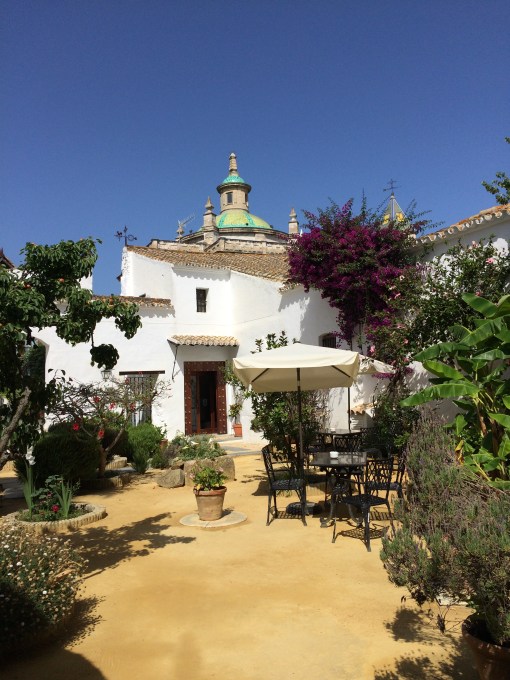
 We took a tour of the Palacio of the Duchess of Medina Sidonia.  No photography was allowed inside the palace, so I have only pictures of the outside. The article below tells a fascinating story about the heiress and her efforts to protect the family archive.
IMG_5013

IMG_5015

IMG_5016                                                      IMG_5014

Children of ‘Red Duchess’ who married lesbian lover on deathbed in battle over legacy

Luisa Isabel Álvarez de Toledo, the 21st Duchess of Medina Sidonia, wed her secretary of 20 years and left her in charge of family inheritance foundation

Luisa Isabel Álvarez de Toledo, the 21st Duchess of Medina Sidonia

Luisa Isabel Álvarez de Toledo, the 21st Duchess of Medina Sidonia Photo: Getty

When an eccentric Spanish duchess married her long-time lesbian lover on her deathbed in 2008, the aristocrat’s three children saw it as the culmination of a betrayal of their right to inherit the family fortune.

Luisa Isabel Álvarez de Toledo, the 21st Duchess of Medina Sidonia who was known as the “Red Duchess” for her opposition to the Franco regime, not only wed her secretary of 20 years, Liliana Dahlmann, but left her in charge of the foundation she had set up to ensure that the family’s historical private archive be maintained intact.

As her lover’s widow and president of the Casa Medina Sidonia Foundation, Ms Dahlmann is now fending off a court challenge against the will by the duchess’s three children.

Liliana Dahlmann attends the Duchess of Medina Sidonia’s funeral

The children, led by the eldest, Leoncio González de Gregorio, 50, say that their mother did not have the right to sign away their legitimate inheritance of the family palace and archive as Spanish law guarantees a portion of at least a third of a deceased parent’s property for their children.

Mr González de Gregorio, now the Duke of Medina Sidonia, is asking for a third of the legacy for himself, with another third to be divided between the siblings. The duchess set up the foundation in 1990 after a financial dispute with her children, and, according to Ms Dahlmann, believed that having signed away her possessions during her lifetime, these could not be claimed by her children once she had died.

Leoncio González de Gregorio arrives at the trial earlier this month

“Isabel wanted to protect the heritage so that her children would not sell it,” Ms Dahlmann told the judge in Sanlúcar de Barrameda in Cádiz province.

The duchess’s family can be traced back to Alonso Pérez de Guzmán el Bueno, the seventh Duke of Medina Sidonia, who led the Spanish Armada.

The family was divided after her children won a legal battle to stop her giving away portions of the estate at Sanlúcar, in Andalucia, in the Nineties.

The archive’s six million documents include a manuscript of the 13th-century Chronicles of Lucas de Túy and a record of the liberal parliament established in Cádiz in the early 19th century at the time of the Peninsular War.

A valuation ordered by the duchess placed a price tag of £44 million on the legacy, although experts from the foundation say it is impossible to value.

Coming to You from Spain: An Unusual Bird

fullsizeoutput_1be8

This bird is a hoopoe, also known as the “butterfly bird” because of the way it flies.  It comes daily to feed in our backyard in Sanlucar.   The hoopoe eats insects and spiders, which our bird seems to be finding in the grass. This blurry photo was taken (discretely) from our patio.  You can hear the hoopoe’s call on Youtube:

https://www.youtube.com/watch?v=M8kRiEM2BV0

And learn more about it here:

https://www.fromthegrapevine.com/nature/10-things-you-didnt-know-about-hoopoe

I’m delighted that the bird flies over from Africa.  It’s exciting to be so close to that continent which also sends us its warm, sandy winds from time to time.

Coming to You from Spain: Guadix Troglodytes

IMG_4986

In the mountain above the city of Guadix, people live in house-caves.  The white pillars that you see sticking up are either air vents or chimneys.  We arrived before the museum opened, but a woman who was cranking out the awning of her store directed us to her “cueva”, to have a look inside for free.

fullsizeoutput_1c36

Her husband was waiting to welcome us in.  He’s there in the photo, behind the gatepost.

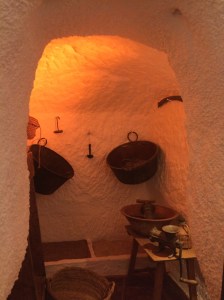
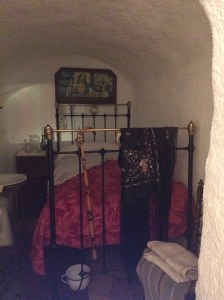
IMG_4980   IMG_4981 Kitchen, dining area, IMG_4983bedroom   IMG_4984 and bath.

The man’s family has lived there for four generations.

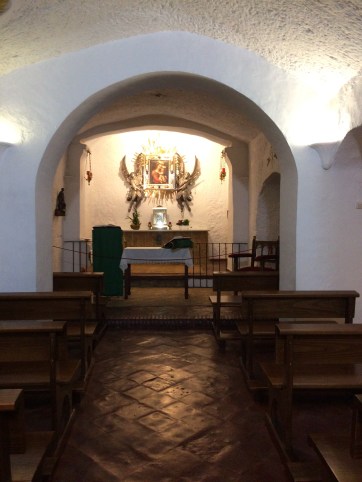
We explored the church, also a cave dug into the mountain.

IMG_4991

The Museum of Traditional Culture was a gem, situated in a cueva that was furnished as it had been in 1928 when the family bought it for less than $2.00.  We saw a film about the history of caves, from practical to religious.   The rooms were full of artifacts.

IMG_5010                             IMG_5009fullsizeoutput_1c35                             IMG_4998

The caves of Guadix didn’t receive electricity until either the 1940s or the 1970s.  Either way, it made for a very dark residence.  There were only two openings to the outside, one, the front door, and two, a window in the kitchen.  The inside temperature was steady and cool.  The animals were kept in the rooms furthest away from the door.  Pigs.  I couldn’t imagine sharing a cave house with pigs.

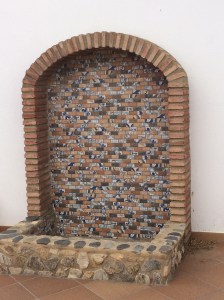
IMG_4992This is a water spigot in a courtyard of one of the cuevas.  The cave village was the most tranquil place I’ve been in Spain.  It was quiet, clean, and had the feel of a spiritual community.

In fact, it was the home of Saint Pedro Poveda, whose cueva is also open to visitors, located next door to the museum.  The saint made many practical improvements in the lives of the very poor folk who lived in the caves in the early 20th century.  He died a martyr in 1936.


Coming to You from Spain: Things That Catch My Attention

IMG_4940Sitting in a cafe across the street from the castle in Jerez de la Frontera, I stared at this incongruity for a while: palm trees and a castle.  Somehow my brain doesn’t put the two together.
IMG_4957

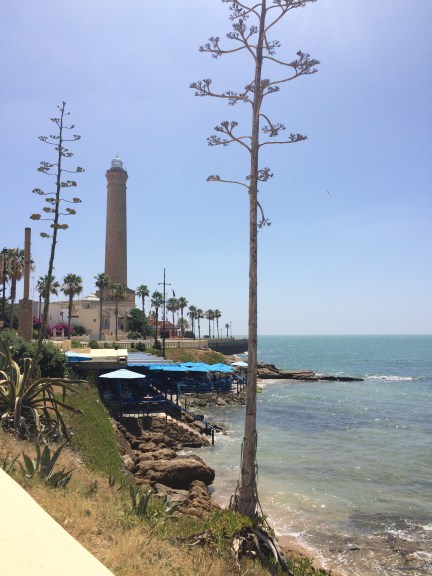
Here is the lighthouse in Chipiona, with a cafe directly on the water.  We liked the look of this town, although it was still before high season, when it would be crowded with summer vacationers.

IMG_4952

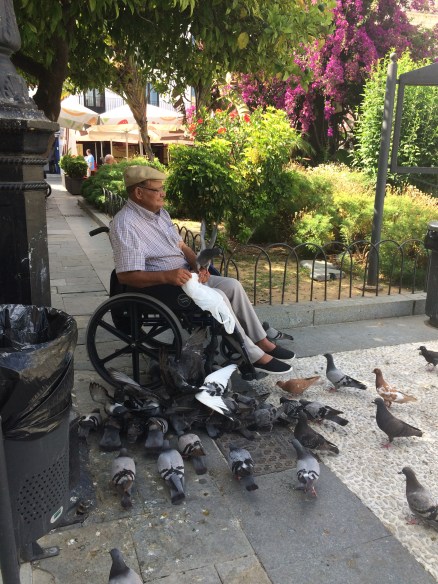
“Feed the birds, tuppence a bag—”    This gentleman is one of the regulars at the Plaza del Cabildo in Sanlucar.

IMG_4953

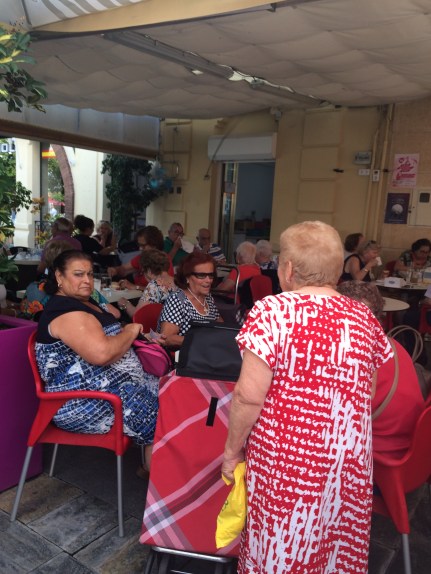
These elders are regulars, too.  The woman with the glasses is the lead entertainment for her group.

IMG_4937

Quite a “do!” on this rooster in the local pet store.

IMG_4949

Aren’t they beautiful?  Useful, too, as the weather rises into the 100s.


What I’m Reading

Life in Yam Hill (Part I), by Tevin Hansen


Did you ever wonder what it would be like to live inside a giant potato?   Tevin Hansen wondered, and he wrote a whole book about it. Polly (Want a Cracker) and her good friend Bic (Lighter) know very little about the Old Earth that existed before the Great Unexpected Tragedy. But Polly’s adult friend, Jack of Hearts, has information about Yam Hill that could endanger all three of their lives.


Author Hansen has created a strange, orange world inside the yam, down to details of how people eat, dress, and dispose of waste. I was drawn in by the weirdness of the concept from the beginning. After the Elders showed up, things got really exciting. I can’t wait to read Part II!


Coming to You from Spain: Castillo de Santiago

IMG_4910

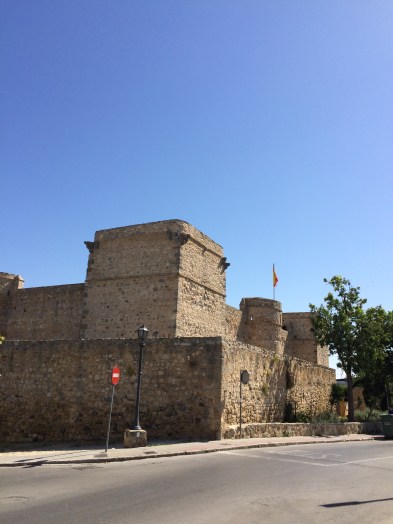
A short walk up from the lower part of Sanlucar de Barrameda stands a real castle right on the street.  Completed in 1477, the Castillo de Santiago was built by Don Enrique Perez de Guzman, the second Duke of Medinasidonia.  Most of the castle has been restored.  You can see “before” and “after” photographs in one of the rooms.

IMG_4913    IMG_4915  IMG_4911    IMG_4922

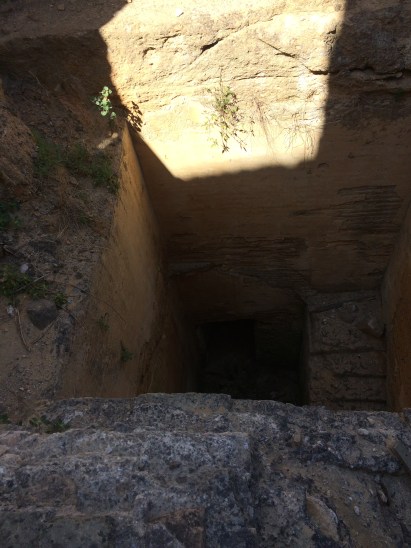
There was an underground passageway between the castle and the palacio of the Guzmans.  I think that is what is in my photograph below.  It certainly looks like a tunnel.

IMG_4914

Being a great fan of mermaids, I enjoyed the Mermaid Gate showing a double-tailed mermaid protecting the coats of arms of the Duke of Medinasidonia and the Duchess Leonor de Mendoza.

fullsizeoutput_1bce

In the winter, a local falconer brings his birds to the castle.  I hold a special place for raptors because of Archer, the gyrfalcon, in my book, Tangled in Magic.

IMG_4920     IMG_4921


Coming to You from Spain: Horse-lovers’ Heaven

fullsizeoutput_1bae


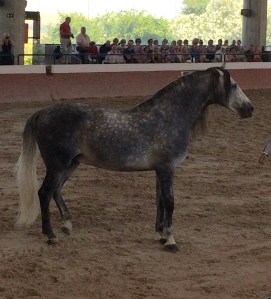
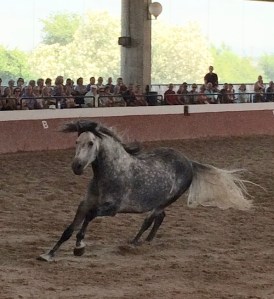
Yeguada de la Cartuja, outside of Jerez, is the main breeding farm for the Andalusian horses.  We took the tour and watched the show as part of my granddaughter’s birthday celebration.  Highly recommended!

For more information:  http://www.yeguadacartuja.org/


fullsizeoutput_1bbc                            fullsizeoutput_1bb4             fullsizeoutput_1ba7                             fullsizeoutput_1bbd  fullsizeoutput_1bb5                        fullsizeoutput_1bb7 fullsizeoutput_1baf   fullsizeoutput_1ba9

Coming to You from Spain: things that delight me

IMG_4847            fullsizeoutput_1b96

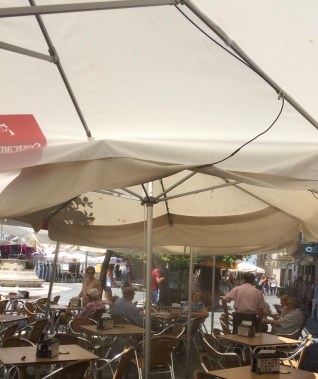
I enjoy the  many common gadgets and conveniences that the Spanish take for granted. (left) The light pole carries a second, lower set of lights so drivers can see when the light changes.  (right) Now that the weather is getting hot, the cafes have misting hoses strung through the umbrellas.

IMG_4850

Houses are surrounded by living walls of ivy, bougainvillea, and grapevines.

IMG_4851

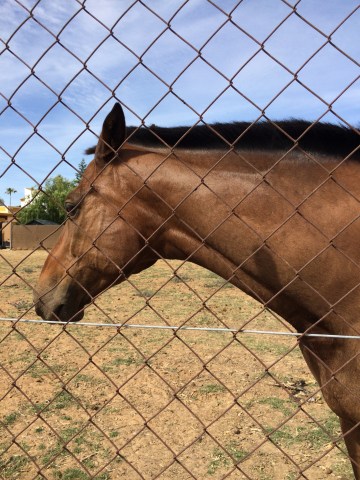
We live across the street from two horses.  They trade locations, but the chickens and the goat stay in this paddock.

fullsizeoutput_1b95          fullsizeoutput_1b93

Windows and doors open two ways.  Is that brilliant, or what??

Note the bars.  Bars on all doors and windows except the front door.

Coming to You from Lebrija, Spain

In another failed effort to gain access to the Parque Nacional de Donana, I misdirected us onto a two-hour plus route to the far entrance of the preserve.  Rather than make the long drive around the park to the entrance at Almonte, we branched off toward Lebrija.  The guidebook announced a promising church, so we got the tower in our sights and started off.

IMG_4841

We passed through this pretty plaza not far from the Iglesia de Santa Maria de la Oliva.

IMG_4840

Sighting the tower–it was restored in 1999.

fullsizeoutput_1b88            IMG_4832

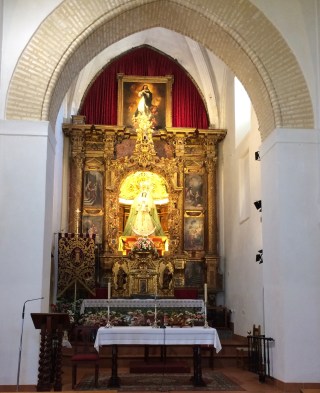
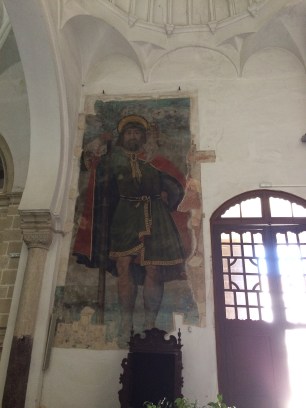
The altar—and a large fresco.

IMG_4831            fullsizeoutput_1b8b

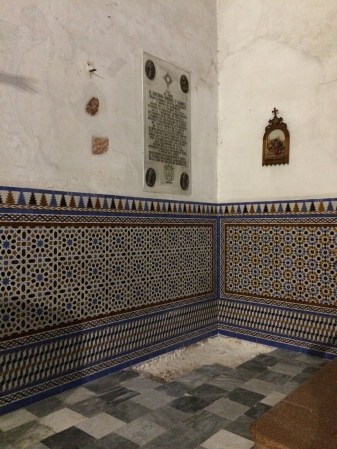
The doorway in the courtyard—-and the Mudejar (Moorish) tiling, surely the oldest part of the church that used to be a mosque.

IMG_4829

More beautiful tile work.

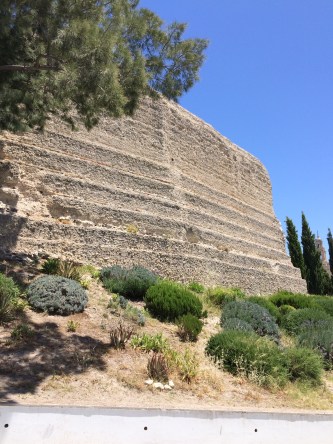
We went on up the hill to the ruins of the medieval castle.

IMG_4839     fullsizeoutput_1b8c

And then to the church on the very top, honoring the patron saint of Lebrija.

IMG_4836

fullsizeoutput_1b86                    IMG_4826

fullsizeoutput_1b8a

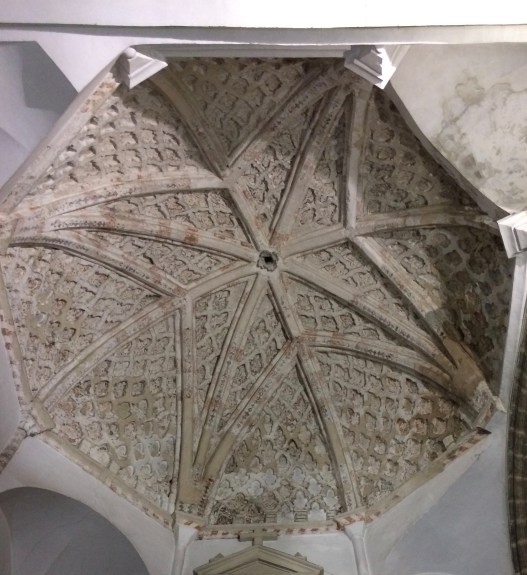
This ceiling vault was my favorite part.  The work must date back to the original Moorish building.

Coming to You from historic Sanlucar de Barrameda, Spain

fullsizeoutput_1b83

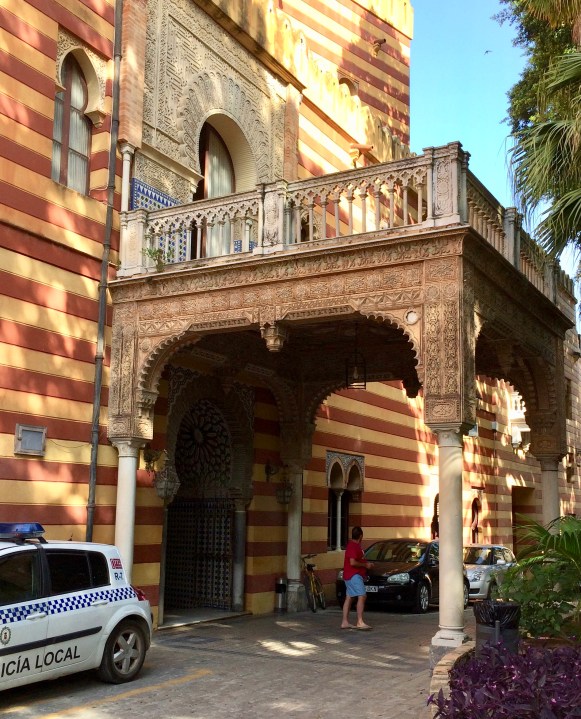
Today new friends took us on a tour of some historic landmarks in Sanlucar.  This is the portico of the Palacio de Orleáns Borbón (XIX Century), the summer residence of the Dukes of Montpensier and the current City Hall (Ayuntamiento).

fullsizeoutput_1b70

The entrance to City Hall–pretty amazing.

IMG_4815

Paintings on fabric decorate the reception area.

IMG_4814

And this is the ceiling….

We toured the gardens, with some really strange plants and trees.

Then on to the Palacio de Medina Sidonia, residence of the Dukes of Medina Sidonia. It contains the archive called of the Red Duchess (Duquesa roja), Isabel Álvarez de Toledo, considered one of the best historical archives in the world.  The Palacio is also a hotel.

IMG_4824

We wandered into a hotel that was almost a museum.  Called the Posada del Palacio, it looks like a fabulous place to stay (below).

IMG_4823

This was the first time we walked around the upper part of town.  The views were wonderful.

IMG_4822